
For Environment, Democracy and Livelihoods
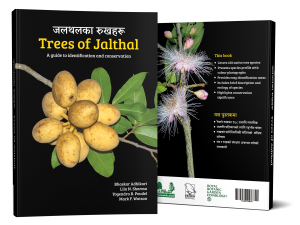
Over the last six years we have been collaborating with local communities to secure the future of the extraordinary biodiversity found within Jalthal forest, Jhapa district, in south-eastern Nepal. Our aim being to conserve biodiversity and restore degraded woodlands through the establishment of a robust scientific knowledge-base and enhancing the capacity of key stakeholders for the management and conservation of this remarkable forest. We have been privileged to be members of a participatory action research team funded by the UK Government’s Darwin Initiative. As part of building a scientific foundation for conservation action, we undertook a series of comprehensive surveys of the forest biodiversity spanning six years. Engaging a wide range of taxonomic experts and members of local communities, our biodiversity surveys covered most of the major groups of organisms: from mushrooms to trees, butterflies to mammals. The results revealed remarkable diversity across all taxonomic groups: fungi, plants, and animals.
Jalthal is a key local biodiversity hotspot in the lowland of Nepal yet has no formal protection. Jalthal demonstrates the conservation value of forests outside the Protected Area network, whilst simultaneously highlighting the limitation of conventional Protected Areas in safeguarding overall national biodiversity. Our study in Jalthal has not only enriched the knowledge of the biodiversity in that unique forest ecosystem, but also broadened our understanding of Tarai biodiversity in general and methods for effective conservation, particularly in areas outside protected areas. Our results clearly show that Jalthal forest is both rich and unique in biodiversity, with an exceptionally high diversity of tree species. Although this small forest fragment comprises only about 0.1% of Nepal’s total forest area, it harbours nearly a quarter of all the 688 species of trees found in the country.
This book is an outcome of biodiversity and forest restoration projects undertaken in Jalthal between July 2019 and December 2025, funded by the UK Government’s Darwin Initiative UK (Ref: 26-022 & 29-028). ForestAction Nepal led the projects, working in collaboration with the Royal Botanic Garden Edinburgh (UK), Kathmandu Forestry College, the Federation of Community Forestry Users Nepal, and the Division Forest Office, Jhapa. The aim was to conserve biodiversity and restore forest while benefiting livelihoods of the local people through science-based localized field actions, capacity building of key stakeholders and the integration of pro-biodiversity practices in forest management policies. Jalthal forest is a model system to showcase the practical methods of science-based biodiversity conservation, forest restoration and invasive plant species management, strengthened by linking biodiversity conservation and livelihood benefits.
Finally, we believe this book will be useful for identification, understanding and conserving trees in Jalthal and Nepal’s lowlands. We also hope it will support further research towards the biological, geographical, ecological, and conservation dimensions of Nepal’s trees. We believe its content will be of interest and benefit to local conservationists, students of botany and forestry, and all who care about trees, forests and nature