For Environment, Democracy and Livelihoods
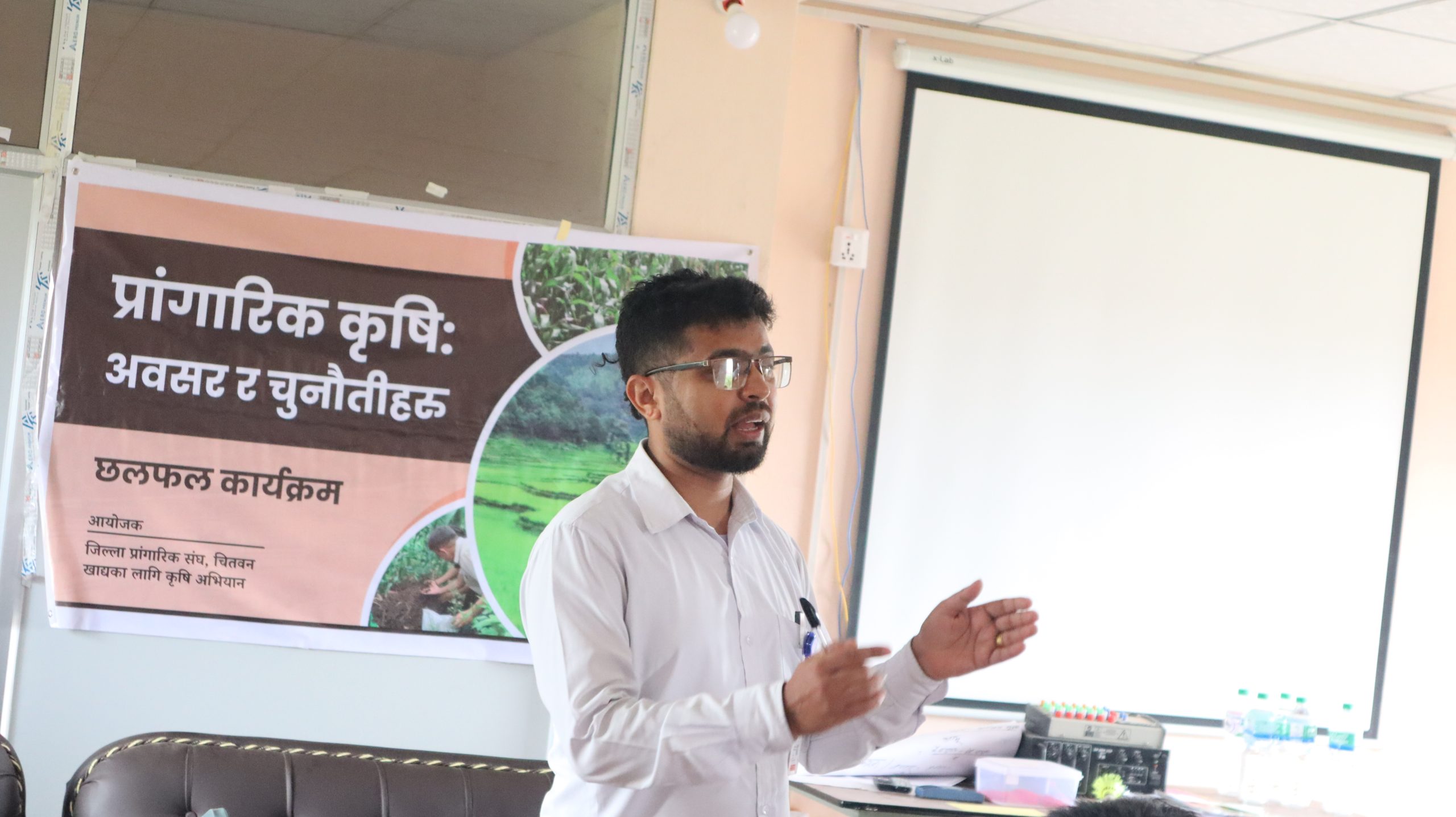
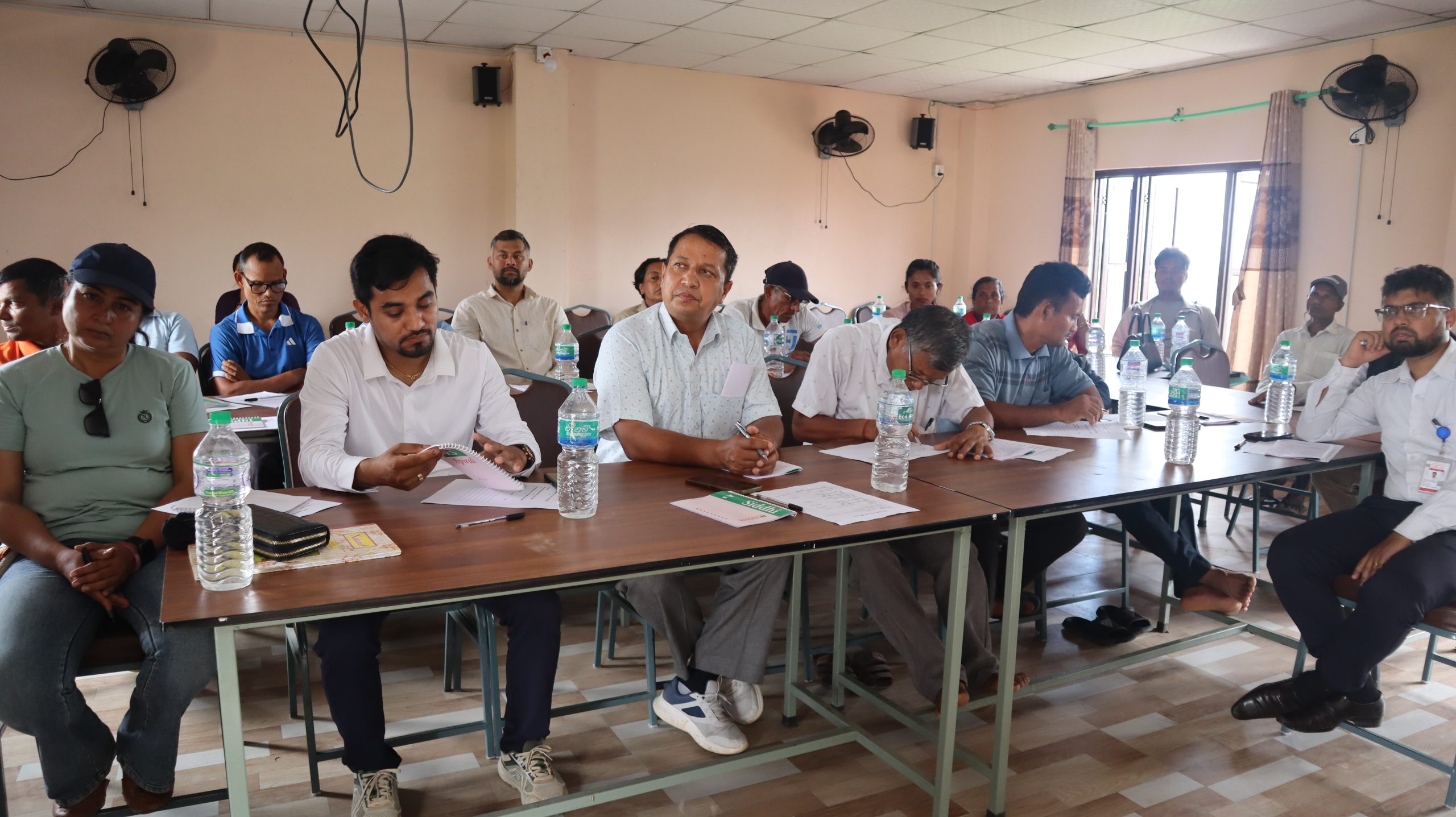
The Alliance of Agriculture for Food (AAF) and ForestAction Nepal organized an interaction program titled “Organic Agriculture: Scope and Opportunities“ on 20 May 2026 at Madi Municipality, Chitwan, bringing together approximately 30 participants including local farmers, organic producers, government representatives, civil society organizations, and private sector actors.
Sunil Bhandari opened the program with an overview of AAF’s history and its multi-level work in promoting agroecology from field to policy alongside ForestAction Nepal’s role in bridging grassroots realities with national advocacy. Mr. Chandra Prasad Adhikari, President of the District Organic Federation, shared his journey in organic production and stressed that uniting smallholder producers under accessible certification and participatory guarantee systems is central to gaining recognition for organic products at local and national levels.
AAF Coordinator Mr. Uddhav Adhikari presented evidence on the long-term economic burden of chemical fertilizer dependency, calling for urgent policy attention to production, consumption, and market dimensions of organic agriculture. Dr. Santosh Chhetri highlighted critical gaps in budget allocation for agricultural research and extension and drew direct links between food quality including commonly consumed products such as vegetables, milk, and yoghurt and public health outcomes.
Natural farming practitioner Ms. Bimala Acharya envisioned Madi as a future organic hub, advocating for open-pollinated varieties, local landraces, and dedicated producer-consumer networks as pillars of a viable organic system. Ms. Rashmi Pandit, a farm stay operator, underscored the synergy between agroecological farming and agri-tourism, expressing strong interest in collaborating with smallholder farmers transitioning to natural farming.
A landmark outcome of the program was the formation of an 11-member local-level organic federation in Madi, led by local farmers themselves. The federation is proposed as a sustained institutional mechanism for networking, coordination, and collective advocacy at both the district and national levels marking a significant step toward an organized and farmer-driven organic movement in Madi Municipality.
The program reaffirmed a collective commitment to advancing organic agriculture in Madi as a model for sustainable agricultural transformation in Nepal.