For Environment, Democracy and Livelihoods
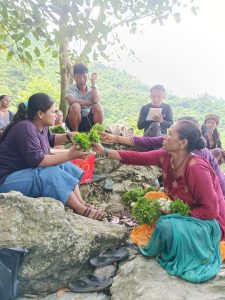
As part of an ongoing community-led agroecological research initiative in Pipal Dada–Dhusa, Ichhakamana Rural Municipality, ForestAction Nepal is supporting farmers to revisit traditional farming wisdom and explore its relevance to contemporary agroecological challenges.
For generations, farmers have grown marigold alongside their crops, not only for its beauty and cultural significance, but also because they observed its benefits in helping their fields thrive. Today, scientific research is increasingly confirming what many farmers have long understood: marigold can contribute to ecological pest management, support biodiversity, and improve soil health.
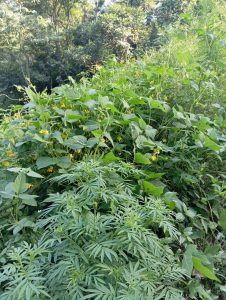
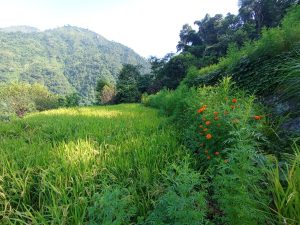
Building on this knowledge, the initiative is examining how marigold can strengthen more diverse, resilient, and ecologically regenerative farming systems. With technical support from ForestAction Nepal, farmers are testing locally adapted varieties, farmer-saved planting materials, and two improved varieties. They are planting marigold along field boundaries and bunds and, in some cases, on dedicated plots, turning underutilized spaces into productive parts of the farm.
Rather than treating marigold simply as a crop, the research combines farmers’ experience with systematic experimentation, observation, and collective learning, generating insights into the ecological functions and performance of different varieties, as well as their emerging market opportunities, while continuing to strengthen local knowledge and agrobiodiversity.