For Environment, Democracy and Livelihoods
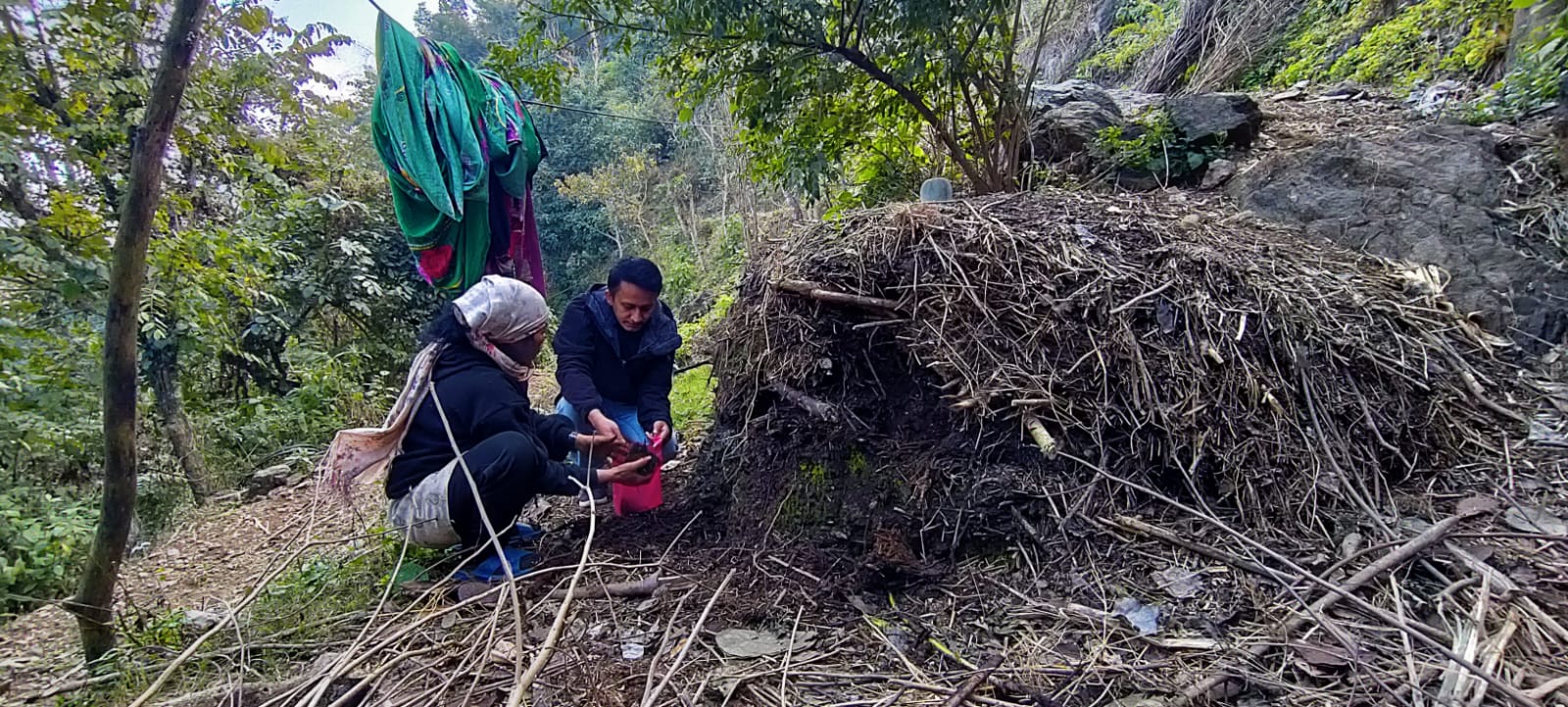
As part of ForestAction Nepal’s ongoing community-led agroecological initiatives, our team is currently in the second year of an action research phase in Dhusa, Ichhakamana. We are focused on co-creating knowledge with local farmers through testing and refining small-scale agroecological technologies, specifically looking for ways to substitute external inputs, like chemical fertilizers and commercial seeds, with locally available resources.
Through previous trials, we observed that the nutrient composition of compost varies significantly based on the diversity of ingredients used (comparing single-ingredient versus multi-ingredient mixes). To validate these findings, we have repeated the composting trials in Dhusa with the lead farmer Daman Kumari Chepang.
During our recent field visit, 29th Jan, 2026, we collected two distinct compost samples for laboratory analysis. This assessment mainly aims to identify the most effective local preparation methods, which serves as vital evidence for scaling these practices.
Beyond nutrient management, our field actions also prioritize enhancing soil health through biological interventions. As part of this experimental phase, we have introduced laboratory-produced Trichoderma viride inoculum into farmers’ composting processes. This is believed to enable the on-farm culture and multiplication of beneficial fungi within local manure piles. The resulting fortified compost will be applied to cucumber fields, one of the major commercial crops in Dhusa, to assess its effectiveness against high-impact soil-borne pathogens, specifically root rot and Fusarium wilt, which are currently affecting farmers’ crops.
Success in these plots will pave the way for scaling up this practice across the wider farming community.