For Environment, Democracy and Livelihoods
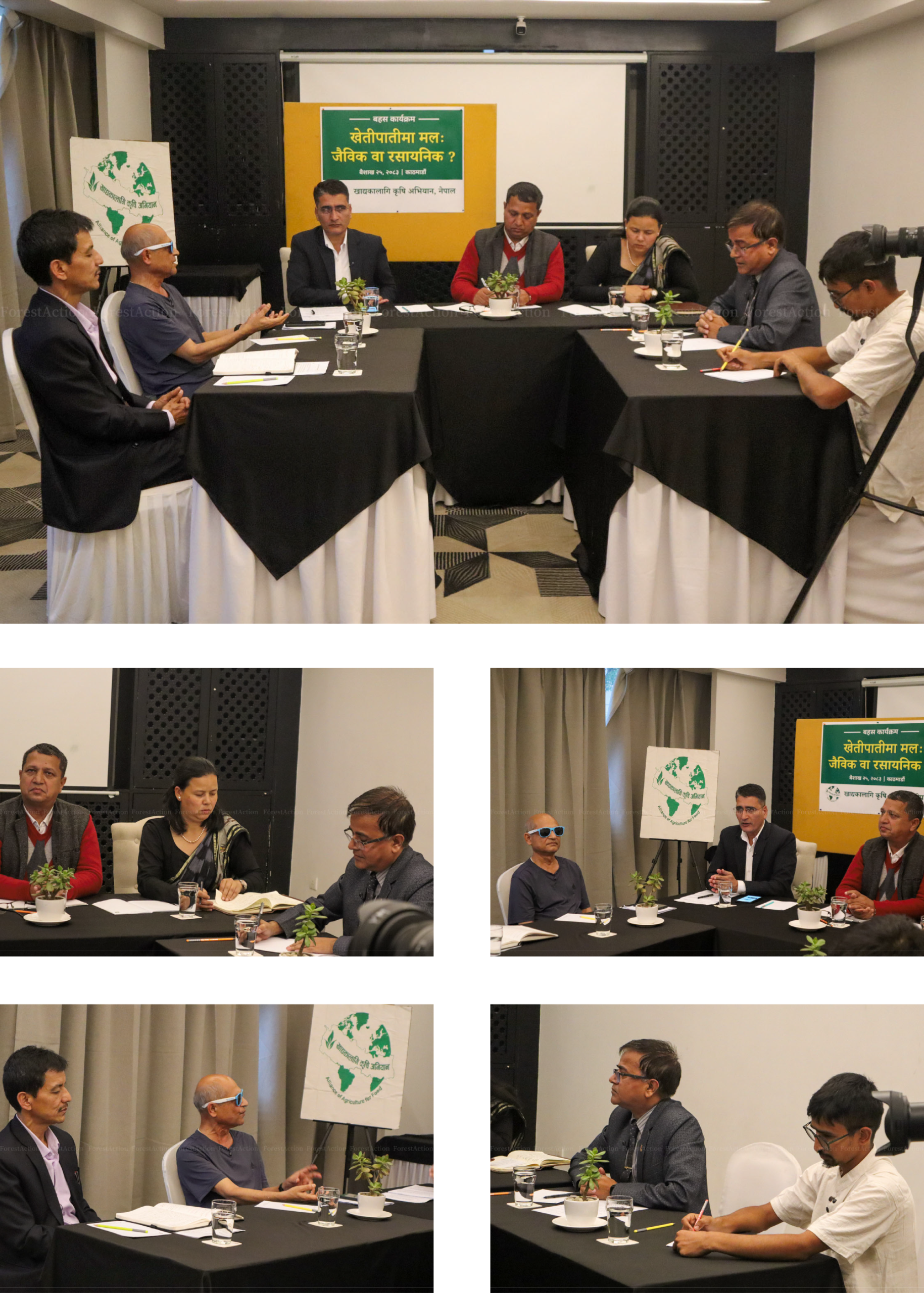
On May 8, 2026, ForestAction Nepal, serving as the secretariat of the Alliance of Agriculture for Food, convened a timely and thought-provoking policy dialogue in Kathmandu titled “Fertilizers in Agriculture: Chemical or Organic?” Facilitated by prominent senior journalist Tikaram Yatri and broadcast across his media platforms, the event brought together distinguished soil experts, government officials, policy analysts, agriculture activists, and young entrepreneurs to deliberate on one of the most pressing policy questions facing Nepal’s agricultural sector today.
The crux of the discussion centered on whether Nepal’s immediate agricultural priority should lie in chemical or organic pathways, especially in light of the government of Nepal’s declared intention to establish a domestic chemical fertilizer factory. Esteemed panelists, including Dr. Ram Krishna Shrestha (Joint Secretary, Ministry of Agriculture and Livestock Development), Dr. Chandra Prasad Risal (Chief Soil Scientist), Dr. Krishna Prasad Paudel (Agriculture Expert), and Dipesh Nepal (Agroecology Practitioner), dissected the long-term ecological and financial implications of chemical dependency. Commentaries from Hon. Dr. Sujata Tamang (Member of Parliament) and Uddhav Adhikari (Coordinator of the Alliance of Agriculture for Food) further enriched the dialogue, grounding the policy debate in grassroots realities.
The deliberations highlighted a critical structural trap in modern farming: while chemical inputs like urea historically boosted short-term yields, they have created a vicious cycle where soil productivity steadily declines over time, forcing farmers to use increasingly higher doses on increasingly acidic and degraded land. Panelists reviewed Nepal’s forty-year history of fertilizer subsidies, noting how external market pressures and historical dependencies have compromised both national fiscal health and soil vitality. While acknowledging that an immediate, absolute halt to chemical inputs could trigger short-term food security shocks, the overwhelming consensus called for a systematic, future-oriented roadmap to phase down chemical reliance in favor of sustainable agroecological practices. The program concluded with a powerful call to action for the government to critically review its chemical factory plans and instead pivot toward policies that protect Nepal’s public health, soil longevity, and long-term economic sovereignty.