For Environment, Democracy and Livelihoods
“You present that Division Forest Offices (DFOs) have not produced timber; that they have not managed forests properly. You tell us to go beyond the set criteria and the upper limit set by the Commission for the Investigation of Abuse of Authority (CIAA). We are ready to do that. Just assure us that we won’t have to bear the consequences for the valid approvals we make.” One of the Divisional Forest Officers burst out in frustration during the plenary discussion. He continued, “I personally have had the bitter experience of doing so. I had to attend the CIAA’s call several times. Is there any institution that will safeguard us for the decisions we make? If so, we will make all the approvals needed. We will approve all harvesting and management applications.”
His voice did not merely reflect on his personal grievance but revealed a deeper, systemic tension embedded within Nepal’s forest governance architecture, that extends beyond individual DFOs and pervades the institutional environment in which they operate.
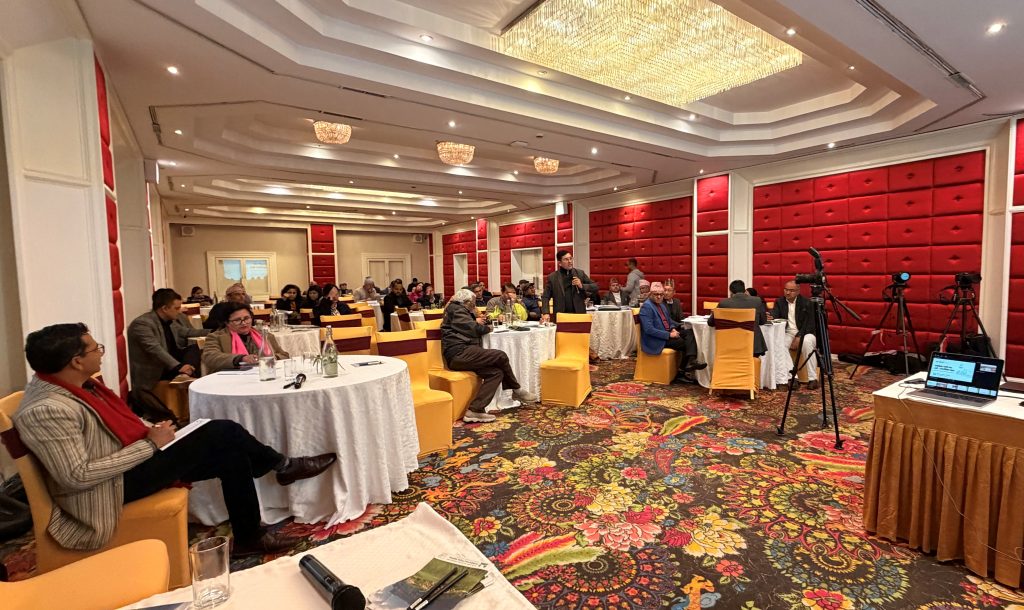
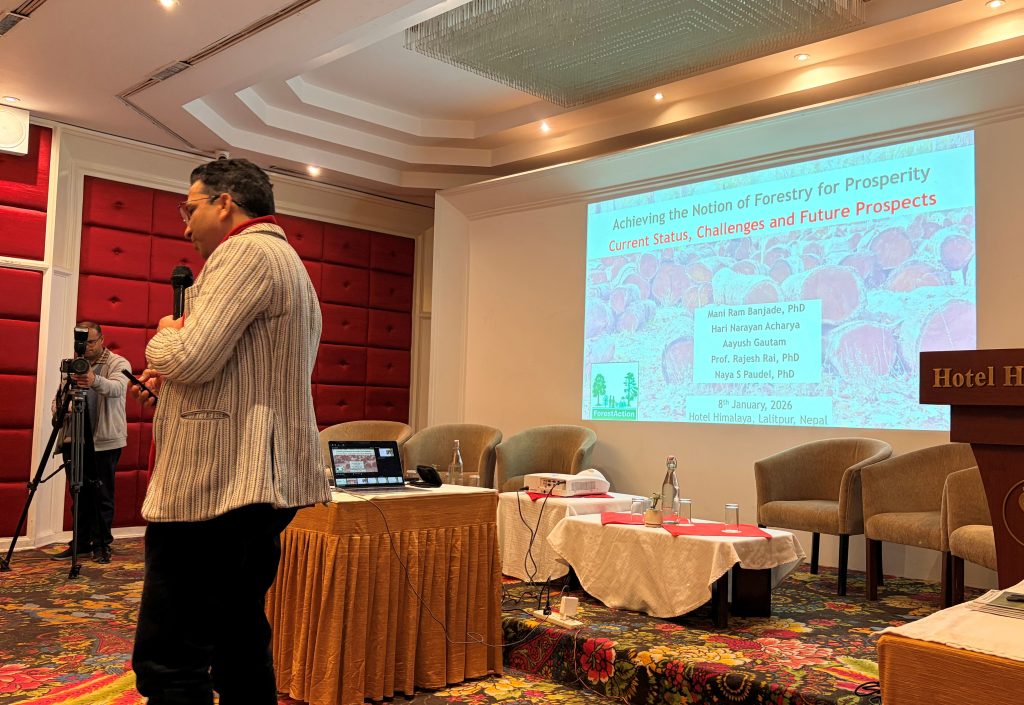
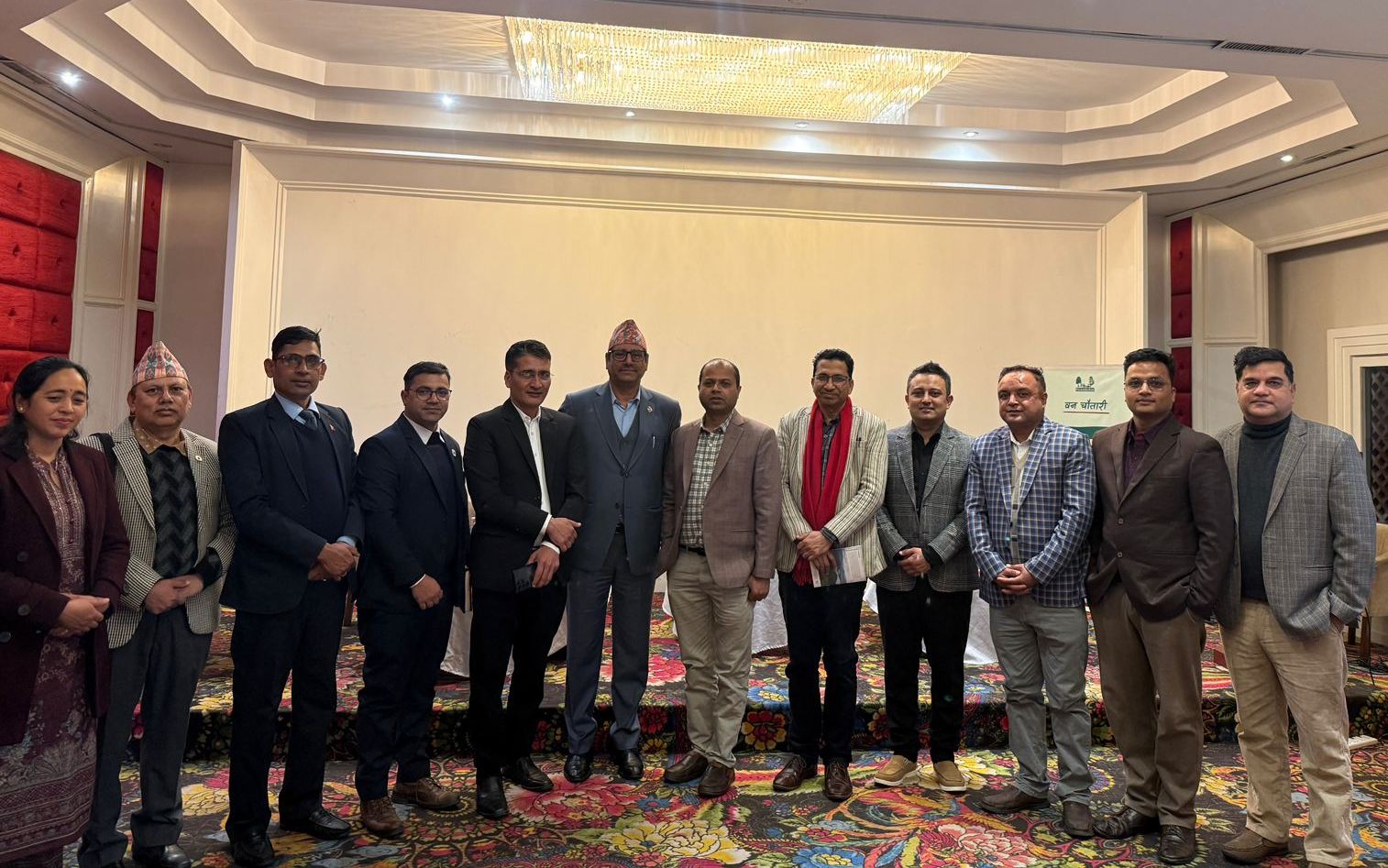
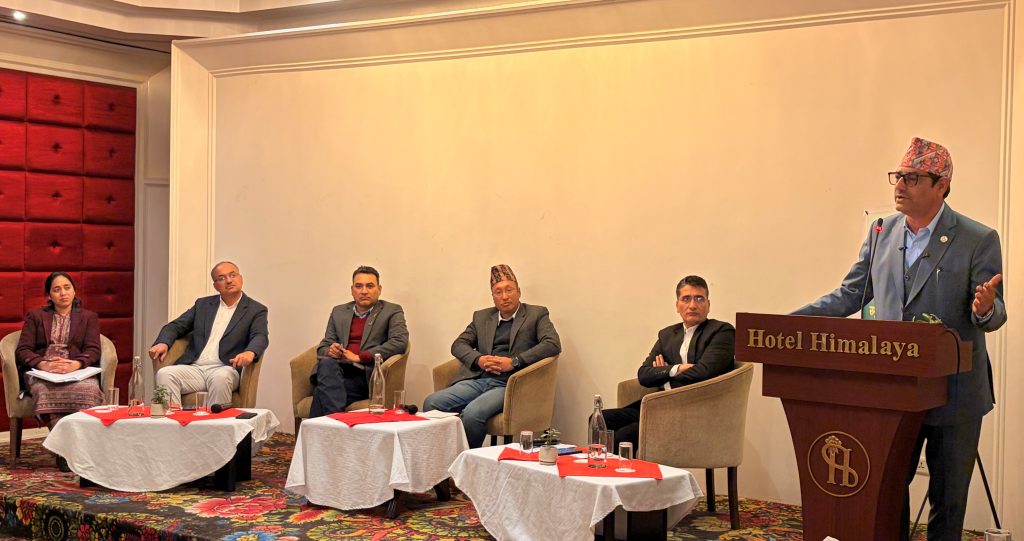
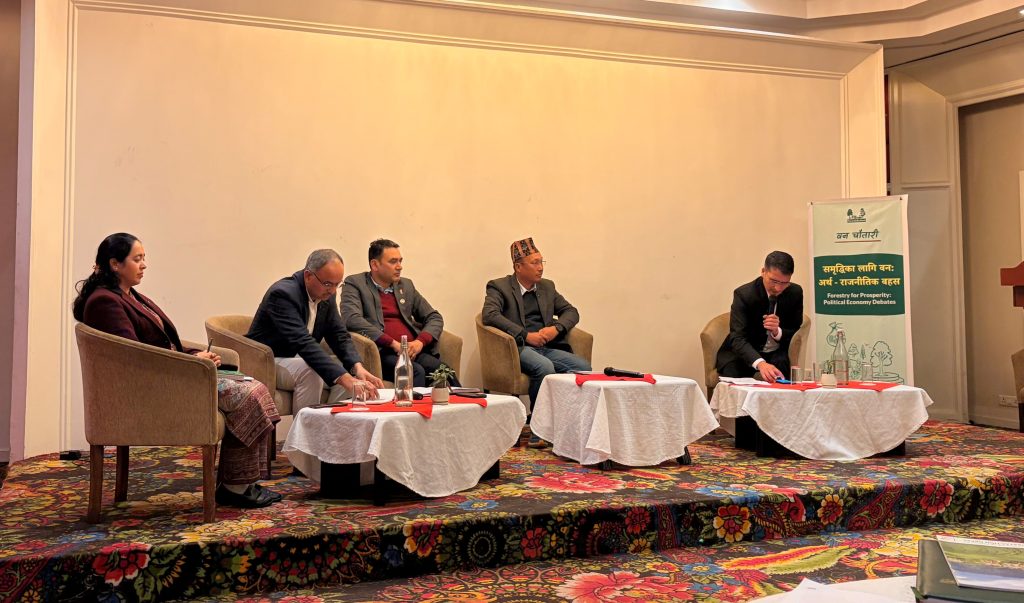
The program was Ban Chautari, organized by ForestAction Nepal (This event was part of the project “Development of Policy Briefs and enhanced communication for Sustainable Forest Management and Green Enterprises in Nepal” under CLARE R4I Opportunities Fund), chaired by Hon. Madhav Chaulagain, Minister of the Ministry of Forests and Environment. The deliberation primarily centered on the presentation delivered by Dr Mani Ram Banjade, that analyzed the forest production data from all Division Forest Offices across Nepal, including annual reports submitted to their monitoring authority, the Provincial Forest Directorate (PFD). The diagnostic study carried out by ForestAction teamdemonstrated a consistent and significant gap between predicted timber production and actual harvest across all forest management regimes. The implication was unambiguous: Nepal is systematically under-realizing the productive potential of its forest resources.
Institutionally, forest management falls primarily under the DFOs, operating within the provincial Ministry of Forests and Environment and reporting through the PFD. Nearly every administrative and technical decisionn of DFO is subject to hierarchical review and cross-validation. Simultaneously, the CIAA exercises parallel oversight by scrutinizing potential misuse of authority.
Following the publication of State of Nepal’s Forests, which reported a national average growing stock of 164.57 m³/ha, the CIAA issued a circular instructing DFOs that district-level stock should not exceed this referenced national average. However, the report did not specify the associated standard deviation or distributional range. From a statistical standpoint, a mean naturally implies variability, some districts must logically exceed the national average. Imposing a uniform ceiling derived from a national mean across ecologically diverse districts is therefore methodologically flawed and operationally restrictive. The subsequent stagnation in timber production trends across the country reflects this structural constraint.
This circular institutionalized risk aversion at the implementation level. DFO personnel increasingly operated on the safer side of compliance to avoid potential investigation. Consequently, the operational plans of 84 DFOs formed under the threashold reflects an average growing stock of merely 127 m³/ha, substantially below the national average cited in the report. The outcome is a systematic suppression of harvesting levels far below the ecological and silvicultural potential of the forests.
Yet just the oversight constraints do not explain the underutilization of one of Nepal’s most valuable natural resources. Governance dynamics within the state apparatus further compound the issue. Laws and regulations are often subject to individual interpretation of an individual. In one documented instance, a change in the DFO of a district resulted in more than a 90% reduction in timber extraction, demonstrating how discretionary authority can significantly alter production outcomes.
Moreover, DFOs face excessive administrative and technical burdens. Their responsibilities extend well beyond silvicultural management to include budget execution, reporting, monitoring across multiple forest regimes, wildlife crime control, dispute resolution, and coordination with oversight agencies. Estimates suggest that barely 20% of the technical human resources within DFOs are actually deployed for core forestry operations. The remainder is absorbed by procedural and compliance-related tasks.
Community-based management systems also form a critical part of this equation. Community Forest User Groups (CFUGs), which manage a substantial proportion of Nepal’s forests, face structural and operational limitations. More than half of CFUGs have yet to amend their mandatory operational plans, a prerequisite for active forest management. Many lack adequate technical capacity to implement silvicultural prescriptions effectively. Additionally, the fragmented and small-scale nature of many CFUG-managed forests constrains economies of scale. If such fragmented patches were consolidated into larger management units, like clusters, the economic viability and market competitiveness of timber production could improve significantly.
In the panel discussion, Professor Dr. Rajesh Rai said, “Nepal is not losing forests by harvesting too much, but by harvesting too little.” Therefore, the central question, is not merely whether forests can generate prosperity, it is whether the current governance framework aligns incentives, accountability mechanisms, and technical capacity in a manner that enables resources to be capital. Whose forest governance structure determines production levels? Whose risk calculations shape harvesting decisions? And whose institutional fears ultimately constrain economic potential?
If Nepal is to unlock the economic value of its forests while maintaining ecological integrity, reforms must be to clarify accountability frameworks between oversight bodies and implementing agencies; revisiting statistically flawed production ceilings; reducing administrative overload on DFOs to prioritize core forestry functions; strengthening technical capacity and plan revision processes within CFUGs.