
For Environment, Democracy and Livelihoods
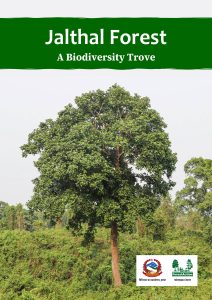
Jalthal forest is a 6,100 ha highly biodiverse remnant of a once more widespread ancient moist tropical forest in the lowlands of south-east Nepal. Now surrounded by agricultural fields and settlements, this biodiversity-rich forest comprising several distinct ecosystems, provides a habitat for several threatened species of plants and animals. The forest is an important habitat of iconic, threatened and protected fauna and flora. In addition, the forest is also known for species composition which is different from other comparable forests of Nepal. Largest natural stand of Artocarpus chama occurs only in Jalthal, which makes this forest distinct from Nepal’s other lowland forests.
The forest is an important source of ecosystem services- fresh water and forest products such as timber, firewood, fodder, wild edible fruits, leafy vegetables and mushrooms, for people living around it. The forest, currently managed by 22 Community Forest User Groups (CFUGs), is important to the livelihoods and culture for over 80,000 people living around the forest. CFUGs and other stakeholders are working to manage the forest, which has prevented forest encroachment, increased tree density, regulated forest product harvest and distribution, controlled forest fire and reduced otherwise pervasive wildlife hunting.
Despite community efforts, Jalthal forest has been subjected to multiple pressures, including biological invasion, human-wildlife conflict (particularly human-elephant), wildlife hunting. Forest’s rich and threatened biodiversity is not well protected. Improper forest management including exotic tree species plantation and preferential protection of certain timber species has also threatened forest biodiversity. The conflict between infrastructure development and conservation has fragmented and perforated the forest patch.
Jalthal Biodiversity project was implemented to conserve biological diversity in community forests through capacity enhancement of local stakeholders and evidence-based management. Incorporating biodiversity in forest management plans and restoring degraded forest are other priority activities of the project.
Understanding what and how about of biodiversity is a prerequisite for effective conservation planning and decision-making. Engaging locals in biodiversity documentation enhances locals’ awareness and creates ownership in conservation. Realizing this, the project took a participatory approach for biodiversity survey and used tools of both natural and social sciences. Several survey techniques, including camera traps, were used to document the diversity of the forest. The survey result is the outcome of over 300 local people and a dozen of subject experts. The survey substantially enriched previous works and enhanced our understanding about biodiversity of the forest. Results of biodiversity survey as presented in this report, indeed built a scientific foundation for biodiversity conservation and forest management.
This profile is outcome of collective work of project staffs, subject experts and local people. While authors were also engaged in the taxonomic survey, several experts have joined to gather the data used in this profile. We would like to acknowledge following people who contributed in generating valuable information for various taxonomic surveys towards this profile.