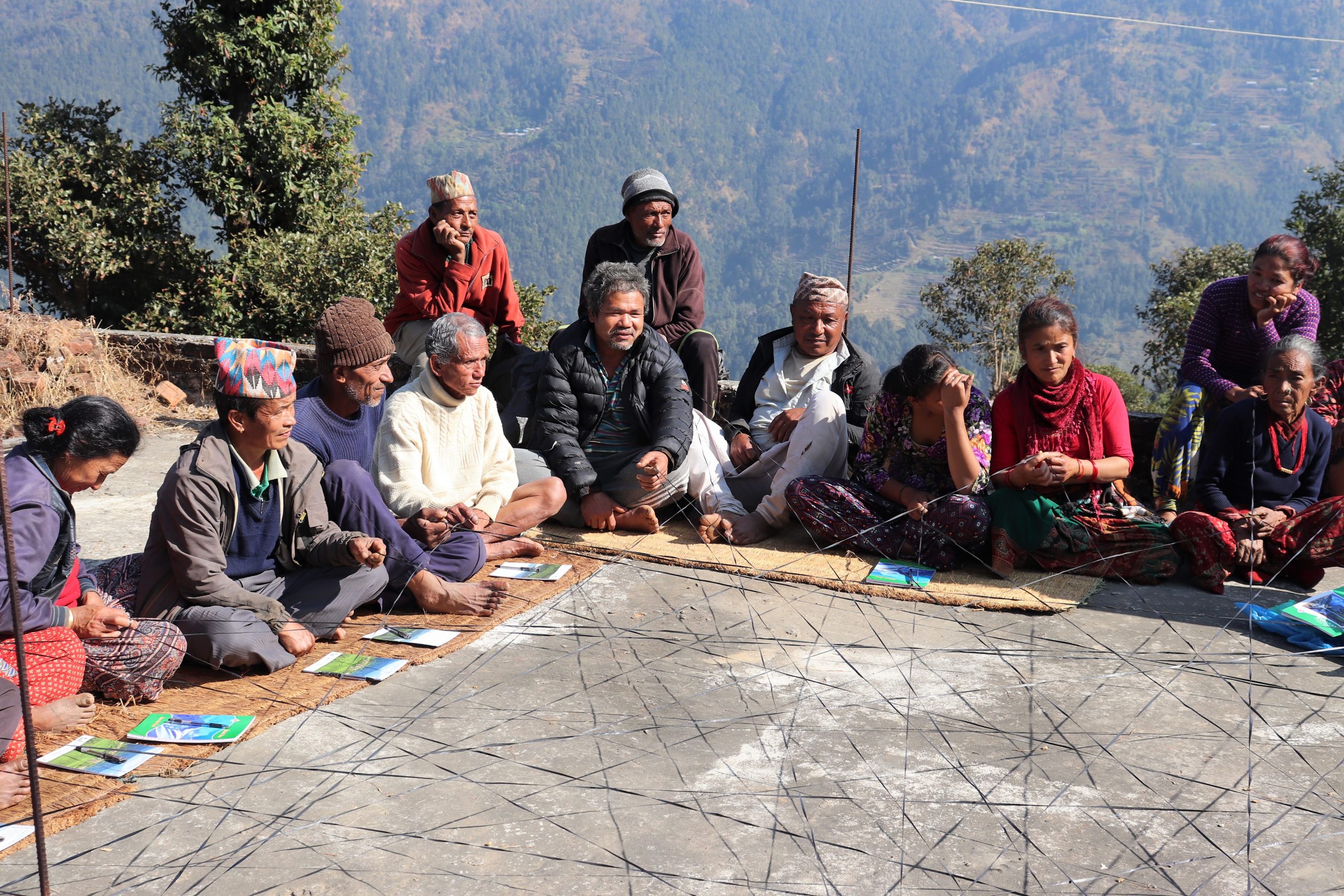
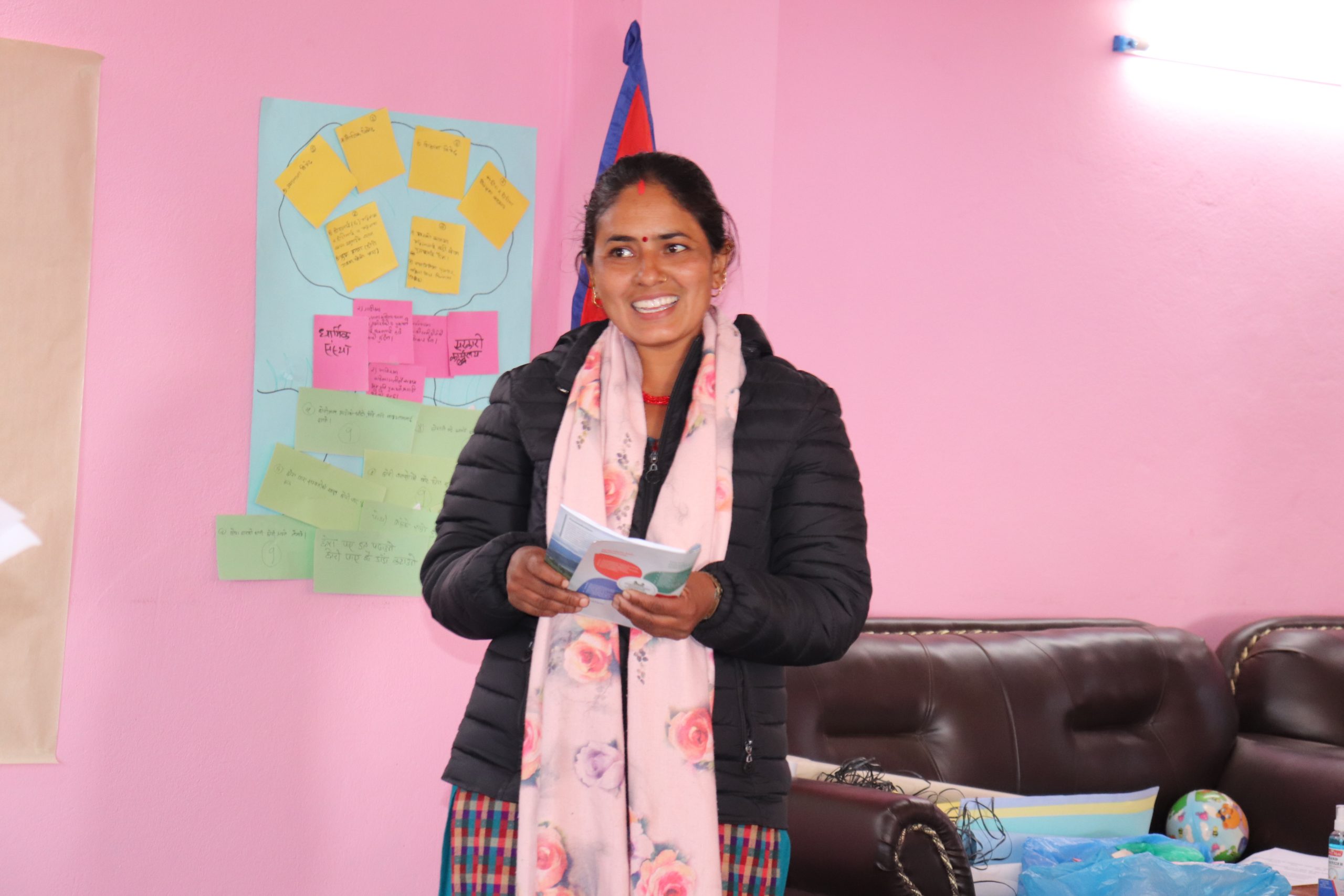
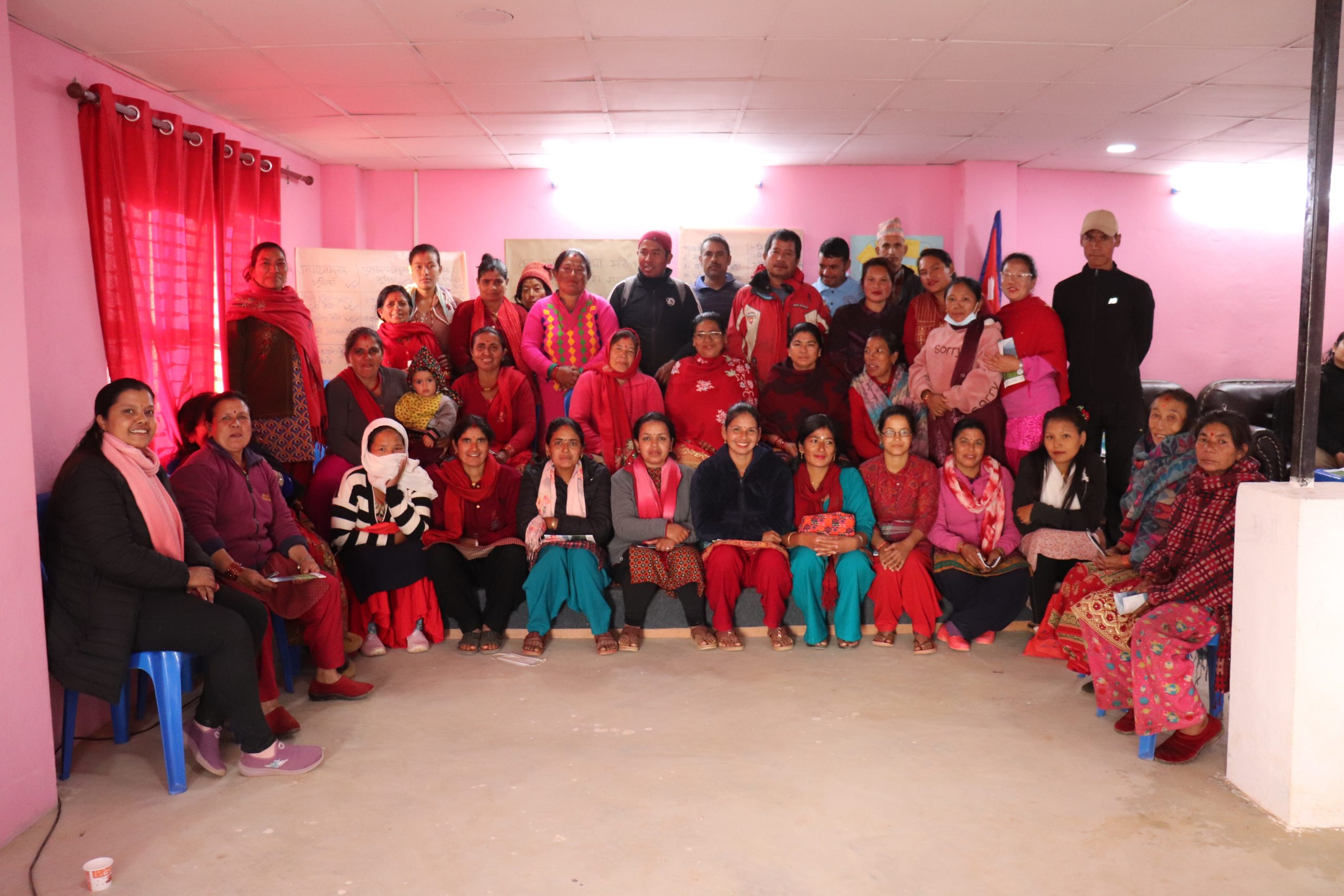
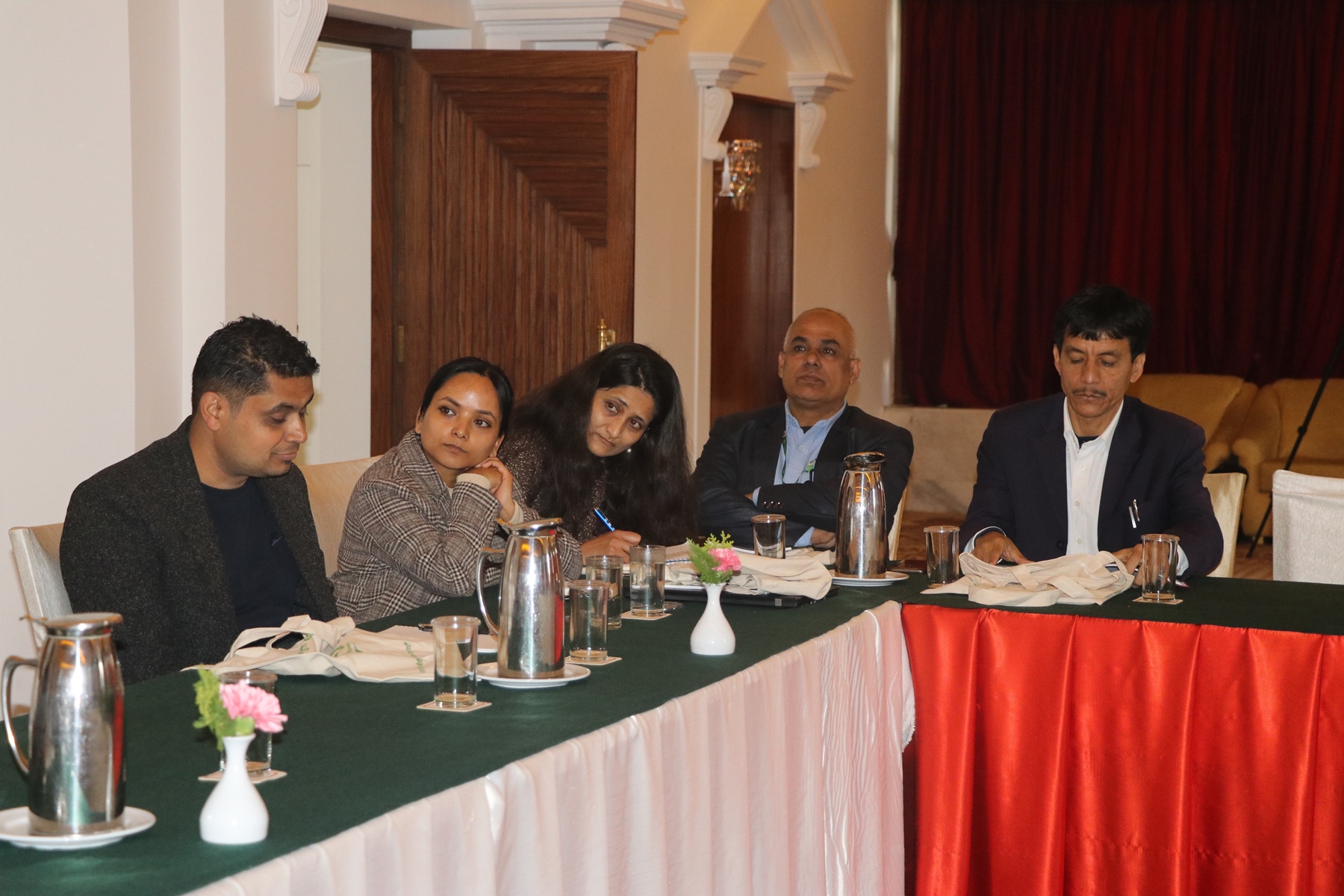
ForestAction Nepal, with its consortium partners AFFON, FenFit, and HIMAWANTI Nepal, hosted a two-day training on the theme “Enhancing gender relationship at home and workplace” as part of the project Economic Empowerment of Women Through Forest Solutions, funded by IDRC, Canada. This training aimed to develop self-awareness for building mutual support and cooperation by appreciating each other’s attributes for improved prosperity, wellbeing and happiness. The goal was to enable the project staff conduct “couple training” on ground through fun and mutual realization. The training was a response to the demands received from women entrepreneurs, as their common opinions echo their desire to train their husbands and in-laws so that they can articulate the gender issues at the same wave with them. Hence, the participants are expected to apply the learning and techniques in the field.
The training strengthened understanding of the participants on gender sensitive communication, gender needs, and gender analysis with an aim to enhance capacity of project staff on gender transformative approach in interventions. The entry session on reflection on the socialization processes shaping gender stereotypical roles motivated the participants at a higher level to establish “gender as a social construct”, which needs strategic structural transformative approach to reform. The training included several intensive reflective sessions and discussions about different ways to help the women entrepreneurs shape, frame, and ease their communication for obtaining support for enterprise development.
The key aspect of family relationship lies on better understanding and appreciation of each other’s needs and interests. The most interesting session was on “I know her/him” which included couples’ testing of each other’s knowledge/sensitivity about his/her partner. The session intended to build a happier family relationship. The learnings from this training are expected to be used for sensitization of the couples on different arenas of the socialization processes of the women entrepreneurs of the project. Besides, the training encouraged the participants, including the couples, to articulate the potential positive impacts on their household prosperity and wellbeing through a harmonious, supportive environment for enterprises. Overall, the training helped the participants to increase their self-awareness, strengthen gender competency to use the learnings through gender lens in different intervention of the project.
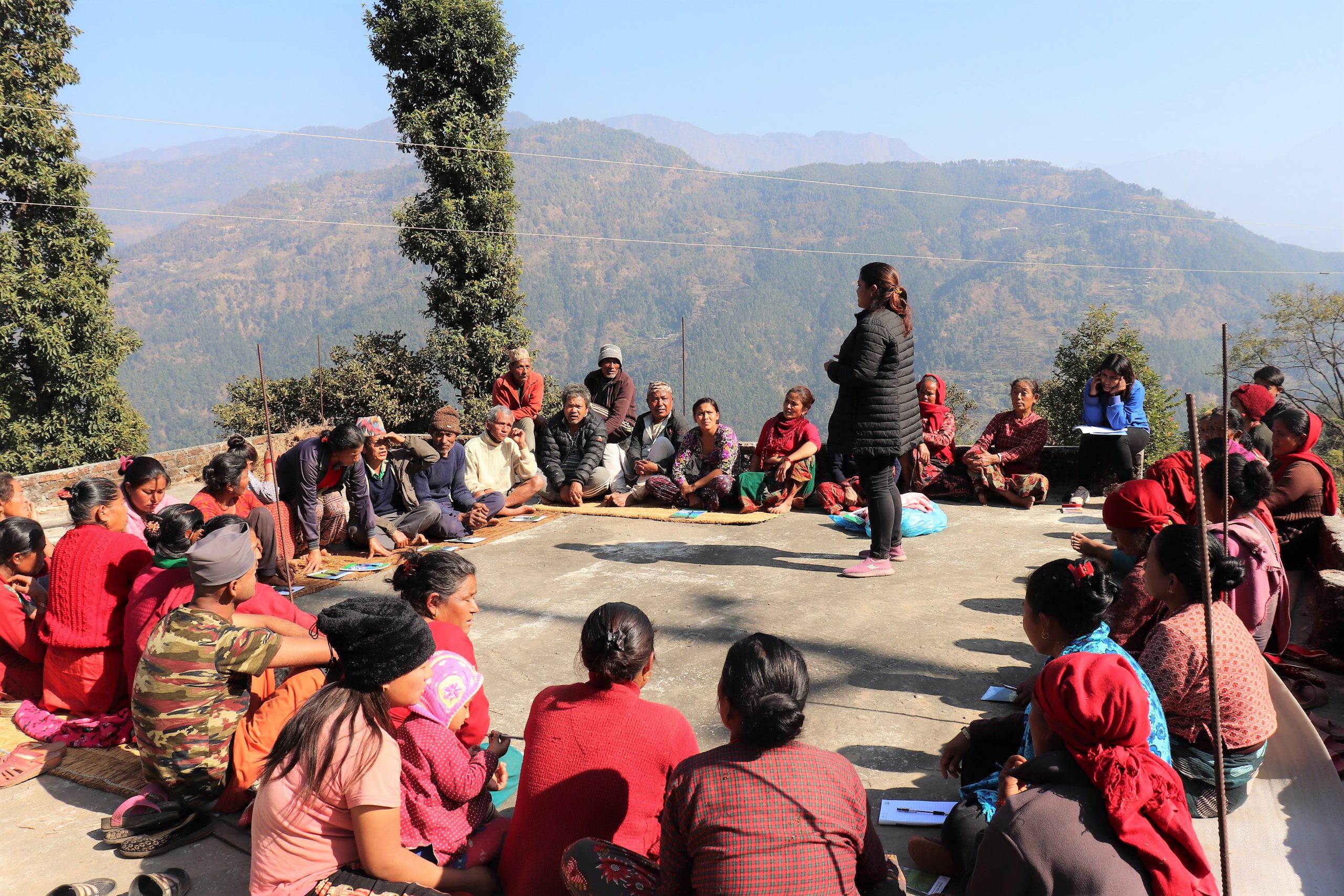
ForestAction Nepal, together with its conglomerate partners, ICCA Network Nepal and ICCA Youth Network Nepal, hosted the Fourth National Gathering, which was attended by individuals from 27 different sites representing different cultures and ethnic backgrounds at Nakkhu, Lalitpur. The gathering was a part of a larger effort to document and promote Indigenous Community Conserved Areas (ICCAs) in Nepal.
In addition to empowering indigenous people, this 2-day (March 25-26, 2023) event facilitated intercultural dialogue and collaboration, as well as share experiences, best practices, and strategies for protecting and preserving their local environments. It also served as an opportunity to showcase the work of ICCA Network Nepal and ICCA Youth Network Nepal in advocating and safeguarding the indigenous people’s rights.
ForestAction Nepal along with its consortium partners HIMAWANTI Nepal, AFFON, and FENFIT Nepal, conducted exposure visits in the intervention areas of Ramechhap and Kavrepalanchok districts, Nepal. Exposure visits are very important training methodology which are integral to sensitizing and empowering the women’s group to carve them into successful entrepreneurs. This three days visit was enriching opportunity for emerging women entrepreneurs who had received technical training and skill-based training to view and learn about the experiences of other forest-based enterprises in the Kavrepalanchok and Ramechhap districts. The visit involved interactions with various stakeholders, like different enterprises owners, entrepreneurs, local people, trainers, and local and municipal-level stakeholders. The overall objective of the exposure visit was to exchange ideas and experience regarding challenges in implementation of Forest based enterprises in Ramechhap and Kavrepalanchok districts. Also to learn from the experience of others running forest-based enterprises in different regions by direct interaction.
In this backdrop, the women entrepreneurs had strong observation and learnings from the Nepali paper enterprises in the Khimti, Ramechhap, and the broom grass enterprises in the Dhunkharka, Kavrepalanchok, Dhasingare plant and nursery management in Rasnalu, Ramechhap, High-tech nursery in Dhunkharka, Kavrepalanchok
Questions and Answers session and open discussions was well facilitated in every site visit and the discussion was mostly covered on financial aspects, motivation and their entrepreneurial journey over the years. The visit was insightful to the women entrepreneurs and they learnt from other entrepreneurs who live in similar circumstances to themselves. This exposure visit further encouraged women entrepreneurs to ask questions about the different facets of running and enterprises and develop them as the entrepreneurs and get first hand feedback.
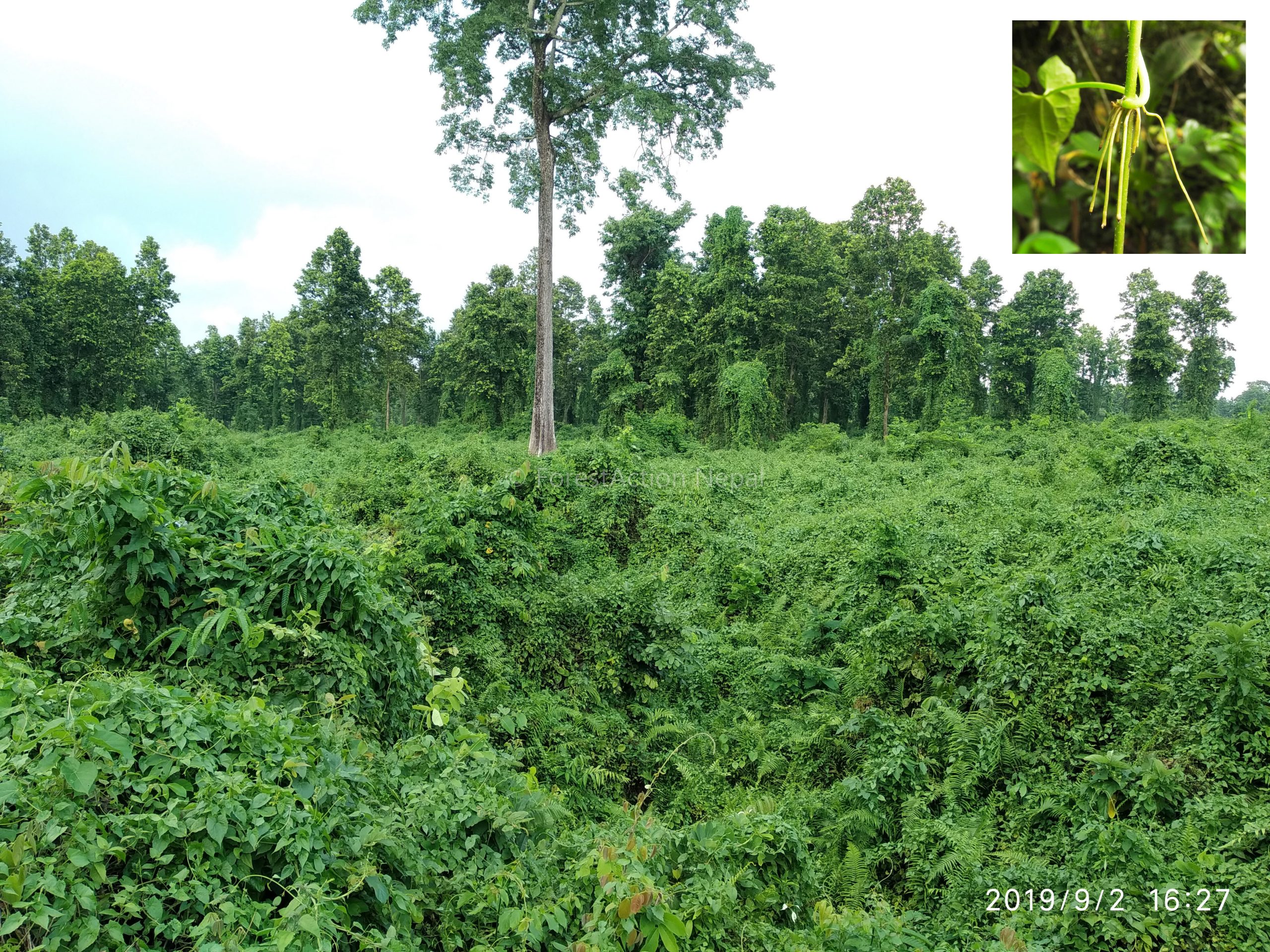
Mikania invaded forest patch in Pathibhara Kalika CF, inset: Mikania roots in the air
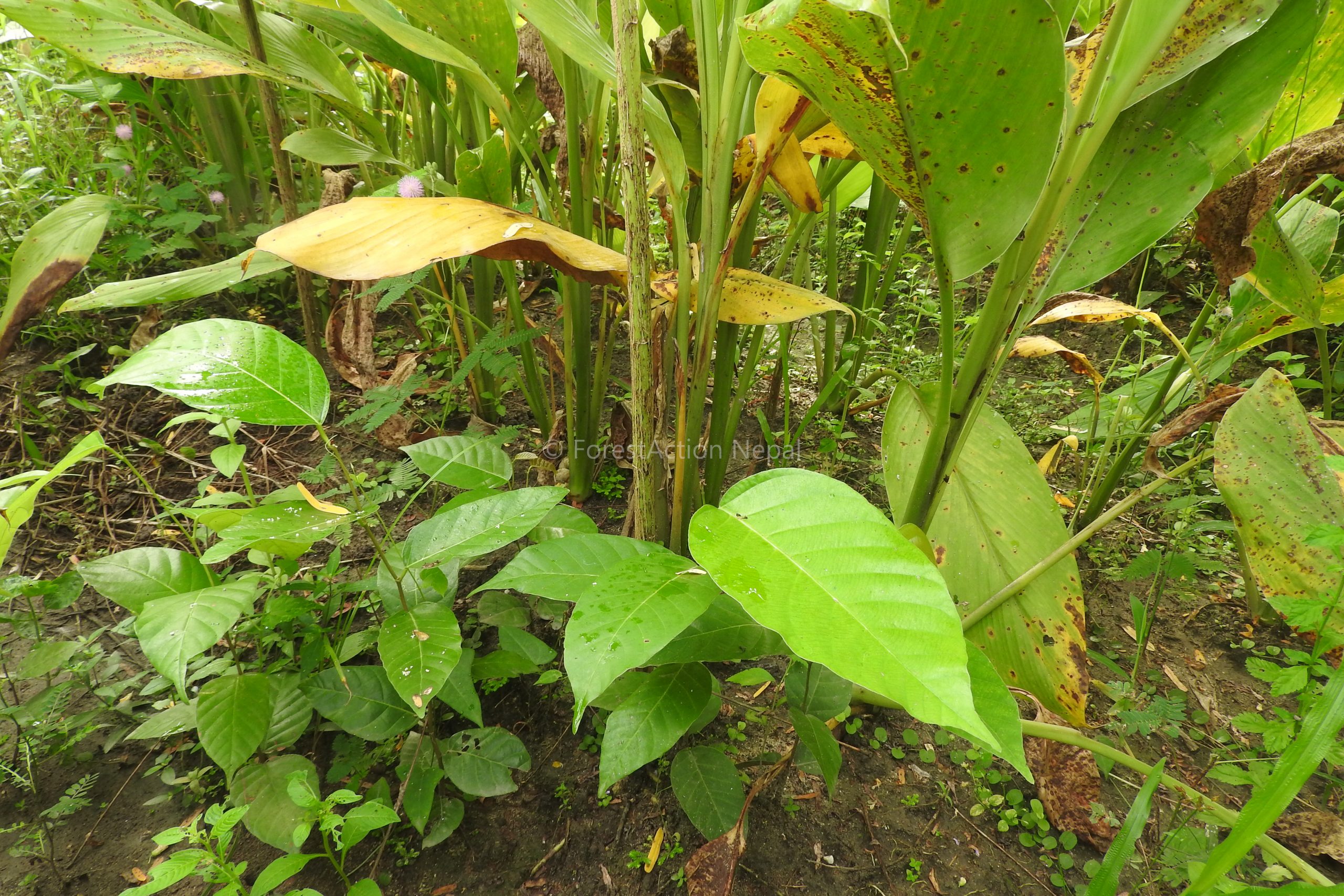
Turmeric cultivation in the forest
On August 16, Dr. Shiva Devkota was exploring mushrooms while strolling along a trail in Jalthal forest. A little off the trail, on his approach deep into the forest, he spotted a Besar (Turmeric) patch. He inquired with curiosity, “Is there Besar cultivation in the forest?” whilst pointing at the Besar field.
Yes! Turmeric was cultivated in the forest. For visitors like Mr. Devkota, it was an oddly positioned crop. We’ve had numerous inquiries from other forest visitors wondering why turmeric was cultivated there. In order to understand the background of turmeric cultivation, it would be better to have an enriching virtual-tour of the forest to get insights on the condition of the forest and its biodiversity.
Turmeric cultivation in Durgabhitta CF
Jalthal: A biodiversity ‘hotspot’
Jalthal is a forested island in the agricultural landscape in Jhapa District in southeastern Nepal. It is a relic of a once lush tropical forest that spanned Nepal’s southern plains. In the country known for high mountains, the forest lies at the lowest elevation point and encompasses diverse ecosystems and habitats like swamps, lakes, rivers, hillocks, forests, and open areas. It is a high-biodiversity area with endangered flora and fauna such as the Asian elephant, Chinese pangolin, and Elongated tortoise. The forest is known for its exceptional richness of tree flora in Nepal; it covers just 0.1% of Nepal’s forest but is home to about a quarter of the country’s total tree species. In a fresh article, we claimed the forest as a capital of tree diversity of Nepal.
The forest is also an important source of environmental services, including water and multitudes of forest products for people living around the forest. The forest is currently being managed by 22 Community Forest User Groups (CFUGs) and is an important livelihood source for over 80,000 people, including marginalized indigenous groups (Meche, Santhal, and Rajbanshi).
Jalthal: A capital of Mikania invasion
“I never imagined a South American weed would cover a forest here on this scale. It’s bloody everywhere! “And it has covered almost every seedling and sapling in every corner of the forest.“
And that’s exactly how Dr. Norbert Holstein described his observations on the abundance of Mikania in Jalthal Forest in the Jhapa District. Dr. Holstein, the curator of the Natural History Museum in London, visited Jalthal forest in the second week of September. He traversed dense bush of Mikania during a hot and humid day of fieldwork in the forest for four days.
Dr. Holstein’s impression provides insight on the scale and depth of the invasion of Mikania in Jalthal area. When Dr. Him Lal Shrestha of the Kathmandu Forestry College (KAFCOL) examined the Mikania coverage three years ago, he calculated that more than half of the 6100-hectare forest had been affected. When Mr. Ramkrishna Gautam- an MSc student at Tribhuvan University, recently mapped Mikania in the forest, he encountered the weed in almost all of the sampled points. He spread 228 sample plots covering the whole forest.
Mr. Shyamlal Meche, leader of the Pathbhara Kalika CF and an inhabitant of Jalthal who belongs to an indigenous minority, has witnessed the transformations in the forest over years. During forest transect walk in August 2020, he demonstrated us how terrible the weed is.
He further added,
“I literally have no idea where this Pyangri lahara (a local name for Mikania) came from and now it has blanketed the whole forest. Although its green, but it is a matter of celebration for the environment enthusiast like me. Seedling growth has been suppressed, our trails have been erased, mushrooms, leafy vegetables such as adders-tongue (Ophioglossum) and majur khutti (Helminthostachys zeylanica) have declined, elephant encounters have increased, and wildlife habitat has been degraded as a result of its expansion. Our access to forests and its resources have been limited by it”
Mr. Meche has also witnessed more pyangri lahara-related alterations and added:
“Python populations in the forest has surged as the bush cover expanded.” As a consequence of increase in python population, other wildlife species including deer mouse and spotted deer have experienced a decline.”
Extending to 741-hectare area, Mr. Shyam Lal’s forest is the largest CF in Jalthal. More than half of the forest is infested with Mikania and other invasive species, with about half of the forest suffering the worst. If we venture deeper into the forest, there are several spots of degraded forest where trees are sparse and with green floors, the latter actually being a green desert.
With all these observations of the veteran researchers, it’s evident that weed invasions have almost engulfed the biodiversity of Jalthal at its utmost level.
Notoriety of the notorious
Mikania micrantha, a vine of South American origin, is an invasive plant species. It grows fast, produces enormous tiny seeds, disperses seeds easily by wind, and reproduces by both stem and seeds. It can develop its roots in the soil, air and even in water. It’s extremely effective photosynthesis has been noted in a recent study. All of these factors combine to make it an invasive species. Additionally, the weed is included as one of the worst invasive species in the world.
The species is on the move. It’s moving northward and westward in Nepal. Bharat Babu Shrestha, a professor of botany at Tribhuvan University and a pioneer and prominent researcher on invasive plants in Nepal, has lately made observations as far north as the Pokhara valley and as far west as the Dang district. And it’ll probably advance even more into its frontier.
Well! The observations, experiences, and mayhem on Mikania micrantha above tells only a portion of the forest’s story. The forest is not only degraded by invasion; it still holds a legacy of its biological diversity, ecological uniqueness, and socioeconomic significance.
Jalthal unquestionably illustrates an example of significant biodiversity and synchronous forest degradation. This paradox of “diversity and degradation” has been discussed in a paper published by ForestAction researchers last year. Among the many challenges in managing forests, invasive species, especially Mikania micrantha, is a serious problem. It spreads swiftly when the crown cover is sparse, especially in bare forests. It inhibits the growth of other plants and stifles the regrowth of native species in high-impact areas. Furthermore, it has an impact on how easily locals may acquire fuelwood and fodder, two crucial sources of forest products for people who live adjacent to forests.
Bush control: A herculean task
In September 2019, Mr. Chiranjibi Paudel, the chair of Pathibhara Kalika CF, led our group for a forest walk. He was struggling to go through a dense bush while along the trail.
“Only eight months ago, we removed the bushes in this area, including Pyangri lahara, but nobody believes it was cleansed. We attempt to eradicate it repeatedly, but each time it reappears and blankets the floor and vegetation. Nearly the entire area of our forest is covered. It is a cancer of the forest, and I have no idea where this demonic weed originated from.”
Local people have tried to control the weed by using every possible means. Mr. Haka Limbu, a forest guard at Kamaldhap Rampokhari community forest, summarizes their effort to control the weed.
“We are trying to control it by burning, slashing, uprooting, and even using chemicals, but all these methods turn out to be like nurturing it” .
“Shortly after we remove it, it comes again, and more vigorously”.
The community forests and locals have made every effort to bring the bush under control. They had been practicing slashing and uprooting the Mikania out of the ground. Additionally, in the region where Mikania-infested bushes have been removed, medicinal herb cultivation and the planting of exotic tree species like eucalyptus, teak, and mahogany have been done in an effort to eliminate it. In this effort, deliberate burning and weedicide and herbicide treatments is adopted.
Mr Chiran Paudel showing Mikania regrowth in cleared area
However, local efforts remain in vain, as bush control is a herculean task. Community forests and other stakeholders have already invested a significant amount of money and labor to control it, but no appreciable improvement has been witnessed. Local attempts to suppress the weed are not having the desired impact, primarily as a result of ineffective, covert, and irregular activity. Their effort is not coordinated or properly planned, and it is not reinforced by any long term perspective. Additionally, neither the ecological attributes of the species nor those of the native ecosystem are taken into account by the actions aimed at regulating it.
Lessons from the interventions
The project implemented by ForestAction Nepal, initiated piloting invasive species control in several CFs, but we could look into detail in only a few places. At the Pathbhara Kalika Forest, one of the patches was under close scrutiny. The intervention will take place in a 2.5 hectare area of a forest that is extensively infested with Mikania. In coordination with CFUG, the bush cleanup and natural regeneration rescue were completed in October 2020. It took 20 days and more than 300 labors to clean up the initial area of Mikania invasion. By uprooting them, the invasive species were eliminated.
The second author of this essay visited the patch while about a dozen local youths were cleaning it. Someone from the group said, “We are cleaning the bush which may be older than I am ” Another member added that people were afraid to enter the area because it was so dense that if a person went inside, he or she would be stuck. The area was cleaned and 400 naturally regenerated seedlings and saplings were released.
We anticipated that after the initial round of intensive cleaning, the weed growth would slow. But the rate of growth surprised us. The vine blanketed the field in three months and began smothering tree seedlings and saplings. After drawing this observation, we concluded that while Mikania’s dismissal is required, it is insufficient on its own. To clean it just once and then leave would be a waste of time, resources, and effort. Therefore, we cleaned the same area again, this time in February 2021. Based on the lessons we learnt, we switched the cleaning process from uprooting to slashing. Slashing was more efficient than entirely uprooting the plant in terms of speed, ease, and most importantly the cost. In comparison to the first time, it took half the labor this time, and cleaning was much smoother. Following the second cleaning, the field opened up and the seedlings started to grow to the point where they could be seen from a distance. The area was accessible to people.
Mikania cleared area in Pathibhara Kalika CF
However, growing seedlings and saplings struggle to survive the strain of biomass collection. Fodder collectors can now find low-hanging fruit in a convenient, accessible area. Unfortunately, saplings were cut down. This was so distressing. The forest provides firewood and fodder to the vast majority of the CF’s 800 users. These users uncovered simple access to fodder after clearing the bushes, which was formerly difficult to reach due to dense mat of the bush.
We investigated additional methods of Mikania control and natural regeneration protection after learning from our experiences and realizing the importance of taking into account local users for our planned restoration. The demand for fodder was so intense that we were unable to manage or control it, so awareness among users alone was insufficient for conservation. We started looking into, researching how to best serve local users while also controlling Mikania and promoting natural regeneration.
Based on our own lessons, users’ experiences, and the traditional dependency of users on forest biomass, we decided to use an agroforestry approach to control Mikania and grow and protect natural regeneration in the forest. Our strategy was to create an environment to grow seedlings and saplings that would eventually control the invasive species. The logic is simple, yet powerful. The weed is light-loving, and any sustained shade would reduce its vigor, growth, and reproduction.
Searching for the most plausible!
A Darwin Initiative UK-funded project entitled “Uprating Community Forest Management in Nepal: Enhancing Biodiversity and Livelihoods” (Jalthal Biodiversity Management Project) has been implemented by ForestAction Nepal since mid-2019 in Jalthal Forest, which has prioritized managing IAPS—one of the most pertinent management challenges of the forest. Among other things, the project’s goal was to restore forests while managing the IAPS. Capitalizing on forests’ natural regeneration for restoration is an important strategy of the project. Natural regeneration protection, in turn, is an easy, reliable, and simple method of forest restoration.
Invasive species problems are often like those in Jalthal. It’s like next to impossible to get rid of them after they’ve invaded. To control them, continuous, well-planned, and ecologically conscious actions are needed. Such efforts are costly because they involve continuous processes rather than one-time interventions. We contemplated about enduring the effort of controlling the weed. Many people suggested cultivating medicinal plants in cleared areas. Others advised planting broom grass, while some proposed cultivating cash crops like lemons. We were seeking a strategy that would control weeds, rebuild forests, and provide advantages to the communities involved in the weed management operation.
Agroforestry was unquestionably a viable option. Mr. Sanjay Raj Tamang, then a field officer at ForestAction, quickly assessed the status of past interventions in Jalthal. He came with the report that such interventions have neither benefited locals nor promoted forest restoration. There was no forest regeneration in areas with broom grass and citronella. Some crops requiring regular care would not qualify in the forest.
In order to benefit the forest and nearby populations while requiring the minimal efforts, we sought out the most promising species for intercropping in agroforestry. In addition, animals like elephants, monkeys, deer, porcupines, and wild boars wouldn’t damage the crop.
Even birds are there, which would bring a notable loss to fruits. We were also looking for something that posed a low risk to the user even in the event of failure. We were aware that there is a wide disparity (disconnect) between expectations and results for many development programs promoting cultivation of NTFPs. We weren’t looking for plants that need a few, if not many, years to produce, like horticultural trees or perennial crops.
We organized a series of meetings with stakeholders, mainly community forests, to search for the most suitable species for agroforestry in Jalthal.
And finally, Besar (turmeric) qualified for all these screenings!
Yes! Turmeric cultivation appears to be a promising option. As it is short-term and farmers won’t have to wait for years to get a harvest. It’s locally used and traditionally grown at homesteads by local people. It does not require intensive care. It does not require expert knowledge either, as all travelers are experts on it. It just required sowing, weeding, and harvesting! Farmers are happy and enjoy doing it.
The cultivation
With the aim of supporting local livelihoods and bringing local people into conservation, a small portion (0.5 ha) of the Mikania invaded patch (the 2.5 ha cleaning site mentioned earlier) was allocated to the 17 local poor and disadvantaged households of the Pathibhara Kalika CF. The selected portion was divided equally among the interested users with a formal, binding agreement between CF and the farmers. The Forest Act 2019 and Forest Regulations 2022 provide the foundation for allocating degraded parts of forest for poor users in community forests. However, this should be for the benefit of forests and people without changing the land use of forests.
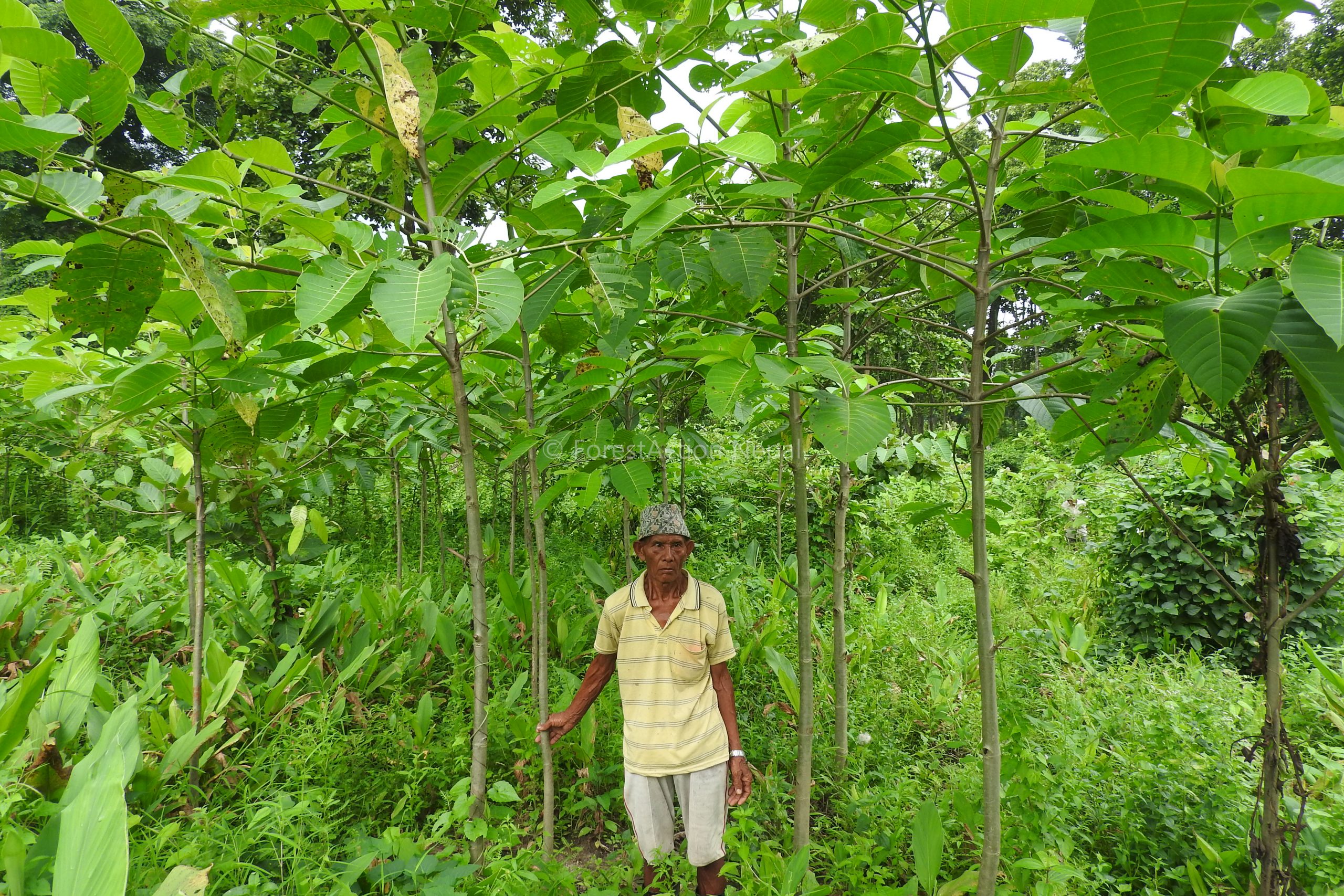
Besar Cultivation and Sal regeneration along with Besar
Turmeric cultivation began in the first week of April 2021, after several preparatory works (from field preparation to paper work) at various levels. Before cultivating the turmeric seed, the users slashed and burned Mikania on their allocation. They also plowed the ground and prepared the cultivation site. The forest soil was rich in nutrients and fertile, necessitating no additional fertilizer.
Some users weeded the turmeric field once or twice, while others did it on a regular basis. They cleaned up the invasive species present in and around turmeric and also protected natural regeneration.
For observers who were unaware of the background of the whole story, turmeric cultivation inside a forest was an oddly placed practice. We had to explain it to several people.
The results
Comparison (before after)
Even while we were routinely monitoring the progress in the pilot area, it wasn’t until July of 2022 that we could thoroughly assess the state of natural regeneration. For the assessment, Mr. Chiran Paudel and a few farmers were also present. Standing next to a Kadam (Neolamarkia cadamba) sapling, Mr. Poudel, Chairman of Pathibhara Kalika CF, was informing the visitors about the site. The expansion of Kadam exceeded our expectations. Using a bamboo stick, Mr. Chiran Paudel began gauging the sapling’s height. In just one year, the specific seedling of Kadam, which was organically regenerated, had grown to an astounding height of 4.5 meters. Majority of Kadam saplings reached above two meters in height within a year.
Comparison (before after)
Mr. Gudanath Koirala a beneficiary of the agroforestry site and Paudel began to count numbers of seedlings and sapling present in the site. They counted seedlings taller than half meter. The figure was staggering!
With the result of the count in hand, Mr Koirala said, “There are so many Kadam Lathra (saplings), I never thought Kadam seedlings would grow at this rate”.
There were over 680 naturally regenerated saplings of 14 different tree species, of which 470 were of Kadam and the remaining 210 were Jamuna, Kaulo, Kalikath, Malato, Rakbrikhsha, and others.
The land has been available to the users for two to three years. Continued weeding and site cleanup are being done. Only 50% of the users harvested their turmeric this year. After the first year of cultivation, Mrs. Harimaya Tamang collected all of her product. She sold half of her products within her neighborhood. She harvested turmeric equivalent to Rs 25000. She is delighted with the outcome and intends to continue for another year. The other seven CFUGs in Jalthal are currently implementing this intervention. Government officials and other stakeholders are thrilled with the intervention’s effects as well.
A farmer practicing agroforestry stands with Kadam saplings
At Last
The piloting of invasive species management through agroforestry in Pathibhara Kalika CF has demonstrated a pragmatic model of forest restoration by engaging forest-dependent poor people. In this approach, people benefit during the transition period of forest restoration through agroforestry and, in the long run, through enhanced ecosystem services of the restored forest. The approach of suppressing invasive Mikania by fostering natural regeneration of native trees is also ecologically sound, as it capitalizes tremendous natural regeneration potential of our forests. The resounding success of natural regeneration calls into question our traditional strategy for restoring forests through plantations, which includes even exotic species.
There is a dire need to maintain the piloting’s early positive results until the forest landscape is restored. Marketing and branding of turmeric and other produce would not only provide cash return to the farmers but also gain wider support for forest restoration. Provided we produce a good-quality organic product, the public might purchase the product to contribute towards forest restoration.
This very place-based, ecologically sound, socially acceptable, and economically feasible approach to agroforestry can be scaled up as an effective way of restoring forests in other parts of the country too. In order to be effective, this approach should be acknowledged by forest management programs, which should embrace forest restoration as one of their objectives. Currently, forest management is narrowly focused and centered on timber management. The Forest Act of 2076 should be implemented legitimately, especially the provision that at least 25% of funds be allocated to forest management and conservation. This model would also benefit greatly from the effective application of agroforestry.
Last but not least, putting forest restoration at the forefront of forest management would unquestionably help with meaningful forest restoration and advance the UN’s decade on forest restoration.
Bhattarai and Sharma work in Jalthal Biodiversity project in Jhapa!
On the occasion of Women’s Day 2023, with a theme of “DigitALL: Innovation and technology for gender equality”, a move towards equality in a digital world, ForestAction Nepal celebrates and honors the strength, resilience, contribution, and achievement of women to society, the economy, and culture. ForestAction recognizes the trailblazing women who fought for equality and equity and paved the way for future generations to create a gender-equal world.
Celebrating this day of power, innovation, and technology, we had very interesting and informative presentations by Mr. Rahul Karki, Executive Coordinator, on the amended GEDSI policy and expressed his gratitude to ForestAction family.
Similarly, Dr. Upama Koju highlights the IWD and its theme for the year 2023 with brief descriptions of Women’s contributions to the digital world throughout history, Challenges women to continue to face in the tech industry today, Digital Technology and Global Women’s Empowerment and Creating a Safer, More Inclusive, and Equitable Digital World.
Ms Aarati Khatri shares her journey of capturing the diversity and authenticity of nature and women and connecting nature and communities through digital photography.
In solidarity with the women’s role in the organization, two female staff from the support service department were felicitated in the program.
Also, the session concluded with strong remarks from Dr. Naya Sharma Paudel who observed positive changes in the organizations. and the research/programs these days and is happy to have become more inclusive and gender friendly. “Diversity is enriched in ForestAction” he shared. Finally, Ms. Kanchan Lama shared how women face countless challenges, yet they continue to inspire us with their courage and determination.
Forest Action Nepal’s “Economic Empowerment of Women through Forest Solutions”- a project implemented by ForestAction along with HIMAWANTI, AFFON and FENFIT and funded by IDRC Canada hosted an educational/learning exposure visit for women leaders from Madhesh and Lumbini Province on 24th January, 2023. The World Bank team including- Ms. Meerim Shakirova- Team Leader- “Forestry for Prosperity” Project, Deputy Mayors, community forest women leaders, representatives from Women Organizing for Change in Agriculture and Natural Resource Management (WOCAN); Dedicated Grant Mechanism for Indigenous Peoples and Local Communities in Nepal (DGM)/Rural Reconstruction Nepal, Focal Persons- Forestry for prosperity from Province, journalists participated in one-day visit to the research sites. The visit was conducted to demonstrate the possibilities of women leadership and empowerment through low carbon enterprise different activities in forestry.
Before departing to the field, the team were briefed on the project, it’s approach, intervention and outcomes. The first half of the visit was concentrated on discussing women empowerment and barriers for women leadership in Amarjyoti CFUG- Devchuli Municipality. The women leaders from the CF executives and the women entrepreneur groups shared their experiences and learning on how women, especially the dalits and their issues got institutionalized and how they benefit from the project and community forestry interventions. Focusing on the cases from Duna tapari leaf plates and bowl enterprise and ginger-turmeric farming, the women shared their stories of struggle and success. The concerns and discussion on the sustainable harvesting, engaging dalit women in duna tapari enterprises and competing with the non-local products especially cheap plastic products for securing markets were major concerns which were addressed strategically by the women entrepreneurs. The team of women leaders also visited the community forest and ginger -turmeric production sites, duna tapari production process and interacted on the forest management modalities and benefits that women could extract from the forest.
The second visit was made to Namuna Women CFUG in Devchuli Municipality. A brief interaction with CFUG members and women entrepreneurs took place inside the community forest. The major objective of visiting the forest was to explore how women priorities are being reflected in the forest development and management. The women in CFUG had used barren land through non-timber forest products plantations e.g. lemon grass, tejpat (bayleaves trees), fruits, amriso (broom grass) plantation of trees like rakta chadan (sandal trees) which are useful to them on daily basis. Thakal (straw bags and hats producers) handicraft group shared the ups and downs of their enterprise establishment stories. They shared how rural women groups can be mis-guided and manipulated by the elite women across the value chain and by different actors. The Thakal entrepreneurs highlighted the exposure and trainings they have received from the project. The WOCAN Associate also visited the trade fair in Daldale and observed how the women entrepreneurs were expanding their market. Finally, the visit team appreciated how both women and men in community forestry were working together for women empowerment.
Alliance of Agriculture for Food/ForestAction Nepal, in collaboration with Centre for Crop Development and Agrobiodiversity Conservation (CCDABC), Uddhyog Badijya Sangh Chitwan and Jilla Prangarik Sangh Chitwan co-organized a seminar entitled “खाना तथा वातावरणीय संकट: विद्यमान अवस्था र समाधानका उपायहरु” on 17 January 2023. The main objective of this event was to discuss and bring the issues of food, public and environmental health, biodiversity into public debate. This event was organized as a side event during Chitwan Mahostav, in the context of National Agrobiodiversity Year 2079. The list of panel members included Dr. Ram Krishna Shrestha (CCDABC), Dr. Aruna Upreti (Public health expert), Prof. Dr. Arjun Kumar Shrestha (Agriculture and Forestry University), and Dr. Krishna Prasad Paudel (AAF/ForestAction). All of the panelist focused on the urgent need of addressing the issues of growing food and environmental crisis.
A group of artists also performed Geeti Natak (An infotainment) portraying the problems and challenges being faced by the farmers.
Ms. Kanchan Lama, the Principal Investigator of “Economic Empowerment of Women through Forest Solutions” (WEE-FS) project (IDRC funded) at ForestAction Nepal participated as a panelist in the event on “Driving Gender Equality through Climate Action” (14th Nov2022). The event was a part of the Canadian Pavilion events held at the COP 27 in the city of Sharm El Sheikh in Egypt. The panel, consisting of five speakers from the globe, highlighted the importance of addressing the gaps in women’s unconditional access to natural resources which are universally maintained by women and are the sources of livelihood for the indigenous communities, primarily women. Ms. Lama shared about the lessons learned through implementation of the low carbon, forest-based enterprise development interventions in a complicated socio-economic and environmental context of a poverty-stricken country like Nepal. She stressed on the issue of systematic deprivation of women from their rights to use the natural resources for productive purposes. She called for special attention to establish women as right holders of land and other productive assets for managing effective climate resilient action on the ground. As a takeaway message from the panel, she appealed to the global leaders of climate action to establish a “women climate adaptation fund” to facilitate an exclusively committed global action to support women in their climate resilient actions.
Community Forestry in Nepal has already created a history of its four decades. Over these years, the trees have grown, and the society has changed and so has the societal roles of individuals evolved. Such changes demand a shift in women’s role from caretaker to a decision maker. In such, mere representation is not enough, their leadership and voices matters the most.
In this backdrop, Forest Action Nepal (FAN) under Enhancing Livelihoods from Improved Forest Management in Nepal (EnLiFT) – an action research project financially supported by the Government of Australia through the Australian Centre for International Agricultural Research (ACIAR) organized orientation programs on “Women Leadership Development on Forest Management” in Chautara-13 and Chautara-8. They were mainly aimed at sensitizing users and leaders of the Community Forest Users Group on women’s role and leadership in regards to decision making for sustainable forest management. The one day interactive event in each ward focused on the importance of individual users and impact of exclusion on community forest management, conceptual clarity on gender, socialization of gender, leadership qualities and barriers of women leadership.
A joint meeting between ForestAction Nepal and Southasia Institute of Advanced Studies (SIAS) was organized on 11th September, 2022 on “Women’s Economic Empowerment in a Low-Carbon COVID-19 Recovery” funded by IDRC Canada. ForestAction Nepal is implementing- Women’s Economic Empowerment through Forest Solutions- WEE-FS in Sindhupalchok and Nawalparasi district and SIAS is implementing Co-production of Shock Resilient Business Ecosystems for Women Engaged Enterprises (CREW) in Ramechhap, Dolakha and Arghakhanchi districts. The meeting was organized to discuss the conceptual framing of women economic empowerment and share the projects achievements, issues and challenges in the action research.
The meeting was organized in two sessions, the first session was intended for sharing and discussion on the conceptual framework and project updates and second one on the opportunities, issues and challenges faced in project implementation. Dr. Bhim Adhikari shared the IDRC’s research priorities and the developmental challenges. He raised the issue of challenges of action research on influencing policy making at national and global level and expected two projects in the same country will bring synergy stimulating policy process.
Dr. Mani Ram Banjade, Principal Investigator- CREW project shared conceptual details of the women economic empowerment (WEE) framework. Five domains of WEE (economic, socio-cultural, environmental, technological and policy) and interlinkages between them important to build shock resilient women led enterprises. He further updated the project achievements and glimpses of base line survey analysis.
Ms. Kanchan Lama and Dr. Srijana Baral, discussed the conceptual framework adopted by WEE-FS project. Ms. Lama shared that in the WEE framework women’s societal relationship with her family is equally important as agency development and reducing the social biases and structural barriers in the empowerment process. Dr. Baral shared the project approaches and the updates made so far in the project outcome areas.
ForestAction Nepal’s consortium partner HIMAWANTI Nepal, AFFON and FenFIT presented their perspectives in issues and challenges faced in the project implementation. Similarly, SIAS partners (NIMS College, ARIA Solutions and Himalayan Bio Trade Limited -HBTL) reflected the same.
The discussions between the sessions were moderated by Dr. Naya Sharma Poudel and Dr. Dil Bahadur Khatri. The majority of the discussions focused on joint actions for WEE, cross learnings and policy gaps on developing low carbon economies. More such events are expected to be useful to both the projects and IDRC as a whole.
In his concluding remarks, Dr. Adhikari shared that the projects are progressing well in line with IDRC’s strategic thinking and ideas. He appreciated the partnership approaches. He also suggested on developing scalable models for women empowerment through low carbon initiatives. He emphasized on knowledge generation and dissemination, as IDRC uses the academic outputs to map project’s impacts.
Alliance of Agriculture for Food (AAF)/ForestAction Nepal, in collaboration with ActionAid Nepal, organized a national level policy round table discussion on Agroecology in Nepal, in presence of policy makers and experts, on 30 November 2022 in Kathmandu.
During the event, issues like policy gaps to promote agroecology, food sovereignty and food security, natural resource management, land and land use, environmental degradation and climate change, nutrient, disease and pest management, agro-biodiversity, peasants’ right, agriculture production and trade, and agricultural research, extension, and education were discussed.
Key highlights of discussion are as follow:
– Need for an integrated agriculture policy that can balance current agriculture practices with agroecological principles.
– Farmers are the knowledge hub of agroecology, as they are long-term practitioners of innovative, environment and smallholder farmer’s friendly practices.
– Areas and scope of sustainable agriculture are not explored enough.
– Documentation, exploration, revision, and integration of agroecological knowledge, with aggressive research and application from the research community, academic institutions, and the corporate sector is lacking.
– Collaboration between education, research, and extension is necessary.
– Marketing of agricultural products need to be enhanced.
– The dignity of farmers must be protected. Research needs to be done in response to issues with farmer’s fields.
“The future generation do not have to worry about how to find bamboo for basket weaving anymore. We are proud of having made a sustainable resource base for the future generation.”
These were the words of Manmaya Bhujel to the ForestAction Nepal team, when we interviewed them recently.
The 29 households of the Bhujel community (a caste group in Nepal) appeared to be happy, encouraged and confident in dreaming about the long-term impacts of their bamboo plantation, on the occasion of “National Plantation Day of Nepal” 2022, when we met them on their homestead fallow land. This is a story about how their confidence and their dreams developed.
The story began more than a year ago, in November 2021, when a small team from ForestAction Nepal visited the village at the invitation of the Deurali Community Forestry Users Group (CFUG), Dhodeni and Ward Chairperson. They visited as part of the work for the IDRC-funded GLOW project entitled “Economic empowerment of women through forest solutions”.
The Bhujels: a migrant community
The Bhujels here have lived inside the community forest for decades. However, they have not yet obtained CFUG membership as they cannot afford to pay the required membership subscription fees to the CFUG. They have no idea if they can make a request to the CFUG for a special subsidy. Moreover, they do not inherit land to be eligible for CFUG membership.
Long ago, the Bhujels migrated from the neighbouring district Tanahu and settled here. One political leader encouraged them to migrate with promises of land and resources. However, later the leader proved selfish and wrong. Once he fulfilled his vested political interest, he did not even look back at them. The migrated Bhujel community could not return but continued to live in the forest as residents, although without obtaining a clear knowledge about how to access their civic identity until now.
Dependent on forest resources – but without clear rights
The community is heavily dependent on the forest. Some timber traders make use of the elderly men and young people as cheap labour for timber harvesting and transportation. The women usually harvest and sell minor forest products, such as, Sal (Shorea robusta) leaves, mushrooms, bamboo shoots, edible seasonal ferns, other wild vegetables and herbs. Besides consuming, they also sell those items in the market, which is located two hours’ walking distance away. During winter, they can reach the market on the three-wheeled “tempo”( a manual tricycle).
Due to their living below the poverty line, and lack of any alternate employment opportunity, the Bhujel community members do waged labour in the neighborhood fields. The men earn NRs. 600/day (USD 6.50) and women earn NRs. 500/day (USD 4.00) for the same work. The prevailing societal assumption is that women cannot do hard work equal to that of the men.
The CFUG occasionally employs them for managing the forest by clearing out the dry leaves, trimming and thinning trees. For three months in a year, they weave bamboo basket (doko-daalo, made from bamboo) and tray (nanglo, Himalayan bamboo).
Despite their reliance on bamboo–based products for livelihood, they do not have procedural access to the bamboo trees. Consequently, they buy bamboo at a costly rate of NRs250/ (USD 2.00) per piece. In addition, they must pay NRs 2000/- (more than USD 15.00) per trip by tractors for transportation of bamboo stems from the distantly-located site of the community-managed forest to the Bhujels’ village.
Research points to the fact that Indigenous Peoples such as this community are often marginalised by development processes which are intended to provide sustainable livelihood and wellbeing solutions. With an objective to reform such practices, the Economic Empowerment of Women through Forest Solutions project responded seriously to the voice raised by this community on their livelihood issues.
Women groups planting the bamboo. Photo by Usha Thakuri
Action research sparks new, collaborative process
At the beginning, the project team was confused by widely-spread rumors, such as, “the Bhujel women are alcoholic, they would ruin the project by drinking day and night, while their men keep working hard to produce bamboo baskets for livelihood. The youngsters of the village are timber smugglers, they would not allow outsiders to enter for project activities,” and so on.
The project team reflected on these negative opinions with empathy and decided to explore whether they were correct, and how the Bhujels are experiencing deprivation.
On one hand, they saw a ray of light – a positive signal – when the Deurali CFUG Chairperson and the Ward Chairperson suggested that the project implement actions with the Bhujels. They found that it is not the Bhujels themselves, rather certain external social forces that play the game of creating rumours. Such external actors were concerned about their potential losses, with the idea that “if the Bhujels become aware about their rights, they might lose the cheap labour force to continue with illegal activities of forest exploitation.”
A preliminary baseline assessment helped the project team to understand the community better as a “skilled group” in possession of indigenous bamboo weaving skills, but fully deprived of education, health and livelihood related resources and services. Although the Gaindakot Rotary Club supported them to construct small homes with toilets and drinking water supply, the community remains far from being involved in local development decision-making. “Someone” decides everything on their behalf, they just follow others’ prescriptions.
Being under domination of “others”, they remain passive by losing their own creativity and confidence. They sound to feel marginalised, frustrated and depressed. Some even lost the hope of a better life. As a woman remarked, “Can you bring us some magical solution to our hard lifestyle? How long will we go on with bamboo weaving from morning till night?”
Another remarked, “We are held capture by micro finance loans. How can we get free from our loans?” Some others voiced, “How can we have easy access to bamboo bushes near to our village so that we can manage bamboo for basket and tray weaving without paying the high price to buy bamboo stems?”
The project team came up with a creative idea for being much closer to the community by relationship-building with them. By taking women’s reproductive health issues as a central issue, the project team organised a “lifestyle interaction programme”. This comprised a one-day interaction, supported by philanthropists, in which a majority of the community people participated. A general primary-level health check-up, interaction on women’s health issues, problems related to men and youth were identified and provided by a naturopathy doctor.
She checked women’s health and provided some basic treatment for a few victims of uterus prolapses. We also provided dental health orientation to the children who happily used toothbrushes supplied by us after they had taken their snacks. The young men came to get checked up of their basic health condition. It was an unanticipated finding that more male, both elderly and young, had high blood pressure and sugar problems. But the women had no such problem; the women’s problems related to a few of them having uterus prolapses.
Following this event, a household needs assessment survey was conducted for a bamboo plantation near to their homestead to establish a sustainable resource base for the bamboo weavers. A total of 34 households demanded and 29 of them planted bamboo rhizomes. The executives from the local government and the community forestry management group encouraged them by joining the bamboo plantation ceremony.
The bamboo rhizomes have a 95% survival rate. A total of 17 women also participated in the entrepreneurship development and Gender Equality and Social Inclusion (GESI) training held in the Deurali CFUG premises. As their favoured major enterprise, the Bhujel women selected improving their bamboo products. Later, they also began demanding training on bio-degradable cup and plates (duna tapari) production.
Re-setting development dynamics and hope for the future
Aspirations and hopes are back among the women. Today, when we interact with the Bhujels, the women come forward to proudly share about their learning from training and other events. Their confidence level is high, with smiles in their faces. They are planning to expand and strengthen their bamboo stock for enriching access to bamboo for weaving baskets and trays.
The project adopted a feminist approach to build self-awareness among the women. This included:
– empathising and encouraging them to take the lead for year-round enterprise development actions,
– enabling them to get organised for negotiating with the local government authorities, forest authorities, CFUG committee and the market sector to create sustainable access to forest resources and marketing processes.
The project is at a crossroads now to focus its investment more on strengthening the Bhujel community women’s leadership for reflecting on their civic status, status on land rights, right to resources, their potential roles on sustainable forest management and mitigating climate disaster.
The project’s action learning process has begun with such mixed initiatives as: analysis of the gender specific needs; interests of skilled, indigenous women; women’s attitude and knowledge about mitigating carbon emissions; and adaptation initiatives for climate resilience through nurturing the forest resources – by managing a sustainable forest resource base for livelihood and environmental health.
Dream: Can this small beginning lead to an economically viable forest and environmental health?
Mr. Bhandari is Field Coordinator, Ms. Baral is Project Manager and Ms. Lama is Principal Researcher – Economic Empowerment of Women through Forest Solution at ForestAction Nepal.