Interactive meeting with the provincial assembly members of Bagmati province

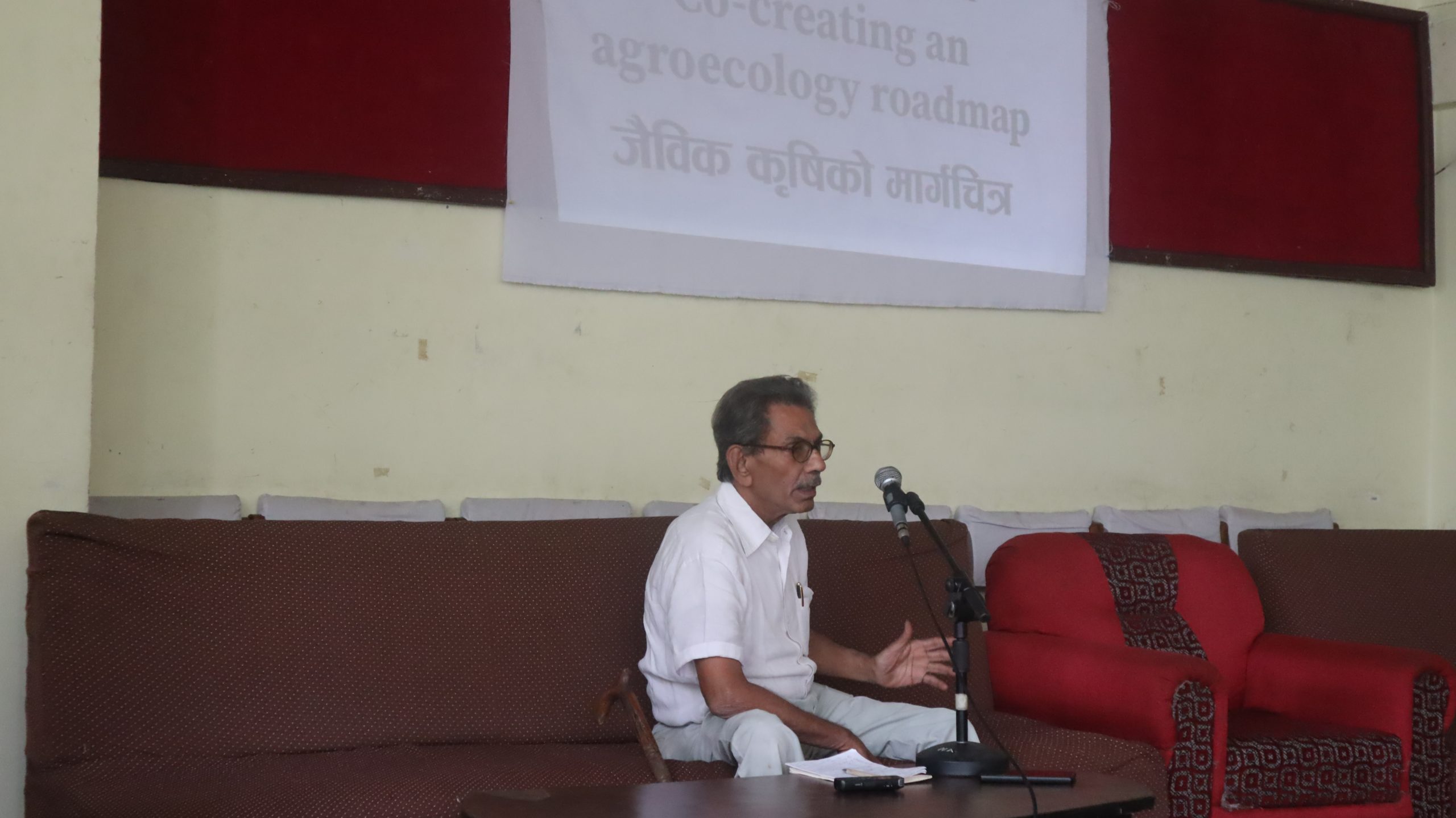
On 21st December 2023, ForestAction Nepal, the secretariat of the Alliance of Agriculture for Food, organized an interaction program entitled ‘Preamble discussion on the Agricultural Development Bill for Bagmati Province’ at Sap-Falcha, Kathmandu. The objective of the event was to discuss the draft document of Agriculture Bill prepared by Bagmati Province.

The program was conducted in the presence of the Honorable Speaker of Bagmati Province Assembly, Mr. Bhuvan Kumar Pathak, along with honorable members of the Committee on Education, Health and Agriculture of Bagmati Province, including Shreeram Lamichhane, Basanta Kumar Manandhar, Urmila Kumari Lama, Raghunath Maharjan, Samita Khadgi, Meena Parajuli, Dhaneshwori Prajapati, Bindu Shrestha, and Sakuntala Shrestha. Additionally, several stakeholders attended, including agriculture experts, farmers, media personnel, students, representatives of civil society organizations (CSOs), and members of AAF.”

During the event, Mr. Uddhav Adhikari, the coordinator of AAF, presented a thorough review of the document, accompanied by valuable feedback from AAF. After the presentation, the floor was opened for questions and views from the participants. Following this, the honorable MPs shared their perspectives, which was then followed by a speech from the honorable speaker. The event concluded with closing remarks from the AAF coordinator.

A summary of the major viewpoints expressed during the discussion;

–  Most of the policy documents emphasize creating jobs through increased production, productivity, and growth. It also seems that the current draft is more focused on promoting agricultural businesses rather than overall agricultural development. Therefore, it would be more appropriate to refer to it as the “Agricultural Business Promotion Act” rather than the “Agricultural Development Bill.”

– Need of act that prevents the fragmentation of agricultural land.

– The provincial government should ensure the provision of a minimum price guarantee for agricultural produce and agricultural products.

– The primary focus should be on overcoming obstacles during the implementation phase of the bill, rather than solely focusing on the process of creating the bill.

– There is a need to develop a model for promoting ecological agriculture. However, considering the current scenario of agricultural education, which is even worse, it is crucial to formulate a policy aimed at improving it.

– There is a need for structural reformation to enhance the effectiveness of agriculture extension process.

– It is crucial to acknowledge and address the crises caused by climate change. Agricultural policies that disregard the climate change crisis on agriculture will not be effective in addressing the challenges that agriculture faces.

– The agricultural insurance system should be simplified and subsidies should be effectively managed.

– It is important to actively involve agricultural students in agricultural entrepreneurship activities.

The honorable provincial assembly members have acknowledged that the policy-making process in Nepal lacks sufficient discussions with stakeholders. However, they view the ongoing discussion on the draft bill as a positive initiative. They also recognize the need for continuous improvement in the process itself, while noting that the discussions surrounding the bill are progressing in the right direction.

Workshop on Policy Provisions in Forest-based Enterprise: Multi-stakeholder consultation

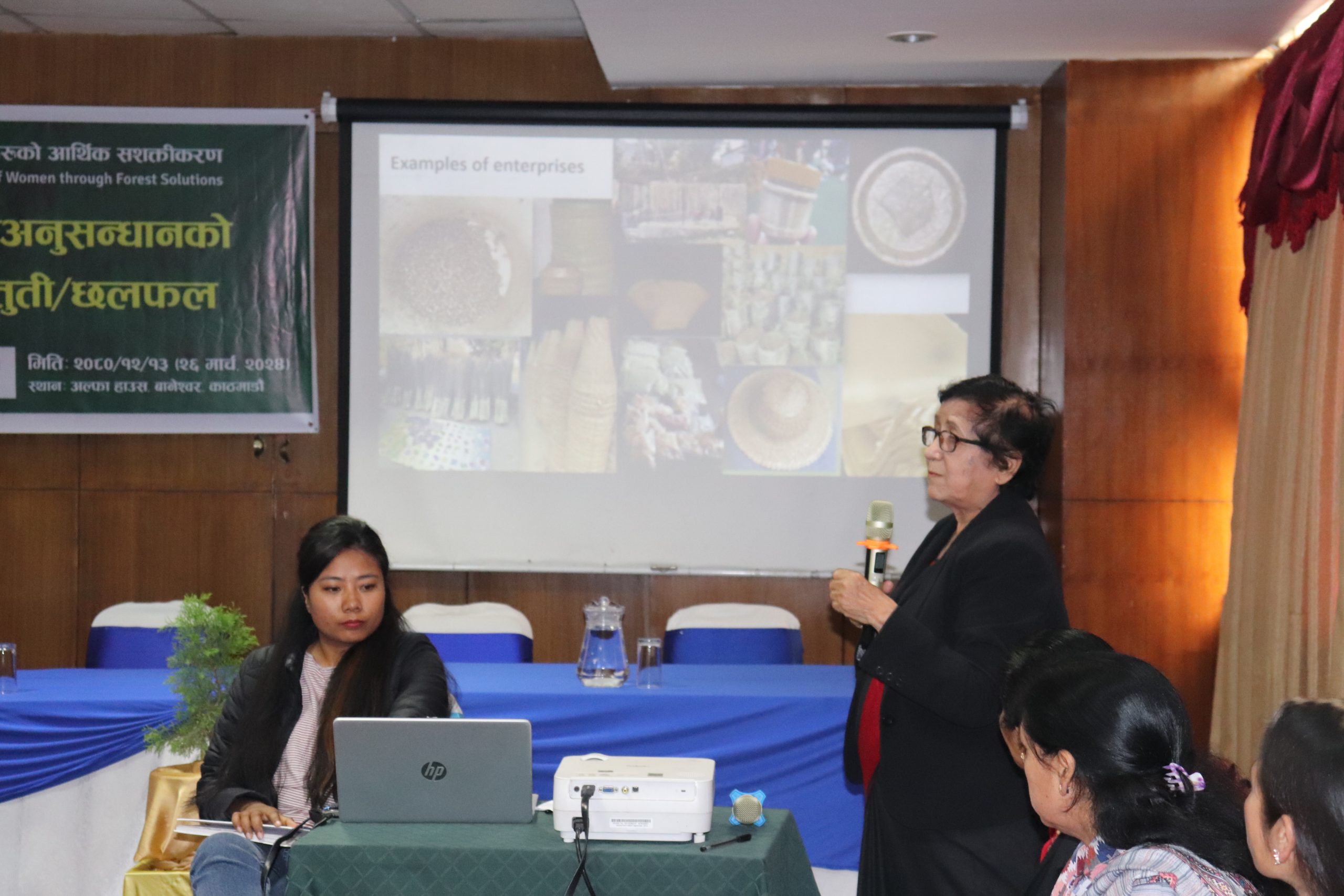
With an aim to discuss on the existing laws, provisions, challenges and opportunities on establishing and operating forest-based enterprise, a multi-stakeholder policy dialogue on Forest-based Enterprise, was jointly organized by ForestAction (EnLiFT2), FenFIT Kathmandu/Bagmati, and FECOFUN Bagmati, in Kathmandu. With Hon. Minister Masina Khadka as the chief guest, the program was participated by diverse actors including representatives from the government, NGOs, INGOs, CSOs among others.

Along with a brief presentation on policy regime and possibilities and challenges around forest-based enterprise, panelists highlighted the challenges faced by diverse actors across the enterprise value chain. In addition, the role of the private sector in forest management was emphasized among other issues during the dialogue.

Agroecological perspectives in the 16th periodic planning

On December 17th, 2023, ForestAction Nepal, the secretariat of the Alliance of Agriculture for Food (AAF), organized a discussion event titled “Agroecological Perspectives in the 16th Periodic Planning” at SAP-Falcha Kathmandu. The main objective of this event was to deliberate on the necessity of incorporating agroecology into the 16th periodic plan, considering the recent publication of its concept note by the National Planning Commission.

The program was conducted in the presence of distinguished guests, including Honorable Binita Kathayat, a member of the Agriculture, Cooperative, and Natural Resources Committee (under the House of Representatives); Honorable Dr. Jaykant Raut, a member of the National Planning Commission; Dr. Hari Bahadur KC, Director General of the Department of Agriculture; Dr. Ram Krishna Shrestha, Joint Secretary of the Ministry of Agriculture and Livestock Development; Mahesh Jaisi, Head of the Agriculture Extension Service Department, IAAS and various stakeholders comprising agriculture experts, farmers, media personnel, students, representatives of civil society organizations (CSOs), and members of AAF.

The event followed a specific modality, beginning with a presentation by the AAF. Mr. Uddhav Adhikari, the coordinator of AAF, presented key facts and figures regarding Nepalese agriculture. This included an assessment of the shortcomings of the previous periodic plan and emphasized the importance of incorporating agroecology into the 16th periodic plan.

Following the presentation, the floor was opened for discussion. A summary of the main viewpoints expressed by the guests and participants is highlighted below;

– agriculture should be regarded as a means of livelihood.

– necessity of allocating agricultural budgets towards the development of environment friendly tools and technologies.

– need of improving implementation strategies of plans.

– due to COVID-19 and other adverse circumstances, many of the goals outlined in the previous plans were not accomplished.

– given the current scenario, an immediate transformation towards agroecological farming may not be possible. Instead, a gradual reduction of chemical use and an increase in organic matter as part of a strategy to transition towards organic farming is required.

– agroecology should be viewed as a scientific approach rather than just a form of subsistence farming.

– current plans and policies have failed to attract the interest of youth in agriculture.

– there is need to establish a co-existence between agricultural extension, research, and development.

– necessity of structural reformation for sustainable transformation of the food system.

– need to develop critical thinking in government programs and processes.

– the need for parliamentarians to have a more active and influential role in shaping agricultural policies and plans.

Advocacy and Campaign

This year, the 43rd World Food Day was celebrated worldwide with the slogan “Water is life, Water is food”. ForestAction Nepal, the secretariat of the Alliance of Agriculture for Food, in collaboration with Agriculture and Forestry University (AFU), the Department of Agriculture, Jilla Prangrarik Sangh, Chitwan, Better Chitwan, Chitwan Kacheheri, and student organizations from AFU and Rampur Agriculture Campus, organized a series of events on October 6, 7, and 8, 2023, to mark this event in Chitwan, Nepal.

The celebration kicked off with a press release to highlight the significance of the event and inform the stakeholders about it. On the following day, a rally was organized, where the participants marched from Pulchwok, Narayanghat, to Chaubiskoti. The rally was attended by farmers, agricultural students, agricultural activists, journalists, and healthcare personnel. The aim of this public event was to raise awareness among the public regarding the problems and challenges faced by farmers, the importance of sustainable farming practices, and the need for a resilient food system. On the same day, a drama entitled Sattapatta was showcased in the auditorium hall of the university in the presence of more than 200 audiences. Sattapatta is the story about the farming, and it gives the audience a message about the impact of the modern farming system that promotes the use of chemical fertilizers and pesticides on our indigenous and traditional knowledge, technologies, soil, seed, and including human health.

On the third day, a seminar titled “Debate on the Issues of Food and Agriculture” was organized, consisting of four sessions, including the opening and thematic sessions. Policymakers, stakeholders, thematic experts, students, journalists, and farmers were all present at the seminar. Following the seminar, “raithane khadhya sanjh” (a food festival) was organized to celebrate the diversity and richness of our local cuisine, featuring a variety of delicious dishes from the Tharu community.

Participatory Theatre on Creating Awareness about Agriculture for Food “SattaPatta”

ForestAction Nepal, the secretariat of Alliance of Agriculture for Food (AAF) collaborated with the Shilpee Theatre Group (STG) and produced a theatre play namely “Sattapatta” with an aim of creating public awareness on the importance of natural farming and its potential benefits for soil and human health.

The main focus areas of the theatre were;

– The impact of industrial food (chemical-based junk), on soil and human health and planetary life and lives of farming communities

– Soil degradation due to malpractices in farming.

– Toxicity in food and alarming non-communicative disease such as cancer and diabetics

– Initiate a discussion about agroecology adaptation and its challenges in the current context of commercial food industry and industrial farming backed by GMO technology

The Forum (Kachahari) Theatre SattaPatta was performed in different 10 villages/cities from 1st of October to 13th of October 2023 respectively. The journey of SattaPatta began with a first premium show performance on 1st of October in the open space of Shilpee Theatre premises. In other districts the play was hosted by the local organisation associated with AAF and STG in different places.

After every performance, the team interacted with the participating audiences and collected their views. The play was highly appreciated by participants all over the places. The audience realized the harm of chemical fertilizer and pesticide to human health and environment. They agreed the way forward for healthy life and sustainable life is only organic food and farming.

Raising the seeds of empowerment with women led Agro-Forest Based Permanent Nursery

Women entrepreneurs of Barhabise municipality ward no 8 recently constructed a permanent nursery with support from the project “Economic Empowerment of Women through Forest Solutions”, an IDRC funded action research project. The project handed over the nursery to the women entrepreneur group in presence of municipality representatives including deputy mayor, municipal member and chief of sub-division forest officer. The handover program was organized to empower the local government authorities along with the women entrepreneurs in collaborative roles for sustaining the lessons learned from the project for economically, socially and politically advancing rural women’s holistic development via increasing accountability of the concerned government authorities.

These women took the lead in constructing the nursery infrastructure, which includes a nursery tunnel (9 m x 11 m) with a capacity for 10 beds, a shed house, a storage house, and iron wire fencing. All the construction funds were mobilized by the entrepreneurial group through their group account. Furthermore, they took leadership in dealing with contractors and monitoring the construction process.

The newly constructed permanent nursery structure has the capacity to raise more than 50,000 seedlings annually. At present, they possess over 5,000 seedlings ranging in age from 1 to 10 months. These include Coffee (2,500), Lemon (2,000), Orange (80-100), Dhupi (400-500), Ipil Ipil (200), and Cardamom (500-700). Entrepreneur women have organized their schedules in a rotational manner throughout the year to operate the seedling production business. Now, they are in the process of initiating the legal registration to ensure the sustainability of the business.

The seedlings are locally consumed. Recently the ward office-8, Barhabise municipality purchased fodder seedlings equivalent to NPR 29,000 which were distributed to farmer households to promote the agroforestry system.  The project along with entrepreneur women has been facilitating the market opportunities at the regional and national level.

During the nursery handover ceremony, the deputy mayor ensured the allocation of the government regular programme and budget in the upcoming process to scale up the women-led agriculture-forest-based nursery. The women expressed their gratitude to the project as well as the local government, saying, “We have experienced many projects that come and go. We thought the same about this project. But we were wrong”. This project has truly brought about constructive change within us. Additionally, another entrepreneurial woman added, “Now we do not have to rely entirely on our husband’s income, which has subtly changed society’s perception of us”. The women are proud of being able to construct and develop the nursery project in a successful, permanent way. They not only owned the nursery in their names but also won the status of skilled nursery experts.

Policy dialogue on the opportunities and challenges of forest enterprise

Attaining prosperity from forestry is one of the pressing policy priorities in the forestry sector of Nepal. With the new local government system in place, there are ample opportunities to support community forests and local farmers in promoting forest-based enterprises. However, there are still gaps pertinent to the financial, technical, and policy aspects of FBEs in Nepal.

With an aim to develop a common understanding on the issue and identify ways forward to promote FBEs, ForestAction Nepal in support of the Australian Aid, conducted a local government-level policy dialogue on the opportunities and challenges of forest enterprises in Chautara, Sindhupalchok, on October 1, 2023. Diverse stakeholders from local government (wards, municipalities), the Department of Cottage and Small Industries (Gharelu), technicians, researchers, NGO (Forest Action Nepal), furniture entrepreneurs, Lapsi entrepreneurs, media and outreach, etc. were actively engaged to discuss the opportunities, challenges, and ways out for forest enterprise development.

Some of the key takeaway messages from the policy dialogue are as follows:

● Unhealthy international competition should be checked and addressed by our existing trade related policies to create a safe and competitive business environment.

● A single-enterprise registration agency is crucial to avoid tedious process of registration.

● An effective monitoring system and the formation of a separate task team would be crucial to check the operation and overall status of the enterprises registered under them.

● Policy, legal reform for the better governance of the enterprises sector

● A system of laws, rules, processes, and stakeholders, together with their respective roles and norm should be brought together by the business institutional framework to further shape the socioeconomic activities of the entrepreneur.

● Capacity development and skill training to identify opportunities, set goals, and develop strategies to ensure that forest resources are used effectively and efficiently.

● Business Promotion Services to gain the national and international recognition

● Prioritizing on ergonomic aspects by implementing the insurance and workers safety gears while working


National Policy Dialogue on Issues and Strategies for Women-Led Forest Enterprises

After completing the 2 years of its action research journey, the project Economic Empowerment of Women through Forest Solutions has successfully carved out more than 240 rural marginalised women entrepreneurs and increased their economic, social, and technological empowerment through a series of trainings, visits, and capacity-building programs. During its implementation, they have come across policy, technological, and many other arduous legal barriers. So in order to represent the voices and stories of transformation of these entrepreneurs from the field to the table of policymakers, a one-day reflective national workshop was organized in Kathmandu. It aimed to enhance business and entrepreneurial knowledge through interaction and sharing their experiences, establish linkages between women-led production processes and the market through direct interactions with veteran entrepreneurs, and create a supportive and inclusive environment for the entrepreneurs in terms of policy and programme implementation, aiming for sustainable markets, and addressing the voice from the grassroots. As the diverse stakeholders are a crucial aspect of this national workshop, there was active engagement from diverse professional backgrounds who sparkled the discussion on different themes, intricately analysed the stories and voices of the entrepreneurs, and gave critical feedback and assurance to facilitate a supportive environment in as many aspects as possible.

The panelist discussion was centered on strategies and policies for the sustainability of microenterprises focusing on women’s engagement in the enterprise, Measures for easing registration and functioning, Major problems and issues encountered, strategies for solving the complications in the value chain of minor forest products, policy and practical gaps faced by women, and potential solutions to promote women in forest-based enterprises The issues faced by women entrepreneurs till now were: limited market, lack of skills of professional intermediaries at the local level, market expansion plans, formal product registration and certification, gender and caste discrimination, sustainability and availability of resources, maintaining quality, legitimacy of product prices, etc.

The common pathways echoed by the stakeholders were

● Accounting and expanding the use of local resources according to market potential.

● Developing strategies and implementing forest resource expansion programs,

● Market management and product diversification, for example, taking initiatives to bring Nepali paper and paper products to the national and international market,

● Producing and cultivating in community forests, private forests, and private lands for the sustainability of raw materials,

● Promoting agroforestry,

● Creating an environment of collaboration and cooperation with local government, domestic and divisional forest offices, banks and financial institutions, enterprise groups, value chain actors, community forests, and other stakeholders, and propagating the latest endeavors of knowledge and skills through various means


Outcome Workshop on Strengthening Collaboration for Women Entrepreneurs’ Initiatives

More than 45 diverse concerned stakeholders passionate about advancing women’s economic empowerment came together in a workshop held in Nawalparasi. It aimed at dissemination of the findings and recommendations of the Mid-Term Review (MTR) of the project “Economic Empowerment of Women through Forest Solutions”. The workshop preceded several sessions, starting with the women entrepreneurs’ journey, a presentation on the project outcomes, and group discussions on the role of different stakeholders in supporting women entrepreneurs. Participants developed a collaborative exit action plan as an outcome.
 
So far, the project has successfully demonstrated certain exemplary women entrepreneurs promising results of forest resource-based livelihood efforts within the contexts of three CFUG. They shared about their growing leadership and decision-making roles in economic, social, and political roles by learning the technical tactics of enterprise management skills, accessing technologies and women entrepreneurs’ buildings, and securing sustainable access to minor forest resources for their product development. They expressed gratitude to concerned stakeholders for encouraging them in their journey to establish themselves as entrepreneurs since they gained a new identity as “green entrepreneurs” based on “green enterprises”
The women entrepreneurs shared their happiness and pride with the new experiences of conducting inventories of Sal and Thakal leaves, preparing operational plans based on analysis of their inventory outputs, and obtaining approval from the DFO while including them in the operational plan of the CFUGs. Thus, women’s choices of NTFPs are now equally respected with the timber-based forestry operational plans of the concerned CFUGs.
 
The workshop also highlighted the critical challenges and suggestions received from the MTR, such as the absence of secure marketing channels, the need for legal certification and branding of products, the diversification of products, and the adoption of quality control measures. The key recommendations of the MTR were also shared in the workshop, highlighting the need for continuity of reflective learning, embracing innovation, and exploring online platforms for developing high-quality products to sustain marketing. The workshop concluded with encouraging words from the Deputy Mayor of Devchuli Municipality, who informed us that the municipality has already included funds for supporting women entrepreneurs’ marketing by opening a marketing outlet (Koseli Ghar) in Devchuli.

A Walking Training: Exploring Agriculture, Ecology, Climate Change and Culture

A walking training was conducted from September 1st to 5th, 2023, with the participation of 17 agricultural graduates in Chitwan district. On the first day of the route, the journey commenced in Hugdi, Dhading district, and concluded at Upper Kaule in Chitwan district. During the visit to Kaule, a brief observation of Chepang culture, traditions, agricultural practices, and lifestyle was carried out. It was also observed that the Chepang community has embraced modernization and there appeared to be a decline in their devotion to their own cultural heritage.

The second day of the journey began in Kaule and concluded at Upardangadi. Along the way, the participants observed the impact of climate change on the local community and vegetation. Dr. Jeewan Chetri moderated a discussion on climate change during this part of the walk.

The third day’s route started in Upardangadi and ended in Syangdi. During this leg of the journey, the participants observed deforestation, wildfires in the forests, and changes in vegetation as they ascended the Mahabharat range. This experience provided insight into the challenges faced by previous generations.

On the fourth day, the journey started in Syangdi and ended in Madi. During this portion of the walk, the participants observed the agricultural practices of the Madi community, with a particular focus on the Tharu community. They visited an organic farm to evaluate the use of organic fertilizers and botanicals for successful organic farming. Additionally, they visited a farm that integrated both organic and inorganic practices. This farm showcased advanced technologies such as high-tech tunnels, drip irrigation, vermi composting, Azolla preparation, and livestock farming. The participants also had the opportunity to learn about an inspiring Ph.D. holder who returned to Nepal to practice high-tech and organic farming.

On the fifth day, some of the participants traveled to Sumeshwor Mahadev, which marks the border between Nepal and India, while others engaged with the Tharu community to discuss their agricultural practices and cultural heritage. At the conclusion of the training, a self-reflection session was arranged to assess the training’s impact on the graduates’ learning and development.

Preliminary discussion on the draft of agriculture act 2080

On July 30, 2023, ForestAction Nepal, the secretariat of the Alliance of Agriculture for Food (AAF), organized a preliminary discussion program on the need for an integrated agriculture act at SAP-Falcha, Kathmandu. The event was attended by distinguished guests, including Dr. Bedu Ram Bhusal, Honorable Minister of Agriculture and Livestock Development (MOALD), as well as the Secretary and joint secretaries from MOALD. There were also honorable members from the Agriculture, Cooperative, and Natural Resources Committee (under the House of Representatives), the National Planning Commission, the National Farmers Commission, and various other stakeholders, such as agriculture experts, farmers, media persons, activists, representatives of CSOs, and AAF members.

The event was conducted in two sessions. During the first session, two presentations were made, one by the Ministry and the other by AAF. The second session was dedicated to discussions on the topic at hand.

During the event, Dr. Rajendra Mishra, the joint secretary from MOALD, shared the first draft of the Agriculture bill that was prepared by the Ministry. In his presentation, he emphasized that the proposed act aims to promote the protection of farmers, the farming occupation, agri-business, water conservation, indigenous products/commodities, and agrobiodiversity.

Additionally, Dr. Rajendra Mishra further highlighted that the proposed act also encompasses the management of a gene bank and ensures the rights of farmers and farming communities.

At the event, Dr. Krishna Prasad Paudel, an AAF activist, presented a review of the first draft of the Agriculture bill. Dr. Paudel criticized the draft prepared by the Ministry, stating that it appeared to be more focused on the agricultural business promotion act rather than on an integrated agriculture act. He emphasized the need for all dimensions of agriculture to be taken into consideration while preparing the act. He expressed his concern that the proposed act failed to prioritize the smallholder farmers. He also stressed the importance of extensive discussions with stakeholders during the drafting process of the act.

Following the presentations, the floor was opened for the discussions. During the open discussion session, various viewpoints were expressed by the guests and participants. Here is a summary of the key viewpoints:

– In order to make the act more comprehensive and effective, there is still a need for significant discussions.

– There is an urgent need for the act to be implemented as soon as possible in order to address the challenges and opportunities in the agricultural sector effectively.

– There has been a lack of attention given to conservation in regards to the farmers group, women group, and forest group.

– Before the formulation of Agriculture act, there is a need to discuss effectively on issues of arable land.

– The purpose of the Agriculture Act should be to localize and empower farmers by prioritizing institutional and bureaucratic restructuring.

– Research institutes and university should actively engage in research initiatives, create knowledge, and provide evidence-based recommendations to foster progress in agriculture. Furthermore, these institutions should work collaboratively and take ownership of implementing policies, programs, and interventions aimed at addressing the challenges faced by farmers and promoting sustainable agricultural practices.

– The Agriculture Act should comprehensively address the important aspects of education, research, and dissemination within the agricultural sector.

– There is a need for coordination between the Ministry of Agriculture, Ministry of Lands, Ministry of Irrigation, and the Ministry of Forestry and prepare the integrated act.

Forest fire management in Nepal: Status, emerging challenges and response strategies

Forest fire pose threats to the ecosystem and human lives every year in Nepal. The problem is exacerbated with rising temperatures, changing precipitation patterns, and prolonged droughts. Despite efforts from multiple agencies, forest fire remains a threat due mainly to high accumulation of fuel load in the forests and poor forest management practices. This calls for effective forest fire management strategies with a combination of prevention, preparedness, response, and recovery measures. In this backdrop, ForestAction Nepal in collaboration with Nepal Forester’s Association (NFA), Global Institute of Interdisciplinary Studies (GIIS), and Institute for Study and Development Worldwide (IFSD) organized a half day dialogue to identify key gaps and challenges pertinent to forest fire management in Nepal.

Some key takeaways from the dialogue are:

– With changing patterns and intensity, it is important to understand the forest fire dynamics to reduce the hazards.

– In recent years, local communities are losing interest and motivation in getting involved in extinguishing forest fire in nearby community forests. Though several reasons can be attributed to this, the primary factor has been increasing regulatory requirements for the user groups to acquire timber and other benefits from the forest.

– Declining interest and involvement of user groups in forest management activities has resulted in high deposition of burning materials/biomass in the forests, thus triggering the risk of fire. This demands for a radical rethinking on the use of forest biomass.

– While technological innovations have proven to be effective in some cases, policies and strategies should largely focus on engaging community institutions and their participation in management of forest fire in Nepal. In addition, adequate focus should be laid on reducing risks of communities who get involved in forest fire management.

– While problems and issues pertinent to forest fire in Nepal are largely understood, prioritizing research and piloting will provide a solid ground for scaling out strategies and options for forest fire management.

Click here to download the event report