Our dream: localization of food, livelihood and economy

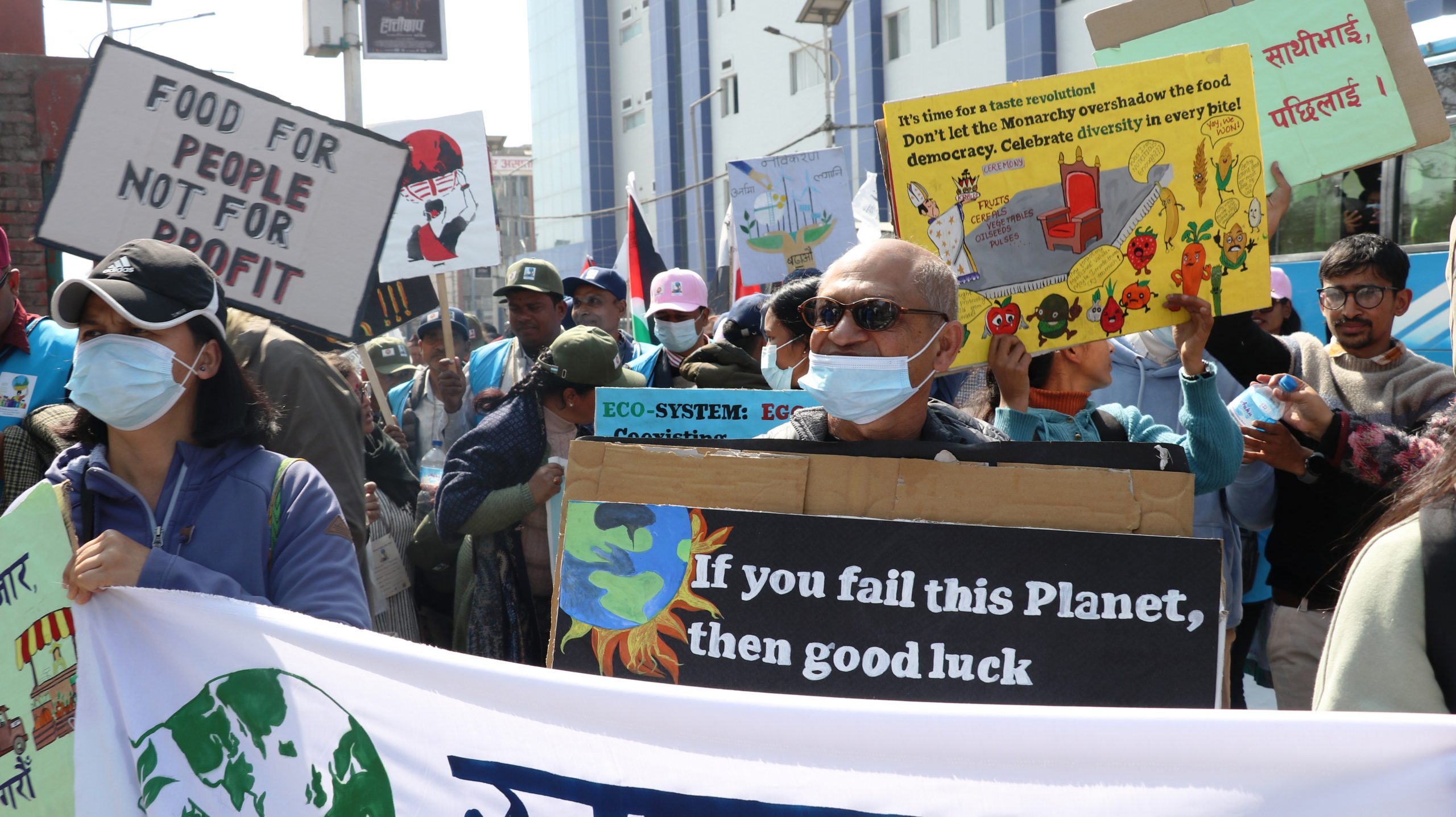
In a remarkable display of community spirit dedication towards Sustainable agriculture, representatives from alliance of agriculture, civil society and media organizations gathered on June 30, 2023, to celebrate 4th International Localization Day and 20th National Paddy Day at Kavresthali, Kathmandu. This event aimed to promote the age-old practice of rice transplantation, emphasizing its importance in ensuring the food security and financial stability of the agricultural community in Nepal, as well as its overall positive effects on the environment. The collective effort of all the stakeholders made this event a resounding success, creating awareness and inspiring a positive campaign.

Bestowed by the hazy day, the event commenced with an opening ceremony led by the agriculture experts, representatives from different organization and media outlets, along with local farmers, highlighting the importance and necessity to promote sustainable farming practices and provide support to local farmers. The event kicked off with informative session, where famers shared insights and knowledge techniques related to rice transplanting.  The session emphasized the ecological advantage productivity associated with this method. Following the session, participants eagerly ventured into nearby paddy fields to engage in hands-on experience. Guided by experienced farmers and experts, enthusiastic representatives’ donned traditional farming attire, rolled up their sleeves, and joined the local famers in the muddy fields. This active participation fostered collaboration and knowledge exchange among the attendees.

The media played a crucial role in amplifying the events impact with journalists from mainstream media documenting the activities and interviewing participants. Through their coverage, they aimed to raise awareness globally, showcasing the significance of traditional farming methods and the efforts made by different related organization, and local farmers in promoting sustainability. As the day drew to a close, local farmers and affiliated officials expressed their gratitude to all the attendees for their unwavering support in promoting sustainable agriculture in the region.

The National Rice Transplanting Day served as a remarkable example of the positive impact, by paving the way for promotion of strategic intervention and support while simultaneously honoring the rich cultural heritage of traditional rice cultivation.
 

Joint Meeting on sharing emerging findings, reflections and learnings

Women around the world are disproportionately stressed by unpaid care work and the effects of shocks, especially in emerging and rural economies. However, much of the work being done to transition to a net-zero economy is frequently fragmented, biased against women, and does not take into account their specific needs and interests. The Gender Equality in a Low-Carbon World (GLOW) research programme was initiated by Canada’s International Development Research Centre (IDRC) in response to this pressing knowledge gap. GLOW funded 12 initiatives in 17 low- and middle-income nations to investigate into how to incorporate women’s economic empowerment into low-carbon, climate-resilient transitions. Nepal was successful in bagging the two out of twelve projects which are implemented by  ForestAction Nepal-, Economic Empowerment of Women through Forest Solutions  in Sindhupalchok and Nawalparasi district while  SIAS  implementing Co-production of Shock Resilient Business Ecosystems for Women Engaged Enterprises (CREW) in Ramechhap, Dolakha and Arghakhanchi districts.

In order to share emerging findings, reflections and learnings between two above mentioned IDRC funded projects in Nepal under (GLOW) program and to identify the areas for collaborative outputs and synergy building for a better enabling environment on women’s economic empowerment in natural resource management sector, ForestAction Nepal along with the SIAS Nepal and their consortium partners organized the joint meeting on 28 June 2023 in the presence of the Dr. Bhim Adhikari, Senior Program Specialist /Sustainable Inclusive Économies – IDRC Canada.

ForestAction Nepal’s consortium partners, HIMAWANTI Nepal, AFFON, and FenFIT, presented their perspectives on approaches and strategies adopted in the project, reflected the achievements, issues and opportunities on women empowerment using forest solutions. The session specifically focused on enterprise and entrepreneurship, socio-political empowerment, sustainable forest management, knowledge dissemination. The research ideas were shared on the impact of forest-based enterprises, challenges of adopting feminist approaches in the consortium, procedural and policy challenges and societal issues, and key learnings encountered during the project interventions.

Similarly, SIAS’ partners (NIMS College, ARIA Solutions, and Himalayan Bio Trade Limited (HBTL)) reflected on 18 months into the CREW Project: Interventions, Approaches, and Reflections in its 3 districts under themes like understanding barriers and constraints, enterprise development through technological and institutional innovations, capacity enhancement to amplify voices and agency, and knowledge dissemination and policy uptake.

The common issue identification and discussion for synergy building were moderated by Dr. Naya Sharma Poudel and Dr. Dil Bahadur Khatri. The majority of the discussions centered on community forest users committee dynamics, policy-level constraints, and the joint collaboration between the consortium might be groundbreaking; the need for meso-level government engagement; societal-level constraints, challenges, and barriers; reflections; open dialogue; Intersectionality within the feminist approach; integrating the productive economy and the care economy; all these for ensuring the sustainability of the forest and agri-best enterprises.

Dr. Bhim Adhikari concluded with the emphasis on the dire need for comprehensive research shifting sectoral policy into macroeconomic policy, deeper analysis of the contradictory policies that restrict the use of the resources on which they are heavily dependent, taking all these stories of learning and co-learning into the global context, exploring how people perceive the upgrading of technology in society, exploring the stories of more incorporation of the private sector, fair trade, branding, and labelling for the sustainability of enterprises—all these for ground-breaking outcomes. He emphasized that now onwards he would appreciate a common outcome of learning from both FAN and SIAS on the research reports. His words of encouragement and critical feedback have opened up the path for both projects to pave their way in a more inclusive, sustainable, and productive way, analyzing them through a feminist approach with an intersectional lens.

Data informed action to protect species in Peril 

Jalthal, a 6100 hectare block of forest, is known for its rich biodiversity. The forest is remnant of once lush and continuous forest of lowland of Nepal. The forest is gradually degrading and its rich biodiversity is gradually eroding. Dillenia indica, a rare species in Nepal, demonstrates case of biodiversity erosion in the forest associated with development during last five decades.

Locally called as Paanchfal and Thaaidith   grows into a medium sized tree used to be a common species in Jalthal forest. Our detail forest survey shows that the  species is about to vanish from the forest. We have spotted only two individual trees and they are without seedlings and saplings. Standing trees are  degraded due to lopping. Locals have not seen its flower and fruits for last two decades. The tree is multipurpose with edible fruit. Fruits are eaten raw, picked and even used in traditional medicines. Twigs are used as fodder and woody parts as firewood.

Given its situation in the forest and to protect the valuable genepool in the wild, ForestAction Nepal joined Bishal Community Forest and Division Forest Office (DFO) Jhapa to protect the species’ last individuals in the forest. Protection of standing trees coupled with awareness among forest user and provision of alternative fodders are expected to conserve the species’ valuable genepool in the forest.

This demonstrates ForestAction Nepal’s Darwin Initiative project’s   ‘data informed conservation action’.

Two-days Participatory Workshop on Agroecology and Sustainable Agriculture

Forest Action Nepal, secretariat of Alliance of Agriculture for Food (AAF) along with Free student Union (FSU) Lamjung campus, hosted a two-day participatory workshop focused on Agroecology and Sustainable Agriculture. The event, held on June 13 and 14 of 2023 aimed to promote sustainable agriculture and disseminate innovative and proportionate solutions for agriculture challenges in the region.

The workshop brought together researchers, experts, and students in the field of Agriculture. Participants engaged in lively discussions, sharing their knowledge and experiences related to agroecology and sustainable farming methods. The event was structured to foster collaboration and encourage the exchange of ideas among the attendees.

Keynote speakers at the workshop highlighted the importance of adopting sustainable practices to mitigate the negative impacts of conventional farming on the environment. They emphasized the need for promoting biodiversity, conserving natural resources, and reducing chemical inputs to ensure long term agriculture sustainability.

Throughout the two days, various topics were covered, including organic farming, permaculture, crop rotation, integrated pest management, and soil conservation strategies. Attendees actively participated in hands-on demonstrations, practical sessions, and interactive group activities to enhance their understanding of these concepts.

Additionally, the workshop featured presentations on successful case studies of agroecology implementation from different parts of the world. These success stories provided inspiration and practical insights for participants, demonstrating the positive outcomes of the sustainable agriculture practices.

The two-days participatory workshop on Agroecology and sustainable agriculture at Lamjung Campus proved to be valuable platform to exchange knowledge, networking and collaborative efforts. The event undoubtedly succeeded in sowing the seed of sustainability in compliance with the aim of the workshop.

World Environment Day 2023 celebrated

Solving environmental problems is not the responsibility of anyone alone. Togetherness in the movement obviously makes a huge difference. While “World Environment Day 2023” was globally celebrated with the campaign #beatplasticpollution, the ACIAR funded EnLiFT2 project implemented under ForestAction Nepal, along with Salle Chaubas Forest Management Committee and Sub Division Forest Office, Chaubas, organized a one-day “School Level Awareness Program” on June 5, 2023, in Setidevi Secondary School, Yakpa tole of Bhumlu-4, Kavre, Nepal. The celebration serves as a spur for collaboration and group efforts to build a more sustainable and environmentally friendly future for future generations. This day was celebrated primarily to raise public awareness of the need to protect the environment by avoiding the use of plastic and instead utilizing eco-friendly alternatives. The event was chaired by Mr. Lok Bahadur Kunwar, the coordinator of Salle Chaubas Forest Management Committee, in the presence of Mr. Prem Bahadur Bhujel, chairperson of Bhumlu Rural Municipality (RM), as chief guest. Other guests, like the chief administrative officer of Bhumlu RM, the coordinator of the Forest, Environment, and Disaster Committee of Bhumlu RM, the chairperson of Bhumlu 5, the Assistant Forest Officer from Sub Division Forest Office-Chaubas, the school’s representative, FECOFUN Bhumlu, CFUG’s representatives, the Private Forest Owners Association, etc., participated in the program.

Marking the 50th anniversary of World Environment Day 2023, the events were divided into multiple sessions that centered on beating plastic pollution. The sessions were a silent rally on the importance of environmental conservation, with the participation of hundreds of students from three major schools in Bhumlu and Kavre. The rally was demonstrated, seeking to bring recognition of how plastic pollution impacts a natural environment. It was staged to bring attention to environmental issues and prompt action to prevent or address plastic pollution. The plantation program was carried out on the school premises to promote the preservation of trees, maintain a sustainable environment, and promote the greenery around the school premises.

Inter-school speech competitions and inter-school quiz competitions were conducted, in which three higher secondary schools, Bhumlu 4 and 5, participated. The main aim of these competitions was to offer the students the chance to socialize not only with classmates but with different students from other schools and learn through these interactions. Further, this competition also helped the students to observe, share their opinions, choose their words, ease oral communication, and take many actions to motivate them to fight against plastic pollution.

This event was intended to encourage fun learning methods while also enhancing general knowledge on diverse environmental-related themes. Overall, all the participants present there benefited from the diverse themes discussed in this event, making them more environmentally conscious. Two cultural dances and songs were performed by the students to promote social and cultural interaction as well as a sense of community well-being and unity. These dances were accompanied by powerful social messages and narratives. Ecofriendly alternatives like cloth banners, handmade papers, hemp bags, etc. were used throughout the program to encourage the use of green alternatives.


Enhancing the collaboration between farmers and journalist

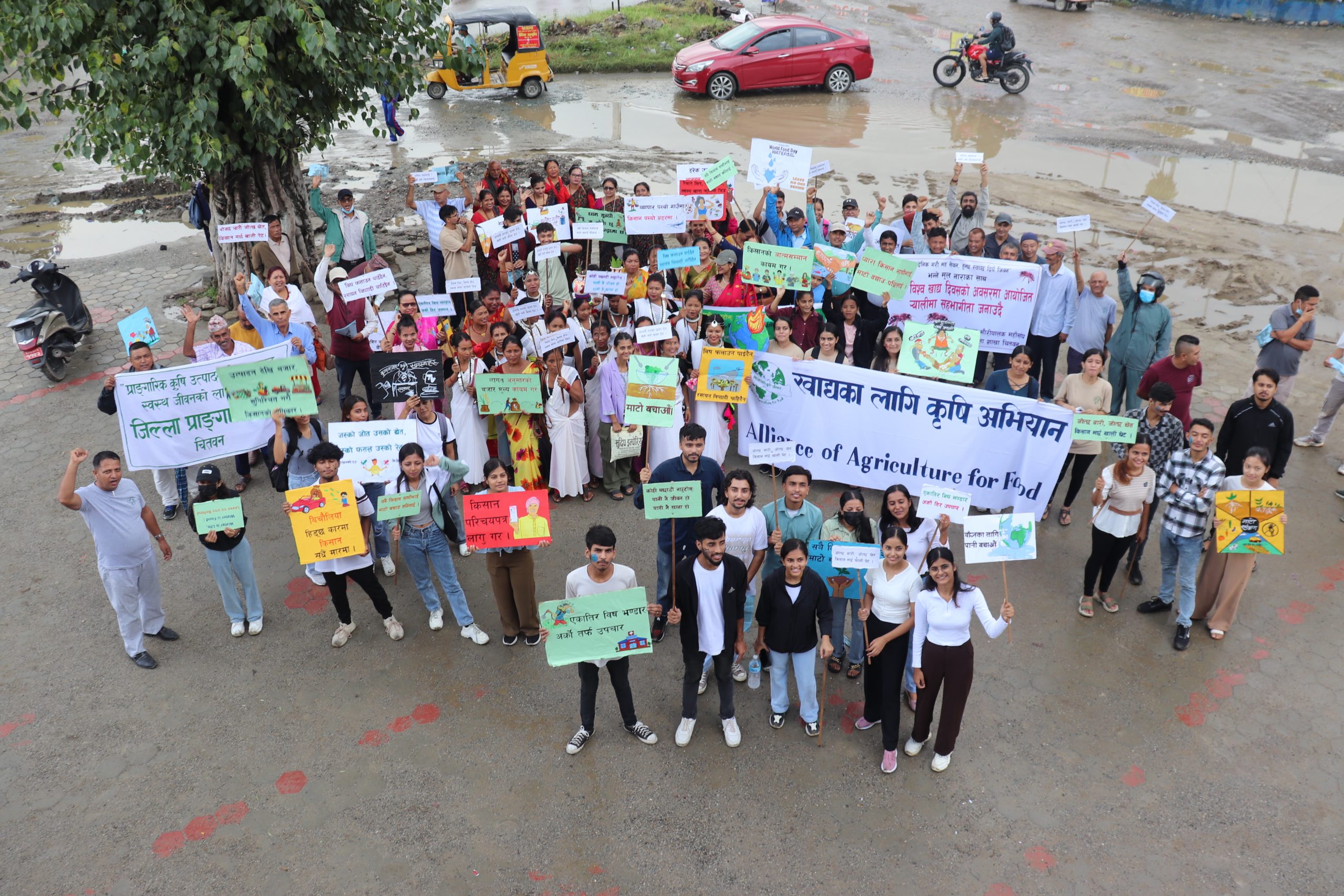
ForestAction Nepal, secretariat for Alliance of Agriculture for Food, organized 2 days interaction program (May 24-25, 2023) with the journalist, media personnel’s and farmers from Chitwan and Makawanpur districts respectively at Syangdi, Chitwan. The main objective of this event was to orient the journalists on the contemporary issues of food and agroecology and also to bridge the gap between the farmers and the journalists.

During the interaction, both farmers and media personnel shared their concern about the uncertain future of agriculture and its significant impact on the national food system. Farmers also criticized about the ineffective policies and programs that pose a serious threat to their livelihood. They expressed that it is essential to consistently exert pressure on the government and bureaucracy to prioritize and protect farmers’ agendas and issues at the national level.

Similarly, journalists committed to supporting farmers in addressing the pressing issues through their media writings and coverage. Furthermore, they also placed their appreciation on the inclusion of a comprehensive agricultural context as a priority in their reporting efforts.


International Biodiversity day: Taking biodiversity to grassroots

International Biodiversity Day 2023 was marked with various activities in the project site of Jalthal, Jhapa. The event brought together  diverse stakeholders; from school students to the Head of local governments in multiple activities.

The event commenced on 22 May, in Jalthal, Jhapa. Head of Haldibari Rural Municipality Inaugurated the program wherein a documentary highlighting floral and faunal diversity, ecosystem, and socio-ecological significance of Jalthal remnant forest was premiered on the day. The primary objective of showcasing the video was to highlight the significance of biodiversity in Jalthal and sensitise stakeholders.   The documentary was based on the comprehensive biodiversity profiling of Jalthal forest by the Darwin Initiative  project. The documentary is available in https://www.facebook.com/JalthalBiodiversity and https://www.youtube.com/watch?v=QhLflddbpZs

Likewise, sixteen students from eight different High schools were engaged in a poster preparation event.  Students identified ’23 Actions for Biodiversity’ in Jalthal forest. These 23 points are in congruence with 23 Targets of Global Biodiversity Framework. The students were initially oriented about the objective of the program and the content of the poster, following which they were prepared in four days period.  Based on innovative idea and excellence, the students were awarded during the event on the International Biodiversity Day. Two girls and two boys were awarded with educational materials and cash prize.

A Biodiversity Appreciation walk was organized on 21st May which brought students and teachers from five different secondary schools in the forest. During the forest walk, students were informed about the significance and features of Jalthal forest biodiversity. This was an important event to increase awareness about biodiversity.

The Jalthal project, led by ForestAction in collaboration with DARWIN Initiative, has supported in establishing and operating eco clubs in high schools. Educational materials for students (Binoculars, Birds and butterfly guidebooks, Stationaries etc.) were handed over during the ceremony on 22 May.

The project coordinator Dr. Lila Nath Sharma organized a forest transect walk on 20th and 21st May, which was aimed at introducing salient features of the forest biodiversity to nature enthusiasts and youth leaders.

Project supported in organizing Forest walk on 23rd May to celebrate International Biodiversity Day. This was attended by journalists and nature enthusiasts and local leaders including representatives of local government.

The events directly engaged and benefited over 250 people representing over forty various institutions-community forests, local governments, Division Forest Office, schools, civil society organizations, political parties  and media. These events were crucial in raising awareness on the importance of biodiversity and inform people about myriads of threats bearing upon forest biodiversity. The events were reached to thousands of people through social media and local newspapers. These events were covered by over two dozens of news outlets.


Policy dialogue on “Community institutions and forest-based enterprises: Prospects of transformation”

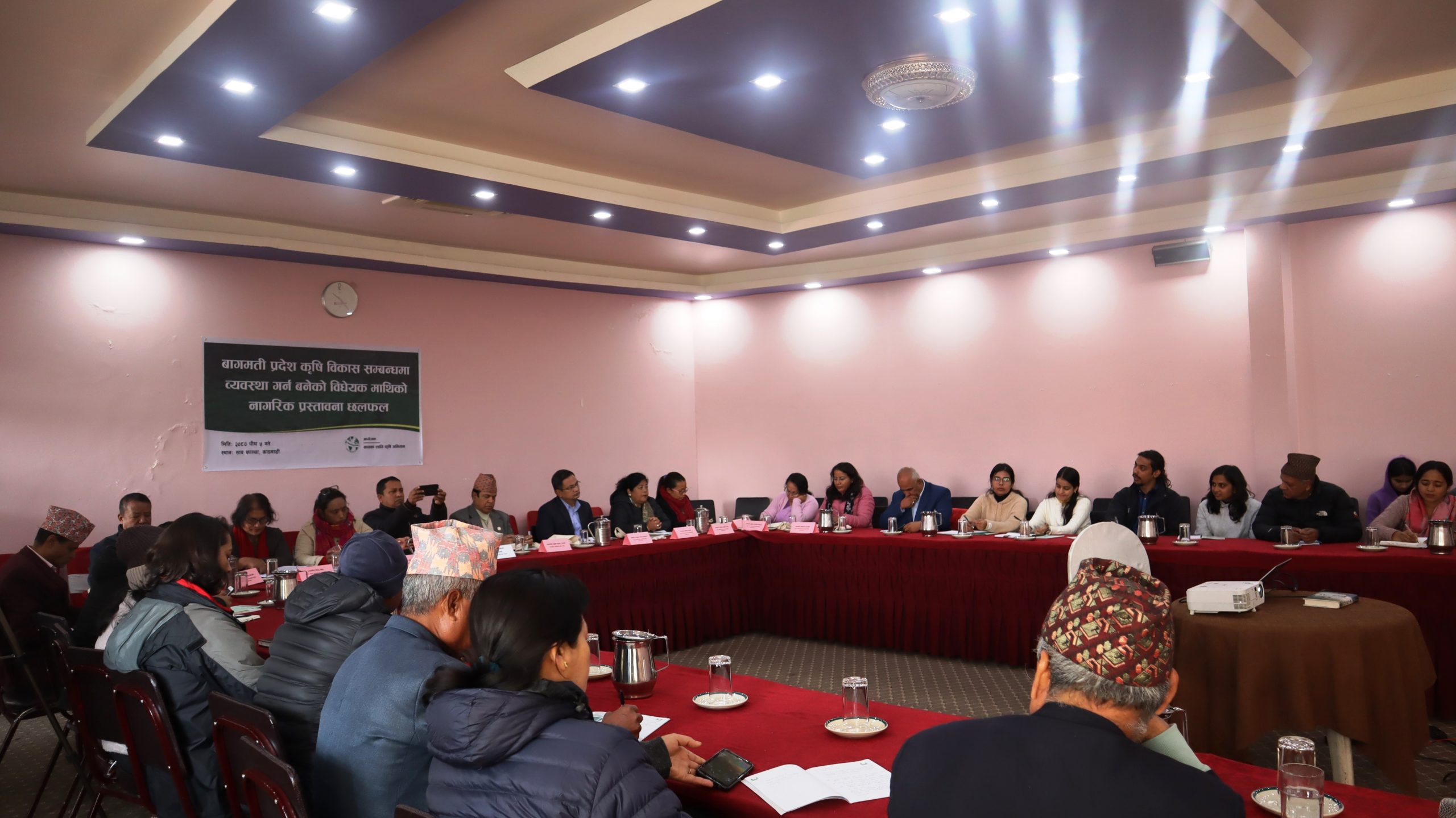
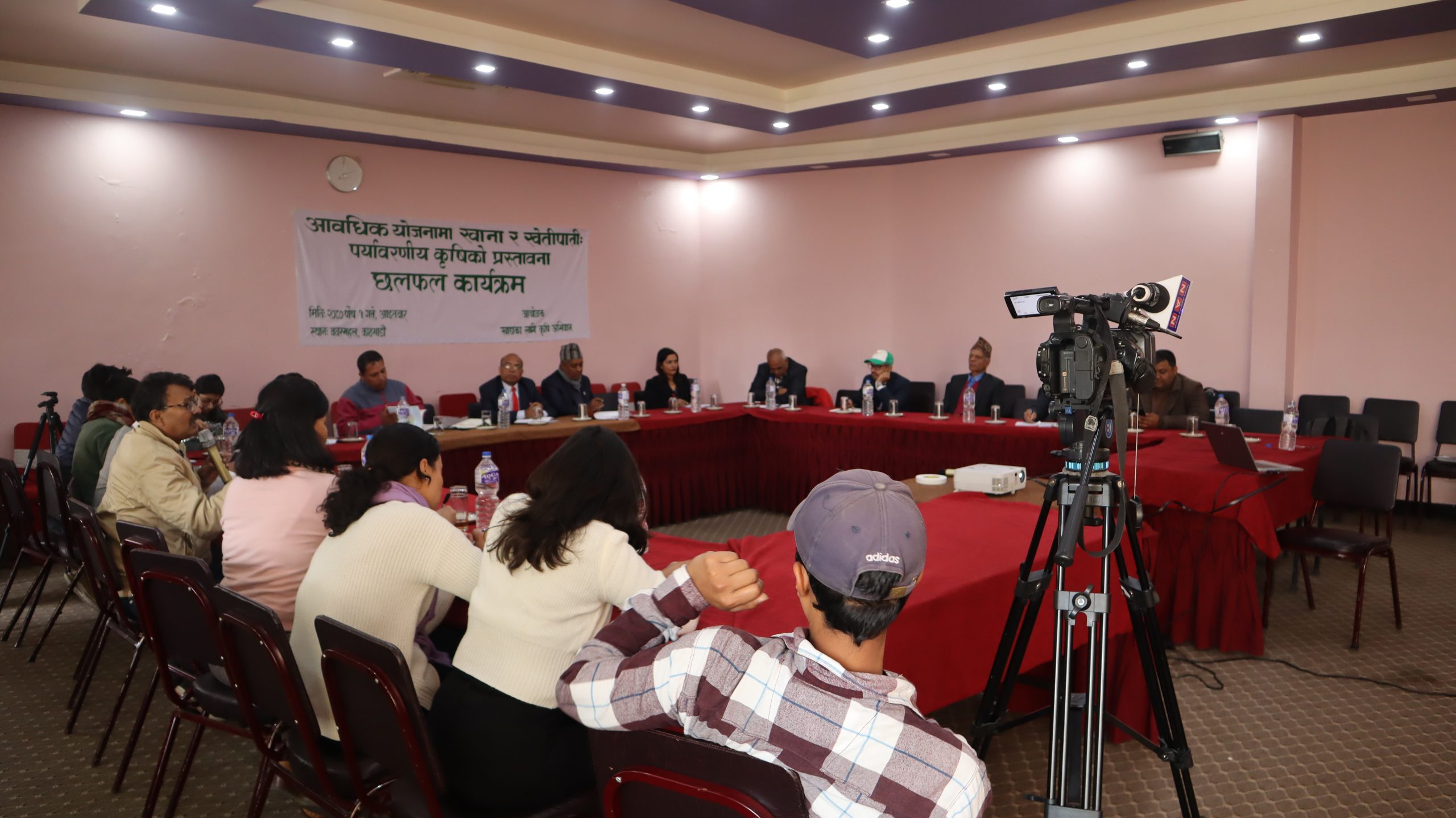
While the Government of Nepal has set the goal of achieving prosperity from forestry, the country holding 44.74% of forest area demonstrates the prospects of forest based enterprises. Along with the ambition, there are a range of challenges that have been rather discouraged in promoting community-based forest enterprises in Nepal. Community institutions are facing several challenges in the establishment and operation of forest-based enterprises. With the aim to discuss opportunities and challenges in promoting forest-based enterprises and laying out ways forward, ForestAction Nepal, in support from the Australian Government, organized a policy dialogue on “Community institutions and forest-based enterprises: Prospects of transformation” on 6th June 2023. A diverse group of actors from the government, non-government, civil society, private sector, local government among others expressed their views during the event.
Click here to download the event report

A delegation meet with Agriculture Minister to discuss forthcoming policies, programs and budget

ForestAction Nepal, the Secretariat of the Alliance of Agriculture for Food (AAF), in collaboration with other partner organizations, scheduled a delegation with Agriculture Minister Dr. Bedu Ram Bhusal in 8 May 2023 to discuss the forthcoming policy, programs, and prioritizing promotion of Agro- Ecology and sustainable agricultural development in the upcoming policy and programs deliberately in the fiscal year’s Budget. Our counterparts briefly read out the report and submitted the minute to the honorable minister.

His comments show his comprehension of the issues. He voiced his concern about irrigation becoming a significant issue in agriculture and described how its enforcement can be a key factor in Nepalese agriculture. Similarly, he concentrated on the need for conducting a campaign to promote Raithane fruits that grow in forest areas, interwoven with the agriculture sector. He believed that organic and commercial production should be supported in tandem, to maximize the collective potential.

Click here to download the meeting minutes

Discussion on contemporary issues of food and agriculture with Agriculture journalists

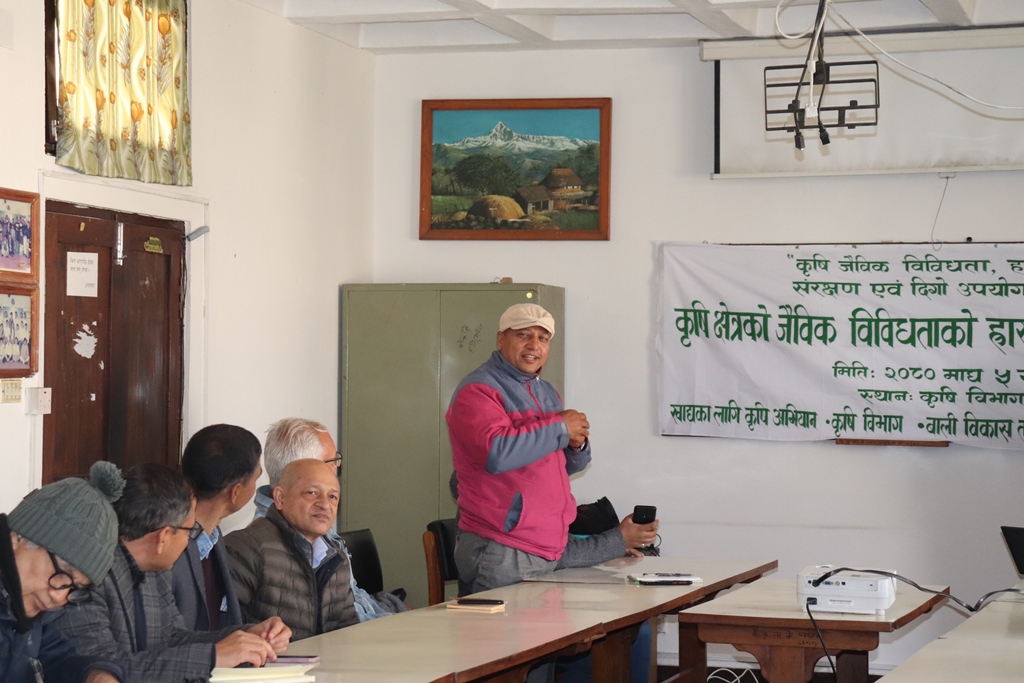
Forest Action Nepal, Secretariat of Alliance of Agriculture for Food (AAF), in conjunction with Association of Nepali Agricultural Journalists (ANAJ), organized a two-day discussion session (May 5–6, 2023) at Edu Farm, Lalitpur, centered on contemporary issues of food and agriculture. The program was attended by total of 30 persons, including a group of journalists reporting and writing feature stories in the realms of agriculture, food, livestock, and forest science, accompanied by the representatives from partner organizations such as Food First Information and Action Network (FIAN) Nepal, National Farmer Group Federation (NFGF), Community Self Reliance Centre(CSRC)/National Land Right Forum (NLRF) and Centre for Agro-Ecology and Development (CAED) Nepal. The programs key objectives were to inform better and engage media personnel’s for them to comprehend AAF’s work highlighting the challenges faced by the agriculture sector along with its repercussion as well as the potential responses. Furthermore, the program also sought to create a platform to exchange knowledge and support among the stakeholders.

The following were the major issues briefly discussed during the session:

– Revision of agriculture strategy and formulation of act

– Periodic plan and annual policy, program and budget

– Foreign direct investment

– Pesticide regulation policy, standards, and regulations

– Import of synthetic chemical fertilizers and release of carbon

– Global food crisis and export ban

– Land use, land distribution and barren land


Policy dialogue: Forum for discussion between the rural women entrepreneurs, policymakers and policy implementers

Effective and successful policy implementation in all sectors is the key to national development. In the forestry context, numerous favourable policies and laws address all the major aspects of this sector, but their implementation is a complex endeavour and is of pivotal concern. To address the policy and regulatory barriers by women entrepreneurs in accessing forest resources, Policy dialogues were organized by the project Economic Empowerment of Women through Forest Solutions in Tripura Sundari Rural Municipality-Sindhupalchok and Gaidakot and Devchuli Municipality in Nawalpur (E). The dialogues were organized to provide women entrepreneurs with a forum to discuss the issues and seek to enhance their understanding of the policies and their translation in practice.

The women entrepreneurs shared with enthusiasm all about their achievements and problems faced during enterprise development, specifically in the context of accessing the raw materials for enterprises, market issues, registration issues and many more. The Chief and representatives of the Local Government, Divisional Forest Office, Chief of District Small and Cottage Industry Office and Banks unpacked the existing gender-responsive service provisions, especially to address women’s practical and strategic needs. For example, women’s access to information, resources, services, employment, credit, programs, budget and other benefits meant for the advancement of women were discussed. The women entrepreneurs actively interacted with the officials for clarification and demanded simplification of the process. The officials responded positively and motivated the women entrepreneurs; the local government officials ensured that they would be thoughtful to include such programs and budgets in their upcoming annual plans. Furthermore, the other non-state actors such as representatives from the Association of Family Forest Owners- Nepal (AFFON) and Federation of Community Forest User Groups Nepal (FECOFUN) expressed the policy and practical hassles could be resolved through functional coordination between state and non-state actors.

At the end of the session, all the women entrepreneurs and stakeholders came to a consensus to develop a joint statement and actions on the policy gaps and commit to policy reform that could help them to continue their entrepreneur’s journey even after the project phases out.

Policy dialogue: Forum for discussion between the rural women entrepreneurs, policymakers and policy implementers

हिडाई तालिमकाे लागि आव्हान

अहिले हाम्रो सामाजिक, सांस्कृतिक, राजनैतिक तथा आर्थिक अवस्थामा व्यापक फेरबदल आएको छ । यो कुरा हामी समाजका विभिन्न तह र सामाजिक सञ्जालमा उठाइने हजारांै प्रश्नहरुबाट पनि थाहा पाउन सक्छौं । तर, यिनको सम्बोधन गर्न आवश्यक विश्लेषण गर्ने क्षमता र आलोचनात्मक चेत दुवै पर्याप्त छैन । खासगरी, हाम्रो सामान्य ज्ञान र शिक्षा पद्धतीले व्यवहारिक अभ्यासहरूबाट सिक्न प्रोत्साहित गर्न सकाको छैन । विद्यालय र विश्वविद्यालयहरूले नविनतम खोज , सिर्जनशीलता र सामाजिक जिम्मेवारी बोध भएका दृढ र जुजारु विद्यार्थी तयार गर्न सकेका छैनन् । यसले हामीलाई पुराना र असान्दार्भिक बन्दै गएका विचारको घेरा भन्दा बाहिर निस्केर भविष्यमूखी हुनबाट बञ्चित गरिरहेको छ । फलस्वरूप हामी धेरैले आफैंलाई र अन्यलार्ई प्रश्न सोध्ने वा जिज्ञासा राख्ने आँट समेत गुमाउँदै गइरहेका छौँ ।

हामी र हाम्रो समाज व्यक्तिवादी, बजारमूखि, र पैसामूखि बन्दै गएको छ । यसले हाम्रो बीच सामुदायिकता र सहकार्य खलबलिँदै गएको छ । अहिले पैसा सबैथोक भन्ने सोचाई हाबी भईरहेको छ । यसले गर्दा मानव, समाज, प्रकृति र स्वास्थ्य अवस्थाबारे उदासीनता बढ्दै गएको छ । यी चुनौतीको सामना गर्न हामीलाई वर्तमान पद्धति र विचारभन्दा उन्नत रुपान्तरणमूखि सिकाइको खाँचो छ । यो त्यतिखेर मात्र सम्भव हुन्छ जतिखेर हामी अहिलेको पद्धति, विचार र यस्तो विचार राख्ने सबैका विचार विरुद्धमा आलोचनात्मक हुन तयार हुन्छौँ । अन्य कुरासँगै अहिले खाना, खेतीपाती र पर्यावरण सबैभन्दा संकटमा छ । हाम्रो वरिपरिको वातावरण दिन प्रतिदिन बिग्रदो छ । हामीले खाने खानेकुरा झनै बिग्रदो छ । रसायन तथा विषादीको प्रयोग दिन प्रतिदिन बढ्दो छ । रसायन र विषादी विना उत्पादननै हुदैन भन्ने सोच बढेको छ ।

यस अर्थमा यो तालिम खाना, खेतीपाती र पर्यावरणको सवालमा दिर्शानिर्देश, पुर्नताजकी र फर्केर हेर्ने समिक्षात्मक ज्ञान, सिप तथा अवधारणा निर्माण गर्ने तयार गरिएको हो । खासगरी, यो तालिमले खाना, खेतीपाती र पर्यावरणका आधारभूत सवालहरूलाई फर्केर हेर्न, किसानहरुका व्यवहारिक अभ्यासबाट सिक्न र उनीहरूले गरेका असल अभ्यासहरूबाट उत्प्रेरित हुन सहभागीहरूलाई मद्दत गर्दछ ।

हिडाई तालिम बारे विस्तृत जानकारीको यहाँ  थिच्नुहोस् ।

हिडाई तालिमको आवेदन फारामको लागि यहाँ थिच्नुहोस् ।