
Transitioning to sustainable farming: A field action research initiative in Dhusa and Kalikhola Gau, Ichhakamana Rural Municipality

ForestAction Nepal’s agriculture team has recently completed their visit to Dhusa and Kalikhola, Ichhakamana Rural Municipality, where they are working with local farmers and the palika to promote agroecology. One of the approaches is field action research, where they are conducting trials and experiments to address the major challenges farmers face in their fields.

One of the significant challenge observed in both villages was the high reliance on chemical pesticides for pest management. To promote sustainable/agroecological practices and technologies, the team demonstrated the use of simple yet effective tools, yellow and blue sticky traps and Cue-Lure, to monitor and trap insect pest in cucumbers and beans, the major crops grown this season.

These tools weren’t new to the farmers, but they had been underutilised in managing insect pests in the fields. This intervention will be followed up with further support to ensure the effective use of these tools and continued learning for the farmers. By demonstrating the benefits of agroecological practices/technologies, we aim to boost farmers’ confidence in adopting these methods, leading to a gradual shift towards more sustainable farming practices.

Additionally, the preparation of an Effective Microorganism (EM) solution was demonstrated, and oriented to farmers about its uses and benefits. EM offers multiple benefits, including accelerating the decomposition of manure and increasing the population of beneficial microorganisms in the soil.
During this visit, the team also conducted a pilot survey with a few farmers to understand the factors influencing the adoption of organic and agroecological practices. The team further aims to reach at least 100 farmers from various parts of Nepal to explore these factors more comprehensively.

Forest Landscape Restoration (FLR) and Biodiversity Conservation Talk Program Kicks Off

Over the past few decades, ForestAction Nepal has been conducting participatory action research and organising critical discussions for democratic and inclusive governance of natural resources in Nepal. Piloting and long-term research on forest management, biodiversity conservation and Forest Landscape Restoration (FLR) are among the major priorities of the organisation. As the world is celebrating UN Decade on Restoration, FLR has been regarded as a key strategy to tackle the interconnected environmental challenges that we are facing today.


To address such issues and ignite discussions, ForestAction Nepal as a part of the REDAA Project has launched a talk series on emerging issues, new insights, methodological innovations, success stories and theoretical advancements in the domains of biodiversity conservation and forest landscape restoration in Nepal. Dr. Lila Nath Sharma commenced the series on 10th January 2025 with a discussion on “Forgotten legacies in biodiversity conservation and forest landscape restoration in the era of socio-ecological crisis.”

On 3rd March 2025, the second talk series kicked off with the sharing by Professor Dr. Ole Reider Vetaa of the University of Bergen, who shed light on “Conservation biogeography; migration, isolation and barriers in changing climate.” Around 35 participants had joined the talk program, including Prof. Emeritus RP Chaudhary and faculty members from Kathmandu University and Tribhuvan University.

Symposium on Women’s Economic Empowerment through Natural Resources: Opportunities, Innovations, and Challenge

A symposium on Women’s Economic Empowerment through Natural Resources: Opportunities, Innovations, and Challenges was conducted on 24 th February 2025. The symposium successfully brought together diverse stakeholders—including government representatives, researchers and academia, development partners, civil society, and the private sector—to discuss current challenges, review and learn from best practices and innovations, and develop approaches and methodologies to inform policymakers and other key stakeholders in advancing women’s economic empowerment.

Building on three years of collaboration between SIAS and ForestAction Nepal in the Women’s Economic Empowerment (WEE) project, along with the collective efforts of 11 knowledge partners, the symposium aimed to share opportunities and challenges in WEE, fostering new knowledge and innovations to address these challenges.
The symposium focused on three major thematic areas of WEE; Opportunities and challenges, innovations and good practices and frameworks, approaches, and methodologies. Dr. Meena Bohara of ForestAction Nepal presented key lessons learned of women in forest-based enterprises. Similarly, Dr. Naya Sharma Paudel facilitated the thematic session on innovations and good practices. Overall, the symposium effectively sparked discussions on empowerment
through natural resource-based enterprises, key governance aspects, institutional and technological innovations, best practices, innovative research methodologies, and inclusive intervention processes to create an enabling environment for women's economic empowerment (WEE).

Training on the National Forest Information System (NFIS) and Safeguards Information System (SIS)

A training on the National Forest Information System (NFIS) and Safeguards Information System (SIS) system was organised by ForestAction (FA) Nepal in collaboration with REDD-IC and Upaveda Technology Pvt. Ltd., through financial support from the World Bank at FA office, Bagdol, Lalitpur. The training focused on equipping participants with the skills to collect and store essential data from 13 districts within the TAL project area. It was attended by 32 forest technicians, DFO staff, and REDD-IC personnel. The sessions primarily covered the functionalities of NFIS and SIS, data entry procedures, checklists, and quality assurance protocols.
The NFIS and SIS platforms in Nepal are web-based systems developed to manage, monitor, and share comprehensive forest-related data. Supported by the Forest Carbon Partnership Facility’s (FCPF) REDD Readiness Preparation Program, NFIS acts as a centralised database for Nepal’s forest information, supporting data-driven decision-making and effective forest management. It integrates various datasets, such as forest type maps, statistical analyses, and research reports, making crucial forest-related information accessible to stakeholders. The successful implementation of NFIS will contribute significantly to the advancement of Nepal’s forestry sector.


Field Research Begins for the forest landscape research assessment

ForestAction Nepal is currently undertaking a REDAA research project funded by UK International Development from the Foreign, Commonwealth and Development Office (FCDO) and managed by the International Institute for Environment and Development (IIED) to analyse the socio-ecological outcomes of restoration interventions in Nepal. Since three months, ForestAction Nepal’s team has been travelling to different transits in Nepal to assess different restoration sites, initiatives and their impacts. The team have complete the field research in Eastern (Pancthar, Ilam, Sunsari, Dhankuta, Bhojpur), Central (Palpa, Syangja, Tanahu, Kaski), and Western (Surkhet, Jajarkot, Dailekh) transits of Nepal.

The team had identified forest coverage changes through satellite images for the intervention. After analysing the satellite images, and assessing the forest cover changes, the team conducted socio ecological surveys, where bio-physical surveys was conducted in the forest and socio-economic surveys were taken in the forest-depended communities. Along with that, the team has also conducted capacity building trainings, leadership trainings to various communities on forest landscape restoration and management.

Training on Compost and bio-pesticide preparation

As part of our ongoing efforts to foster agroecology for soil restoration and biodiversity conservation, Forest-Action Nepal, in collaboration with Ichhakamana Rural Municipality, successfully conducted training sessions on compost and bio-pesticide preparation for farmers from Dhusa and Kalikhola villages on February 4 and 5, 2025, respectively. A total of 34 farmers, all actively engaged in commercial vegetable farming, participated in the training sessions.

Chandra Prasad Adhikari, an organic farmer with over three decades of experience facilitated the training. The training methodology integrated learning approaches like interactive discussions and hands-on field exercises and covered topics like the orientation on agroecology, the effects of inorganic farming on soil and human health, the benefits of organic fertilizers and bio-pesticides, and the practical demonstration of composting and bio-pesticides.

This training is a significant step in our agroecology initiative, promoting community-led approaches to sustainable farming that promotes local knowledge exchange and capacity building of farmers. This training also serves as a foundation for establishing farmer-led demonstration plots, further strengthening our collaborative action plan with Ichhakamana Rural Municipality.


Fostering agroecology for soil restoration and biodiversity conservation through a community-led approach in Ichhakamana Rural Municipality

ForestAction Nepal’s agricultural team recently visited Ichhakamana Rural Municipality, where productive meetings were held with local farmers and farmer groups to explore opportunities for promoting agroecology, specifically focusing on soil restoration and biodiversity conservation. The team discussed the challenges faced by farmers, such as soil degradation and declining fertility, and how agroecological practices like crop rotation, organic farming, and agroforestry could address these issues. Emphasis was placed on restoring soil health through composting, mulching, and the use of bio-fertilizers, while also promoting biodiversity through intercropping and protecting pollinators.

The importance of a community-led approach to implementing these practices was highlighted, with farmer-led demonstration plots, training sessions, workshops, and capacity-building efforts identified as key strategies to strengthen local knowledge.

A significant outcome of the meeting was the agreement to develop a collaborative action plan, that ensures farmers are actively engaged at every stage, from planning and implementation to monitoring and evaluating progress.

Additionally, a meeting was held with the agriculture section of Ichhakamana Rural Municipality, where we provided an update on the discussions with the farmers’ groups, as we will be collaborating with the municipality in this initiative.

Advocacy for Agroecology at Chitwan Mahotsab, 2025

ForestAction Nepal has been actively promoting agroecology in Nepal through field action research, training and capacity-building activities, and policy advocacy, engaging stakeholders at the local, provincial, and federal levels. As part of these efforts, ForestAction Nepal has been utilizing public platforms to raise awareness of agroecological issues, draw the attention of policymakers, and foster dialogue.

In this context, Dr. Krishna Prasad Paudel, representing ForestAction Nepal (the secretariat of the Alliance of Agriculture for Food), delivered a speech at the Agricultural Forum organized by the Chamber of Commerce and Industry (CCI) during the Chitwan Mahotsab on January 20, 2025. Dr. Paudel highlighted the consequences of chemical-based modern farming on soil fertility and human health and emphasized the urgent need to shift towards agroecological approaches.

Similarly, Mr. Chandra Prasad Adhikari, an organic farmer with over three decades of experience and president of the Organic Farmers Federation Chitwan, an ally of the Alliance of Agriculture for Food, provided valuable insights into the status and challenges of organic farming in Chitwan.

The forum was attended by the Honorable Prakash Shrestha, Minister of Agriculture and Livestock Development of Bagmati Province, as the Chief Guest. Other notable figures included Dr. Sharada Thapaliya, Vice-Chancellor of Agriculture and Forestry University; Mr. Narayan Prasad Adhikari, President of the Office of the District Coordination Committee Chitwan; Mr. Chun Narayan Shrestha, President of the Chamber of Commerce and Industry Chitwan; Mr. Jhalak Nath Kandel, Chief of the Agriculture Development Centre; and Mr. Sujan Amgain, Chief of the Beekeeping Development Program. More than 100 participants, including farmers, journalists, researchers, and stakeholders from diverse sectors, engaged in the discussions, which focused on current issues in the Nepalese agriculture sector and the need for collaboration among diverse stakeholders to advance sustainable agriculture in Nepal.


Training to CFUGs on forest/forest fire management in Dolakha and Sindhupalchowk districts

The rugged terrain of Nepal’s mountain districts makes it difficult to respond to any forest fire event. This compounded by lack of tools and equipment, inadequate capacity of local stakeholders to prevent and respond to forest fire, and weak coordination mechanism, makes the situation even worse.
While enhancing capacities of stakeholders in addressing any forest fire event is a priority, preventing it through involvement of community forest user groups (CFUGs) in forest management by drawing on their years of local knowledge is imperative. In this line, ForestAction Nepal has entered into partnership with the Australian Himalayan Foundation to address the challenge through inclusive community-based forest fire management in Dolakha and Sindhupalchowk districts.
The project kicked off with inception workshops in Shailung rural municipality of Dolakha and Chautara Sangachokgadhi municipality of Sindhupalchowk districts on 8th and 9th January 2025.

Participation in agricultural exhibition and farmers fair

Participation in agricultural exhibition and farmers fair at Agriculture and Forestry University, Rampur, Chitwan

From December 14–18, 2024, ForestAction Nepal participated in the Agricultural exhibition and farmers fair organized by Agriculture and Forestry University at Rampur, Chitwan. Utilizing this event as a platform to promote agroecology among diverse stakeholders, we collaborated with the Organic Farmers Federation Chitwan (Jilla Prangarik Sangh) and Shree Prangarik Krishi Utpadak Sahakari Sanstha Limited and showcased a variety of local and indigenous seeds and crops from across Nepal. Similarly, informative posters/arts were also displayed, highlighting the importance of sustainable farming, the effects of climate change, and the benefits of using indigenous seeds instead of commercial ones. The stall attracted many visitors who appreciated the displays and information presented.

Call for Submissions: Women’s Economic Empowerment through Natural Resources: Opportunities, Innovations, and Challenges

A SYMPOSIUM

The Southasia Institute of Advanced Studies (SIAS) and Forest Resources Studies and Action Team (ForestAction) Nepal, in collaboration with other organisations, are organising a symposium entitled Women’s Economic Empowerment through Natural Resources: Opportunities, Innovations and Challenges. We invite submissions from researchers, scholars, policymakers and practitioners engaged in initiatives related to women’s economic empowerment in the agriculture and/or forestry sectors.

Date: 24 February 2025

Location: Kathmandu

Please submit an abstract of max. 300 words of the research, experiences and insights aligned with the symposium themes along with a summary CV.

The deadline for the abstract submission (papers/presentation/ poster) is 20 January 2025.

You will be notified about the acceptance of your proposal by 25 January 2025.

Please send your abstracts to: salu@sias-southasia.org

The Thematic Focus

Women’s economic empowerment (WEE) is a prerequisite for achieving gender equality, and there have been different WEE frameworks that have suggested the means to achieve this. Women led and/or engaged enterprises are key strategies for achieving women’s economic empowerment and an inclusive economy. Despite its transformational potential, women in general, face political, socio-economic and cultural barriers in accessing resources, information, and networking and institutional support. Such disparities in access undermine their ability to establish and expand their enterprises or benefit the businesses they are involved in, especially in the context of fast-growing manifold impacts of climate change. In the context of growing risks from environmental and socio-economic factors and their impacts (especially in the context of natural resources), policies, strategies and practices need to become central to all debates and actions related to women’s economic empowerment.

In this symposium, we aim to bring together multiple actors – government, researchers and academia, development partners, civil society, private sector – to understand current challenges, review and learn from good practices and innovations and develop approaches and methodologies that inform policymakers and other key stakeholders, towards achieving women’s economic empowerment.

We would like the presentations/posters to focus on the following questions:

1. Frameworks, approaches and methodologies: What are some of the innovative research methodologies and inclusive intervention processes that provide an enabling environment for women’s economic empowerment?

2. Opportunities and Challenges: What are the key opportunities and challenges in women’s economic empowerment through natural resources-based enterprises in the face of changing climate?

3. Innovations and good practices: What are some key governance, institutional and technological innovations and good practices that can be scaled out and scaled up so that more and more women engage in and benefit from natural resources-based enterprises?

National policy dialogue: Transforming the role of CFs in the context of a shift in socio-political priorities, growing economic opportunities & climate change

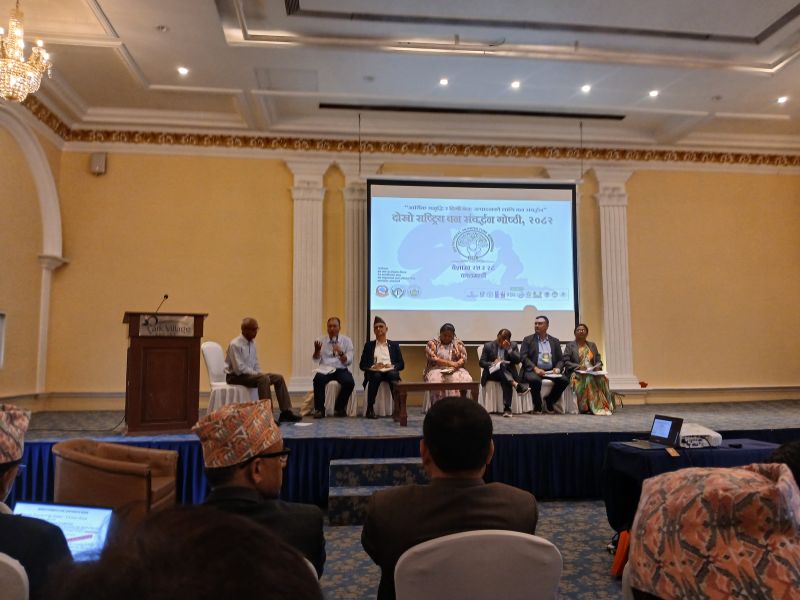
The debate on forest sector governance has become more intense within the federal structure due to the lack of clarity in the use and responsibility to conserve forests, carbon services and biodiversity among the three tiers of government. Against this backdrop, the Ministry of Forests and Environment, Federation of Community Forest Users Nepal (FECOFUN), with the support of FFF (Forest and Farm Facility) and in collaboration with ForestAction Nepal and RECOFTC, organised a two-day Policy Dialogue on 19th and 20th December 2024 focusing on “Transforming the Role of Community Forests in the Context of a Shift in Socio-Political Priorities, Growing Economic Opportunities and Climate Change.” The objective of this policy dialogue was to focus on fostering an inclusive discussion on the evolving role of community forests in addressing sociopolitical dynamics, driving economic development through sustainable livelihoods, and enhancing community resilience to climate change through adaptation and mitigation activities.

Four different sessions including a presentation and panel discussions were held. Out of the them, Dr. Naya Sharma Paudel from ForestAction presented and moderated the panel discussion on “Policy framework and governance restructure enabling community forestry in socio-political transitions.” The session focused on the evolving socio-political dynamics of community forestry (CF) and the challenges they pose, such as declining community engagement, institutional inefficiencies, and tedious policies. Panelists highlighted the importance of simplifying policies, and ensuring equitable financial benefits while addressing legislative delays and fostering effective governance across all tiers of government.

Overall, the two days policy dialogue brought different stakeholder together to invest and discuss on necessary strategic interventions which will propel the effects and impacts of previous interventions to larger areas, and producer groups and organisations.