Advocacy and Campaign

This year, the 43rd World Food Day was celebrated worldwide with the slogan “Water is life, Water is food”. ForestAction Nepal, the secretariat of the Alliance of Agriculture for Food, in collaboration with Agriculture and Forestry University (AFU), the Department of Agriculture, Jilla Prangrarik Sangh, Chitwan, Better Chitwan, Chitwan Kacheheri, and student organizations from AFU and Rampur Agriculture Campus, organized a series of events on October 6, 7, and 8, 2023, to mark this event in Chitwan, Nepal.

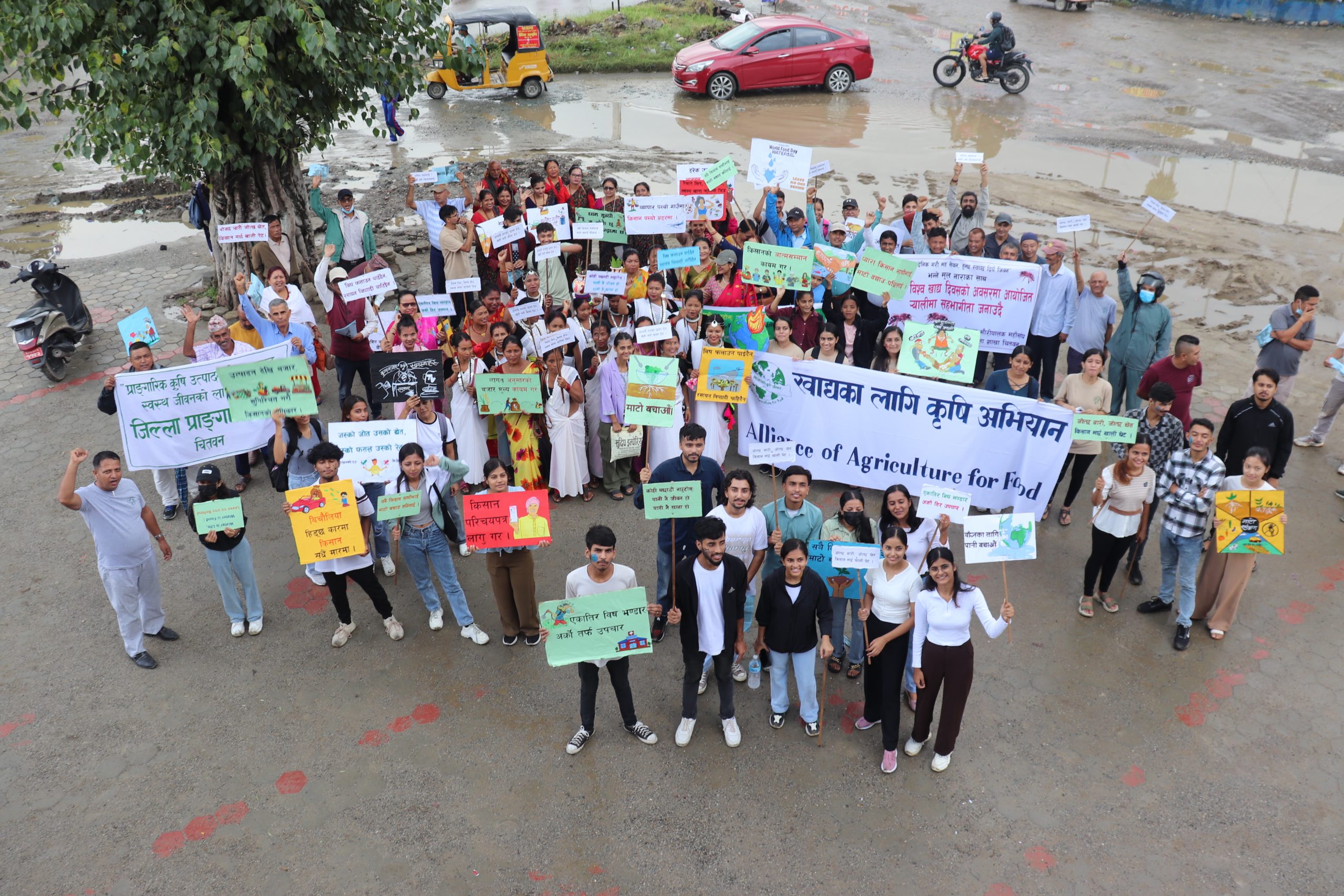
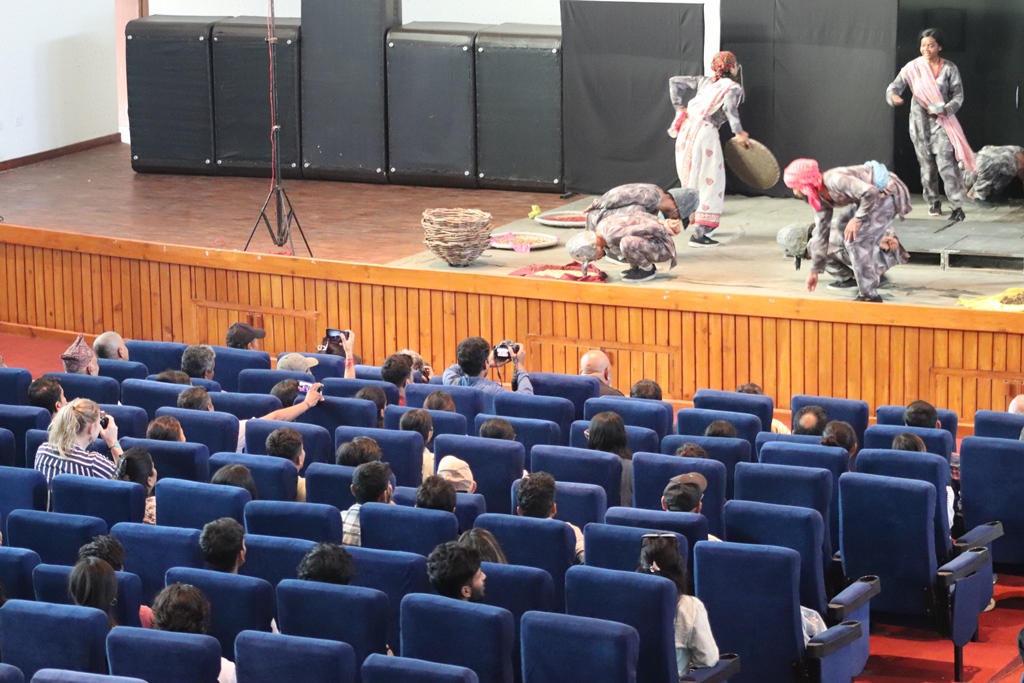
The celebration kicked off with a press release to highlight the significance of the event and inform the stakeholders about it. On the following day, a rally was organized, where the participants marched from Pulchwok, Narayanghat, to Chaubiskoti. The rally was attended by farmers, agricultural students, agricultural activists, journalists, and healthcare personnel. The aim of this public event was to raise awareness among the public regarding the problems and challenges faced by farmers, the importance of sustainable farming practices, and the need for a resilient food system. On the same day, a drama entitled Sattapatta was showcased in the auditorium hall of the university in the presence of more than 200 audiences. Sattapatta is the story about the farming, and it gives the audience a message about the impact of the modern farming system that promotes the use of chemical fertilizers and pesticides on our indigenous and traditional knowledge, technologies, soil, seed, and including human health.

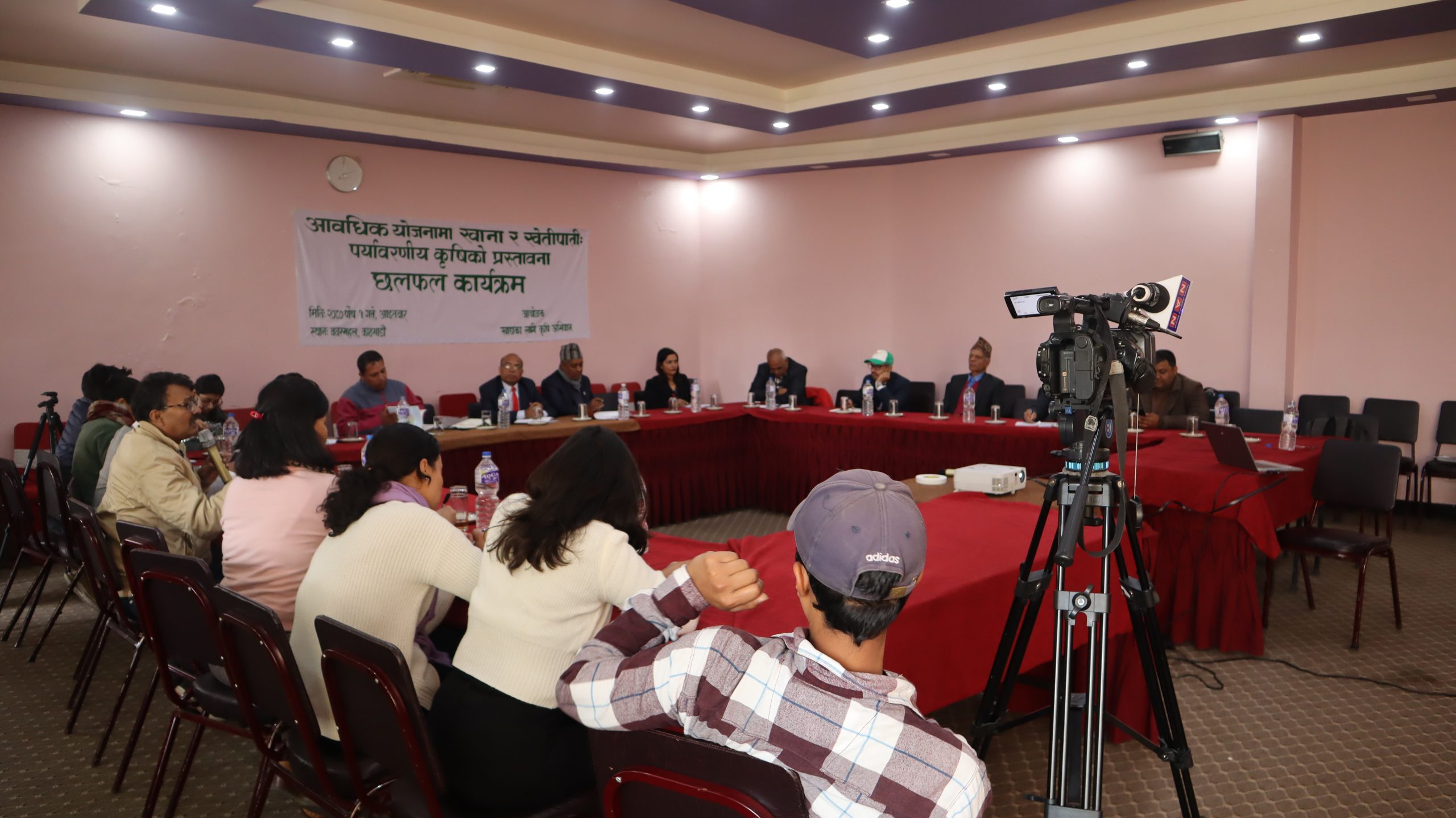
On the third day, a seminar titled “Debate on the Issues of Food and Agriculture” was organized, consisting of four sessions, including the opening and thematic sessions. Policymakers, stakeholders, thematic experts, students, journalists, and farmers were all present at the seminar. Following the seminar, “raithane khadhya sanjh” (a food festival) was organized to celebrate the diversity and richness of our local cuisine, featuring a variety of delicious dishes from the Tharu community.

Participatory Theatre on Creating Awareness about Agriculture for Food “SattaPatta”

ForestAction Nepal, the secretariat of Alliance of Agriculture for Food (AAF) collaborated with the Shilpee Theatre Group (STG) and produced a theatre play namely “Sattapatta” with an aim of creating public awareness on the importance of natural farming and its potential benefits for soil and human health.

The main focus areas of the theatre were;

– The impact of industrial food (chemical-based junk), on soil and human health and planetary life and lives of farming communities

– Soil degradation due to malpractices in farming.

– Toxicity in food and alarming non-communicative disease such as cancer and diabetics

– Initiate a discussion about agroecology adaptation and its challenges in the current context of commercial food industry and industrial farming backed by GMO technology

The Forum (Kachahari) Theatre SattaPatta was performed in different 10 villages/cities from 1st of October to 13th of October 2023 respectively. The journey of SattaPatta began with a first premium show performance on 1st of October in the open space of Shilpee Theatre premises. In other districts the play was hosted by the local organisation associated with AAF and STG in different places.

After every performance, the team interacted with the participating audiences and collected their views. The play was highly appreciated by participants all over the places. The audience realized the harm of chemical fertilizer and pesticide to human health and environment. They agreed the way forward for healthy life and sustainable life is only organic food and farming.

Raising the seeds of empowerment with women led Agro-Forest Based Permanent Nursery

Women entrepreneurs of Barhabise municipality ward no 8 recently constructed a permanent nursery with support from the project “Economic Empowerment of Women through Forest Solutions”, an IDRC funded action research project. The project handed over the nursery to the women entrepreneur group in presence of municipality representatives including deputy mayor, municipal member and chief of sub-division forest officer. The handover program was organized to empower the local government authorities along with the women entrepreneurs in collaborative roles for sustaining the lessons learned from the project for economically, socially and politically advancing rural women’s holistic development via increasing accountability of the concerned government authorities.

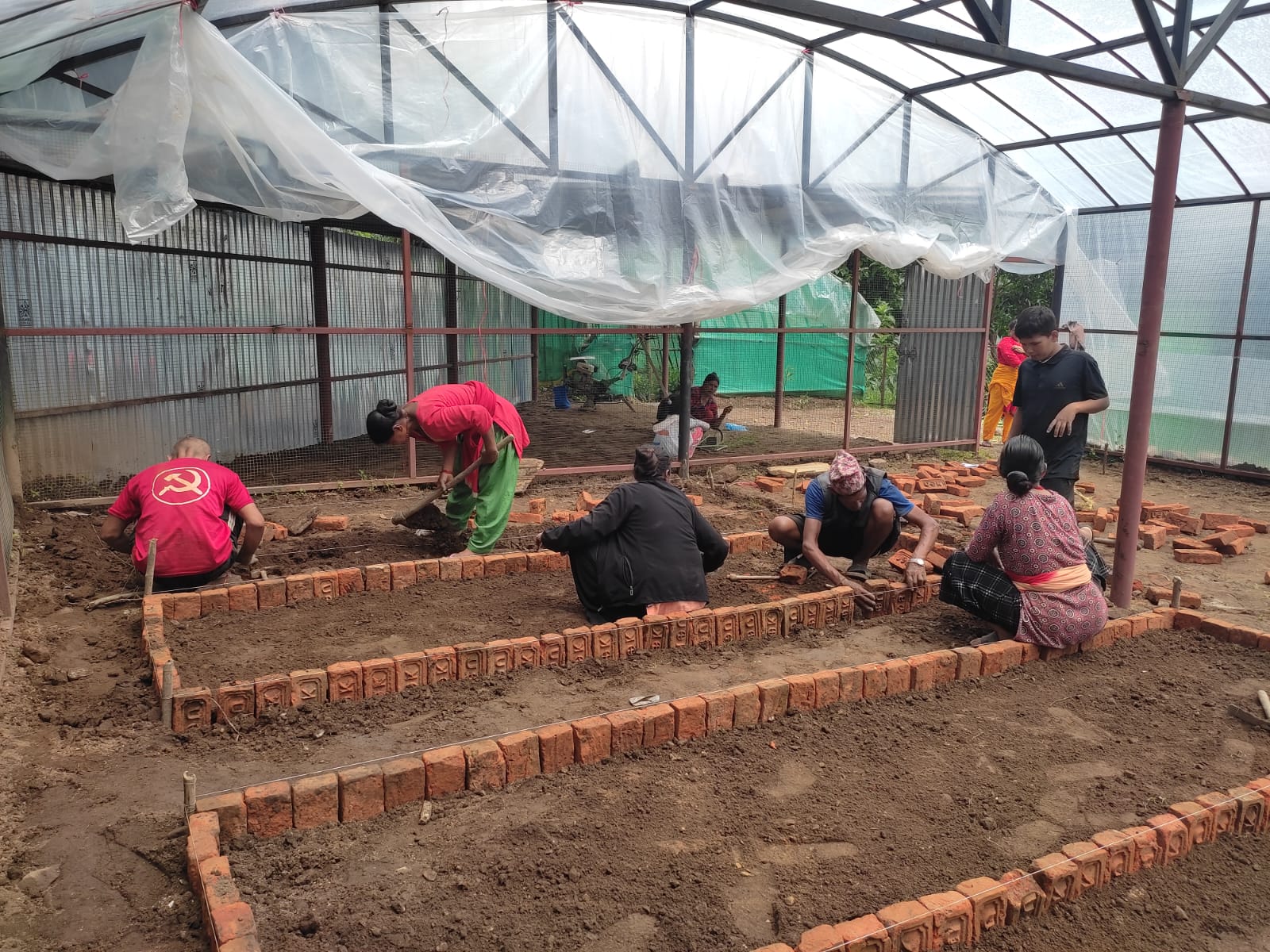
These women took the lead in constructing the nursery infrastructure, which includes a nursery tunnel (9 m x 11 m) with a capacity for 10 beds, a shed house, a storage house, and iron wire fencing. All the construction funds were mobilized by the entrepreneurial group through their group account. Furthermore, they took leadership in dealing with contractors and monitoring the construction process.

The newly constructed permanent nursery structure has the capacity to raise more than 50,000 seedlings annually. At present, they possess over 5,000 seedlings ranging in age from 1 to 10 months. These include Coffee (2,500), Lemon (2,000), Orange (80-100), Dhupi (400-500), Ipil Ipil (200), and Cardamom (500-700). Entrepreneur women have organized their schedules in a rotational manner throughout the year to operate the seedling production business. Now, they are in the process of initiating the legal registration to ensure the sustainability of the business.

The seedlings are locally consumed. Recently the ward office-8, Barhabise municipality purchased fodder seedlings equivalent to NPR 29,000 which were distributed to farmer households to promote the agroforestry system.  The project along with entrepreneur women has been facilitating the market opportunities at the regional and national level.

During the nursery handover ceremony, the deputy mayor ensured the allocation of the government regular programme and budget in the upcoming process to scale up the women-led agriculture-forest-based nursery. The women expressed their gratitude to the project as well as the local government, saying, “We have experienced many projects that come and go. We thought the same about this project. But we were wrong”. This project has truly brought about constructive change within us. Additionally, another entrepreneurial woman added, “Now we do not have to rely entirely on our husband’s income, which has subtly changed society’s perception of us”. The women are proud of being able to construct and develop the nursery project in a successful, permanent way. They not only owned the nursery in their names but also won the status of skilled nursery experts.

Study tour of EfD Forest Collaborative participants

Wrapped up a four days’ (20-23 November) study tour of EfD Forest Collaborative participants in Nepal. Participants from Uganda, Tanzania, and Kenya visited Nepal to explore community forestry practice in Nepal. The study tour involved a mix of discussions with Nepali policymakers, academics, community forestry advocates and members of forest user groups.  The team led by Prof. Randell Bluffstone from Portland State University, visited community forests in Kavre and met with community forest user groups to discuss ways forests are being managed. They mostly observed how community forests in Nepal operate and had meaningful conversations with the people driving this initiative. Likewise, the participants had insightful discussions with members of FECOFUN, forest officials at the Department of Forests and Soil Conservation as well as the Department of National Park and Wildlife Conservation, the Dean of the Institute of Forestry, and researchers.

Policy dialogue on the opportunities and challenges of forest enterprise

Attaining prosperity from forestry is one of the pressing policy priorities in the forestry sector of Nepal. With the new local government system in place, there are ample opportunities to support community forests and local farmers in promoting forest-based enterprises. However, there are still gaps pertinent to the financial, technical, and policy aspects of FBEs in Nepal.

With an aim to develop a common understanding on the issue and identify ways forward to promote FBEs, ForestAction Nepal in support of the Australian Aid, conducted a local government-level policy dialogue on the opportunities and challenges of forest enterprises in Chautara, Sindhupalchok, on October 1, 2023. Diverse stakeholders from local government (wards, municipalities), the Department of Cottage and Small Industries (Gharelu), technicians, researchers, NGO (Forest Action Nepal), furniture entrepreneurs, Lapsi entrepreneurs, media and outreach, etc. were actively engaged to discuss the opportunities, challenges, and ways out for forest enterprise development.

Some of the key takeaway messages from the policy dialogue are as follows:

● Unhealthy international competition should be checked and addressed by our existing trade related policies to create a safe and competitive business environment.

● A single-enterprise registration agency is crucial to avoid tedious process of registration.

● An effective monitoring system and the formation of a separate task team would be crucial to check the operation and overall status of the enterprises registered under them.

● Policy, legal reform for the better governance of the enterprises sector

● A system of laws, rules, processes, and stakeholders, together with their respective roles and norm should be brought together by the business institutional framework to further shape the socioeconomic activities of the entrepreneur.

● Capacity development and skill training to identify opportunities, set goals, and develop strategies to ensure that forest resources are used effectively and efficiently.

● Business Promotion Services to gain the national and international recognition

● Prioritizing on ergonomic aspects by implementing the insurance and workers safety gears while working


National Policy Dialogue on Issues and Strategies for Women-Led Forest Enterprises

After completing the 2 years of its action research journey, the project Economic Empowerment of Women through Forest Solutions has successfully carved out more than 240 rural marginalised women entrepreneurs and increased their economic, social, and technological empowerment through a series of trainings, visits, and capacity-building programs. During its implementation, they have come across policy, technological, and many other arduous legal barriers. So in order to represent the voices and stories of transformation of these entrepreneurs from the field to the table of policymakers, a one-day reflective national workshop was organized in Kathmandu. It aimed to enhance business and entrepreneurial knowledge through interaction and sharing their experiences, establish linkages between women-led production processes and the market through direct interactions with veteran entrepreneurs, and create a supportive and inclusive environment for the entrepreneurs in terms of policy and programme implementation, aiming for sustainable markets, and addressing the voice from the grassroots. As the diverse stakeholders are a crucial aspect of this national workshop, there was active engagement from diverse professional backgrounds who sparkled the discussion on different themes, intricately analysed the stories and voices of the entrepreneurs, and gave critical feedback and assurance to facilitate a supportive environment in as many aspects as possible.

The panelist discussion was centered on strategies and policies for the sustainability of microenterprises focusing on women’s engagement in the enterprise, Measures for easing registration and functioning, Major problems and issues encountered, strategies for solving the complications in the value chain of minor forest products, policy and practical gaps faced by women, and potential solutions to promote women in forest-based enterprises The issues faced by women entrepreneurs till now were: limited market, lack of skills of professional intermediaries at the local level, market expansion plans, formal product registration and certification, gender and caste discrimination, sustainability and availability of resources, maintaining quality, legitimacy of product prices, etc.

The common pathways echoed by the stakeholders were

● Accounting and expanding the use of local resources according to market potential.

● Developing strategies and implementing forest resource expansion programs,

● Market management and product diversification, for example, taking initiatives to bring Nepali paper and paper products to the national and international market,

● Producing and cultivating in community forests, private forests, and private lands for the sustainability of raw materials,

● Promoting agroforestry,

● Creating an environment of collaboration and cooperation with local government, domestic and divisional forest offices, banks and financial institutions, enterprise groups, value chain actors, community forests, and other stakeholders, and propagating the latest endeavors of knowledge and skills through various means


Outcome Workshop on Strengthening Collaboration for Women Entrepreneurs’ Initiatives

More than 45 diverse concerned stakeholders passionate about advancing women’s economic empowerment came together in a workshop held in Nawalparasi. It aimed at dissemination of the findings and recommendations of the Mid-Term Review (MTR) of the project “Economic Empowerment of Women through Forest Solutions”. The workshop preceded several sessions, starting with the women entrepreneurs’ journey, a presentation on the project outcomes, and group discussions on the role of different stakeholders in supporting women entrepreneurs. Participants developed a collaborative exit action plan as an outcome.
 
So far, the project has successfully demonstrated certain exemplary women entrepreneurs promising results of forest resource-based livelihood efforts within the contexts of three CFUG. They shared about their growing leadership and decision-making roles in economic, social, and political roles by learning the technical tactics of enterprise management skills, accessing technologies and women entrepreneurs’ buildings, and securing sustainable access to minor forest resources for their product development. They expressed gratitude to concerned stakeholders for encouraging them in their journey to establish themselves as entrepreneurs since they gained a new identity as “green entrepreneurs” based on “green enterprises”
The women entrepreneurs shared their happiness and pride with the new experiences of conducting inventories of Sal and Thakal leaves, preparing operational plans based on analysis of their inventory outputs, and obtaining approval from the DFO while including them in the operational plan of the CFUGs. Thus, women’s choices of NTFPs are now equally respected with the timber-based forestry operational plans of the concerned CFUGs.
 
The workshop also highlighted the critical challenges and suggestions received from the MTR, such as the absence of secure marketing channels, the need for legal certification and branding of products, the diversification of products, and the adoption of quality control measures. The key recommendations of the MTR were also shared in the workshop, highlighting the need for continuity of reflective learning, embracing innovation, and exploring online platforms for developing high-quality products to sustain marketing. The workshop concluded with encouraging words from the Deputy Mayor of Devchuli Municipality, who informed us that the municipality has already included funds for supporting women entrepreneurs’ marketing by opening a marketing outlet (Koseli Ghar) in Devchuli.

A Walking Training: Exploring Agriculture, Ecology, Climate Change and Culture

A walking training was conducted from September 1st to 5th, 2023, with the participation of 17 agricultural graduates in Chitwan district. On the first day of the route, the journey commenced in Hugdi, Dhading district, and concluded at Upper Kaule in Chitwan district. During the visit to Kaule, a brief observation of Chepang culture, traditions, agricultural practices, and lifestyle was carried out. It was also observed that the Chepang community has embraced modernization and there appeared to be a decline in their devotion to their own cultural heritage.

The second day of the journey began in Kaule and concluded at Upardangadi. Along the way, the participants observed the impact of climate change on the local community and vegetation. Dr. Jeewan Chetri moderated a discussion on climate change during this part of the walk.

The third day’s route started in Upardangadi and ended in Syangdi. During this leg of the journey, the participants observed deforestation, wildfires in the forests, and changes in vegetation as they ascended the Mahabharat range. This experience provided insight into the challenges faced by previous generations.

On the fourth day, the journey started in Syangdi and ended in Madi. During this portion of the walk, the participants observed the agricultural practices of the Madi community, with a particular focus on the Tharu community. They visited an organic farm to evaluate the use of organic fertilizers and botanicals for successful organic farming. Additionally, they visited a farm that integrated both organic and inorganic practices. This farm showcased advanced technologies such as high-tech tunnels, drip irrigation, vermi composting, Azolla preparation, and livestock farming. The participants also had the opportunity to learn about an inspiring Ph.D. holder who returned to Nepal to practice high-tech and organic farming.

On the fifth day, some of the participants traveled to Sumeshwor Mahadev, which marks the border between Nepal and India, while others engaged with the Tharu community to discuss their agricultural practices and cultural heritage. At the conclusion of the training, a self-reflection session was arranged to assess the training’s impact on the graduates’ learning and development.

Seeing construction through women’s eyes: as a cradle for socio-economic resilience

The trend of constructing gender-friendly infrastructure is systematically ignored in Nepal and elsewhere. Although the government issues a circular to strictly enforce building codes to ensure disabled-friendly infrastructure construction, the practice does not materialise. Yet, mainstreaming women’s needs and accommodating diverse people’s perspectives into infrastructure design has the power to address gender inequalities and increase women’s mobility. It can also link with to efforts to enhance women’s access to and ownership of land, where a great gender gap exists.

In this context, the GLOW project Economic Empowerment of Women through Forest Solutions (WEE-FS) is addressing the vital issue of infrastructure development in sustaining women-led micro enterprises in Nepal. The project has secured six collective spaces for more than 240 women, engaging in 18 enterprise groups from the rural areas of Nawalpur and Sindhupalchok. These six “women entrepreneurs’ homes” were constructed to offer collective working spaces and solve the women’s difficulty in finding workspaces elsewhere.

In Bhujel village, Nawalparasi, where the project has supported bamboo enterprises, the women entrepreneurs wanted to use bamboo-splitting technology to enhance the efficiency of their production. The WEE-FS project supported them to purchase the required machine. However, the women struggled to find an appropriate place to install it. They asked the WEE-FS project to support construction of a building where they could use the machine together.

The women identified land for construction; but a powerful man sought to undermine them. Initially, he pretended to support the women’s group by providing a land lease agreement for 20 years (claiming that he owned the land, although it was never formally registered to him). The women suspected foul play and refused to accept.

He then led a small group of men in threatening the women to dispose of all the project’s capital equipment, if interrogated further on the land issue. In defence, the women are now claiming their rights with the local government and community forest user group (CFUG) – asking them to grant a plot of land for women’s enterprise buildings.

Completely different women’s groups in Sindhupalchok requested a solar dryer and grinding machine to expand their processing of nettle powder and cardamom, but could find no common space to install the machines. They started looking for rental space, but most requests were denied.

One man offered his land for a 20-year lease, the first two years free of cost. The women’s groups received equipment from the project, and started generating income. Then, the landlord began bargaining for rent and he threatened to throw out the machines if he did not receive it.

In another case, the women entrepreneurs running bio-cup and bio-plate businesses had to transfer their equipment from one place to another, paying the charges from their own pockets. There was a shortage of common space for the meetings and other capacity-building programmes. At times, CFUG events would clash with entrepreneurs’ machine operations, training programmes, or other group activities.

These examples illustrate how women entrepreneurs feel insecure due to lack of space for their enterprises.  To meet these multiple needs, the women entrepreneurs decided to muster forces and pull together the legal permissions, materials, the labour and operating rules to construct and run a collective space, together with financial support from the project, local government and CFUGs.

Women entrepreneurs welcome delegates of the municipality to their home | Image source: Aarati Khatri, ForestAction Nepal

The women’s group also managed to leverage timber from the CFUG and cash from the local government. This paved the way for mainstreaming the women’s voices and wishes into the ward level development plans. They reflected that, “we could never go to the local government and demand before, but now we can get budget for construction”. This proactive involvement of government authorities and supporting agencies is imperative for the viability and sustainability of such green enterprises. They hold the potential to boost household economies, ensure societal well-being, and encourage wise resource utilisation while lowering carbon damage.

The women took the lead in the construction work by breaking all the gender stereotypes. Formation of a construction committee, opening bank account, dealing with the contractors and bargaining with the hardware shopkeepers for the best price were all done by women.

After the establishment of the entrepreneurial buildings, the happiness of these entrepreneurs knew no bounds. “I’m proud of our engagement in the construction, my learning with this construction is more than what we I could gain while I was an elected representative in the local government”, said one entrepreneur.

The businesswomen from Bhagar, Gaidakot ward 14, are excited to have their own space. One of them shared, “Earlier, we had no common places for the machine installation, and it was so worrisome to carry the machine here and there in search of a common space. But now we have our own building”. Another entrepreneur added, “We had to pay the rent, but now we are rent-free as we have constructed our own building”.

A woman from a broom-making enterprise shared her excitement: “Finally, we have a space that we can freely call our own. Now we don’t have to wander here and there to search for a rental home for working on our enterprise activities and storage for our raw materials.”

Entrepreneurs of the bio-cup business teach the local mayor how to use the machine | Image source: Aarati Khatri, ForestAction Nepal


A space free from violence and trauma

More importantly the “homes” have become a common ground to share the history-long oppressions of gender inequality and countless incidences of gender-based violence and intergenerational traumas. One of the entrepreneurs said that the house can act as a safe shelter for women suffering from domestic violence. She added, ”If there are any disputes in the family, at least I have a new safe home to stay in. This building has been a space to gain mental peace too and this makes me feel empowered.”

The community halls will hold the discussion, sharing, and interactions that help women to socialise and learn, while combating their loneliness through “women for women” counselling and support.

Space to keep materials, machinery and products safe from harm

Where there is economically valuable equipment, there will be security concerns, and the homes provide security from thefts. During disasters, they can be used as rescue homes; also as isolation centers during medical emergencies. In addition, the homes provide safe storage and can save the products from insect attacks and forest fires, too. Entrepreneurs noted that “we encountered losses as our bio-cups and plates were eaten by insects and mice! Now we are happy our products are safe in the newly constructed building”. Furthermore, the homes help to maintain  hygiene when storing edible products such as sisnoo, lapsi, and triphala, which could be easily spoiled under poor storage conditions.

Space for innovation and creation

This space enhances creativity and innovation through the interactions among the entrepreneurs. “The home has helped us to maintain consistency in our products, the bags and mats that we prepare were not consistent in size and shape, but now we can work together”, said a Thakal entrepreneur. These common roofs weave the unity needed to empower marginalised women and people with disabilities to be part of societal and economic development through enterprise development. The women are creating ideas to diversify their products and exchange them with other entrepreneurs.

Space for meetings and cultural exchange

The homes act as the unifying places for the networking of different stakeholders, such as government line agencies, researchers, and other diverse visitors, with women entrepreneurs. They provide a common roof and ground for negotiations, capacity-building training, and marketing that will further enhance connectedness and cohesion. “After the machine and the products are safely stored and the decorated here in the entrepreneurs building, there has been an increase in the number of visitors to see the buildings and the process of bio-cup and plate production”, said an entrepreneur in Sankhadevi CFUG. The group has been motivating others to bring the lapha (leaves weaved together) or leaves with them so that we can buy them and they can reap the benefits as well as visit our enterprises too.

There are numerous women’s festivals and social gatherings, and these buildings can be used as a common ground and recreational space for cultural exchange, uniting the diversity of entrepreneurs having different cultures and religions. They help create a friendly environment, where people can strengthen their social bonds, and celebrate peace and harmony.

Interior of the bio-cup and bio-plate enterprise home | Image source: Usha Thakuri, ForestAction Nepal

Summary: one space, many benefits

There is true inclusion because each building comprises three rooms: one for productive machinery, storing raw materials, and showcasing the final products, a second room is for childcare and breast feeding and a third room is a  kitchen where the women can cook snacks and eat. The building is not only gender-responsive, but also disability-friendly, being wheelchair-compatible.

This infrastructure is not just grey cement and concrete but rather signifies the roof of unity, agency and feminist compassionate leadership development. It also complies with SDG 9, Building resilient infrastructure by promoting inclusive and sustainable industrialization and fostering innovation.

This advancement of gender-responsive buildings that are safe, affordable, and reliable has significant potential for reducing the barriers that hold back the success of women entrepreneurs. Investing in more sustainable infrastructure and promoting gender equality are development priorities of Agenda 2030. These buildings have incorporated the multiple facets of women’s entrepreneurial journey. They are a foundation that will carry the legacy of women’s entrepreneurship, by maintaining sustainability and cohesion with other development actions.

Businesswoman balances her entrepreneurial and family priorities, during the completion of the baseline survey | Image source: Aarati Khatri, ForestAction Nepal

The blog was originally published in CDKN website as a part of the gender equality in low carbon world (GLOW) program funded by IDRC Canada.

Preliminary discussion on the draft of agriculture act 2080

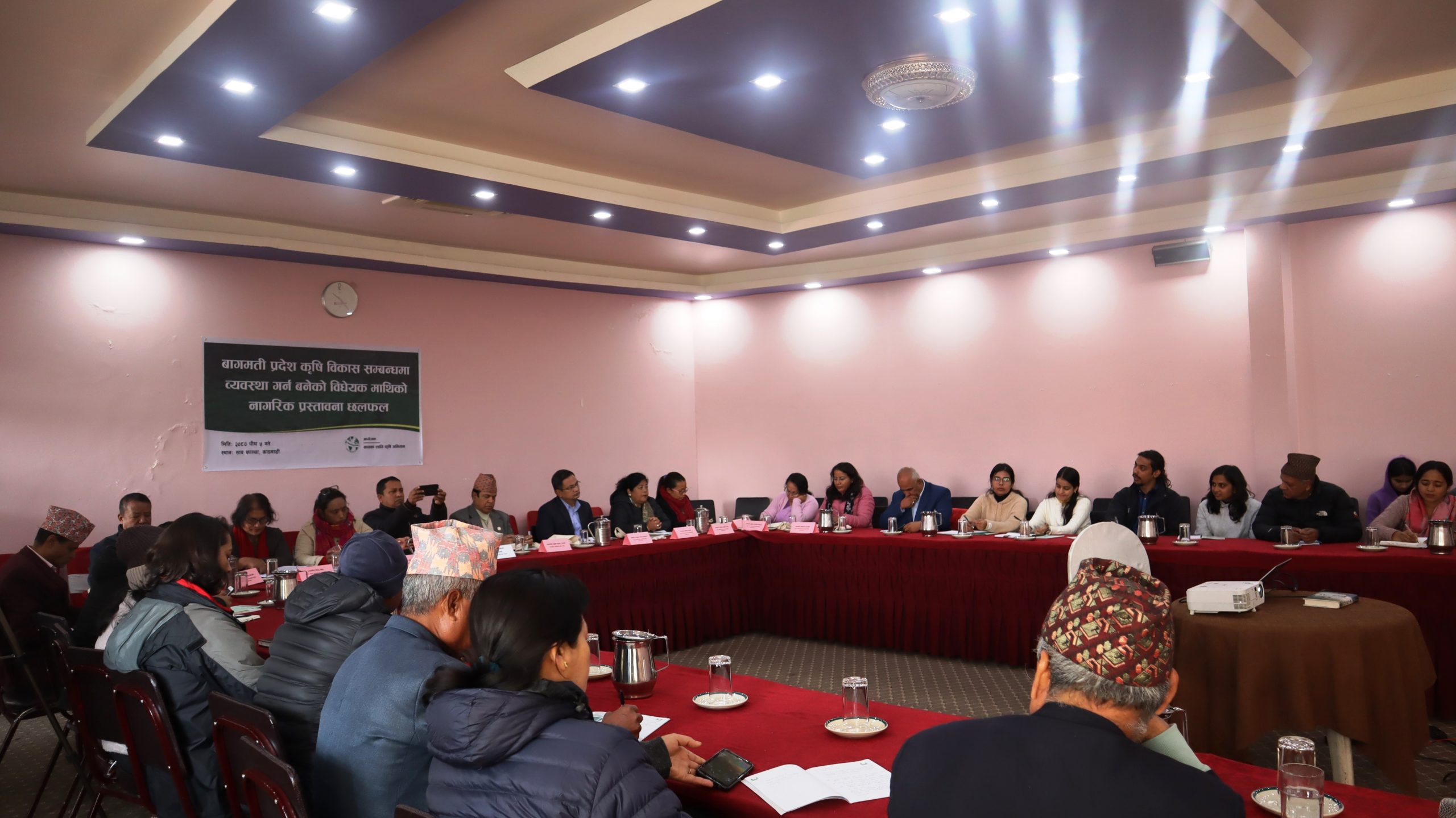
On July 30, 2023, ForestAction Nepal, the secretariat of the Alliance of Agriculture for Food (AAF), organized a preliminary discussion program on the need for an integrated agriculture act at SAP-Falcha, Kathmandu. The event was attended by distinguished guests, including Dr. Bedu Ram Bhusal, Honorable Minister of Agriculture and Livestock Development (MOALD), as well as the Secretary and joint secretaries from MOALD. There were also honorable members from the Agriculture, Cooperative, and Natural Resources Committee (under the House of Representatives), the National Planning Commission, the National Farmers Commission, and various other stakeholders, such as agriculture experts, farmers, media persons, activists, representatives of CSOs, and AAF members.

The event was conducted in two sessions. During the first session, two presentations were made, one by the Ministry and the other by AAF. The second session was dedicated to discussions on the topic at hand.

During the event, Dr. Rajendra Mishra, the joint secretary from MOALD, shared the first draft of the Agriculture bill that was prepared by the Ministry. In his presentation, he emphasized that the proposed act aims to promote the protection of farmers, the farming occupation, agri-business, water conservation, indigenous products/commodities, and agrobiodiversity.

Additionally, Dr. Rajendra Mishra further highlighted that the proposed act also encompasses the management of a gene bank and ensures the rights of farmers and farming communities.

At the event, Dr. Krishna Prasad Paudel, an AAF activist, presented a review of the first draft of the Agriculture bill. Dr. Paudel criticized the draft prepared by the Ministry, stating that it appeared to be more focused on the agricultural business promotion act rather than on an integrated agriculture act. He emphasized the need for all dimensions of agriculture to be taken into consideration while preparing the act. He expressed his concern that the proposed act failed to prioritize the smallholder farmers. He also stressed the importance of extensive discussions with stakeholders during the drafting process of the act.

Following the presentations, the floor was opened for the discussions. During the open discussion session, various viewpoints were expressed by the guests and participants. Here is a summary of the key viewpoints:

– In order to make the act more comprehensive and effective, there is still a need for significant discussions.

– There is an urgent need for the act to be implemented as soon as possible in order to address the challenges and opportunities in the agricultural sector effectively.

– There has been a lack of attention given to conservation in regards to the farmers group, women group, and forest group.

– Before the formulation of Agriculture act, there is a need to discuss effectively on issues of arable land.

– The purpose of the Agriculture Act should be to localize and empower farmers by prioritizing institutional and bureaucratic restructuring.

– Research institutes and university should actively engage in research initiatives, create knowledge, and provide evidence-based recommendations to foster progress in agriculture. Furthermore, these institutions should work collaboratively and take ownership of implementing policies, programs, and interventions aimed at addressing the challenges faced by farmers and promoting sustainable agricultural practices.

– The Agriculture Act should comprehensively address the important aspects of education, research, and dissemination within the agricultural sector.

– There is a need for coordination between the Ministry of Agriculture, Ministry of Lands, Ministry of Irrigation, and the Ministry of Forestry and prepare the integrated act.

Forest fire management in Nepal: Status, emerging challenges and response strategies

Forest fire pose threats to the ecosystem and human lives every year in Nepal. The problem is exacerbated with rising temperatures, changing precipitation patterns, and prolonged droughts. Despite efforts from multiple agencies, forest fire remains a threat due mainly to high accumulation of fuel load in the forests and poor forest management practices. This calls for effective forest fire management strategies with a combination of prevention, preparedness, response, and recovery measures. In this backdrop, ForestAction Nepal in collaboration with Nepal Forester’s Association (NFA), Global Institute of Interdisciplinary Studies (GIIS), and Institute for Study and Development Worldwide (IFSD) organized a half day dialogue to identify key gaps and challenges pertinent to forest fire management in Nepal.

Some key takeaways from the dialogue are:

– With changing patterns and intensity, it is important to understand the forest fire dynamics to reduce the hazards.

– In recent years, local communities are losing interest and motivation in getting involved in extinguishing forest fire in nearby community forests. Though several reasons can be attributed to this, the primary factor has been increasing regulatory requirements for the user groups to acquire timber and other benefits from the forest.

– Declining interest and involvement of user groups in forest management activities has resulted in high deposition of burning materials/biomass in the forests, thus triggering the risk of fire. This demands for a radical rethinking on the use of forest biomass.

– While technological innovations have proven to be effective in some cases, policies and strategies should largely focus on engaging community institutions and their participation in management of forest fire in Nepal. In addition, adequate focus should be laid on reducing risks of communities who get involved in forest fire management.

– While problems and issues pertinent to forest fire in Nepal are largely understood, prioritizing research and piloting will provide a solid ground for scaling out strategies and options for forest fire management.

Click here to download the event report

Our dream: localization of food, livelihood and economy

In a remarkable display of community spirit dedication towards Sustainable agriculture, representatives from alliance of agriculture, civil society and media organizations gathered on June 30, 2023, to celebrate 4th International Localization Day and 20th National Paddy Day at Kavresthali, Kathmandu. This event aimed to promote the age-old practice of rice transplantation, emphasizing its importance in ensuring the food security and financial stability of the agricultural community in Nepal, as well as its overall positive effects on the environment. The collective effort of all the stakeholders made this event a resounding success, creating awareness and inspiring a positive campaign.

Bestowed by the hazy day, the event commenced with an opening ceremony led by the agriculture experts, representatives from different organization and media outlets, along with local farmers, highlighting the importance and necessity to promote sustainable farming practices and provide support to local farmers. The event kicked off with informative session, where famers shared insights and knowledge techniques related to rice transplanting.  The session emphasized the ecological advantage productivity associated with this method. Following the session, participants eagerly ventured into nearby paddy fields to engage in hands-on experience. Guided by experienced farmers and experts, enthusiastic representatives’ donned traditional farming attire, rolled up their sleeves, and joined the local famers in the muddy fields. This active participation fostered collaboration and knowledge exchange among the attendees.

The media played a crucial role in amplifying the events impact with journalists from mainstream media documenting the activities and interviewing participants. Through their coverage, they aimed to raise awareness globally, showcasing the significance of traditional farming methods and the efforts made by different related organization, and local farmers in promoting sustainability. As the day drew to a close, local farmers and affiliated officials expressed their gratitude to all the attendees for their unwavering support in promoting sustainable agriculture in the region.

The National Rice Transplanting Day served as a remarkable example of the positive impact, by paving the way for promotion of strategic intervention and support while simultaneously honoring the rich cultural heritage of traditional rice cultivation.