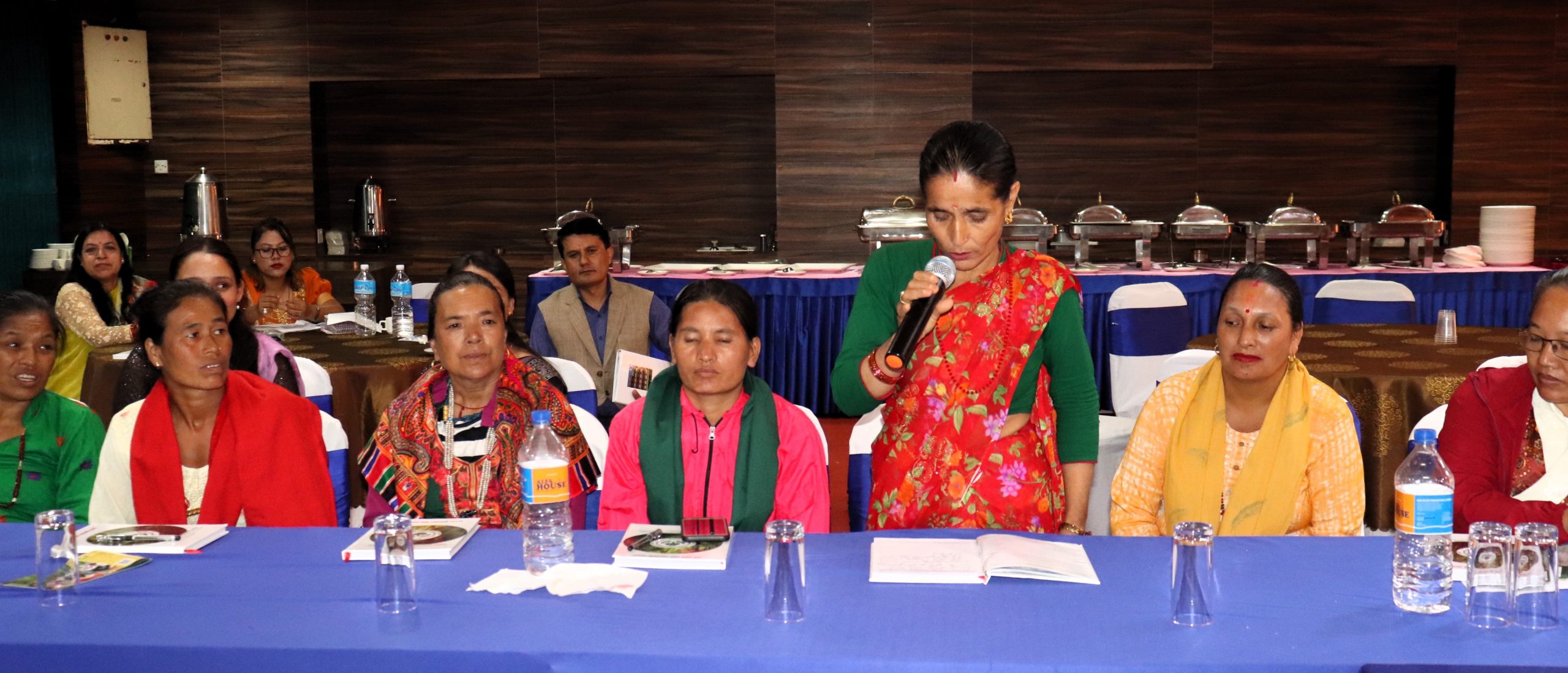
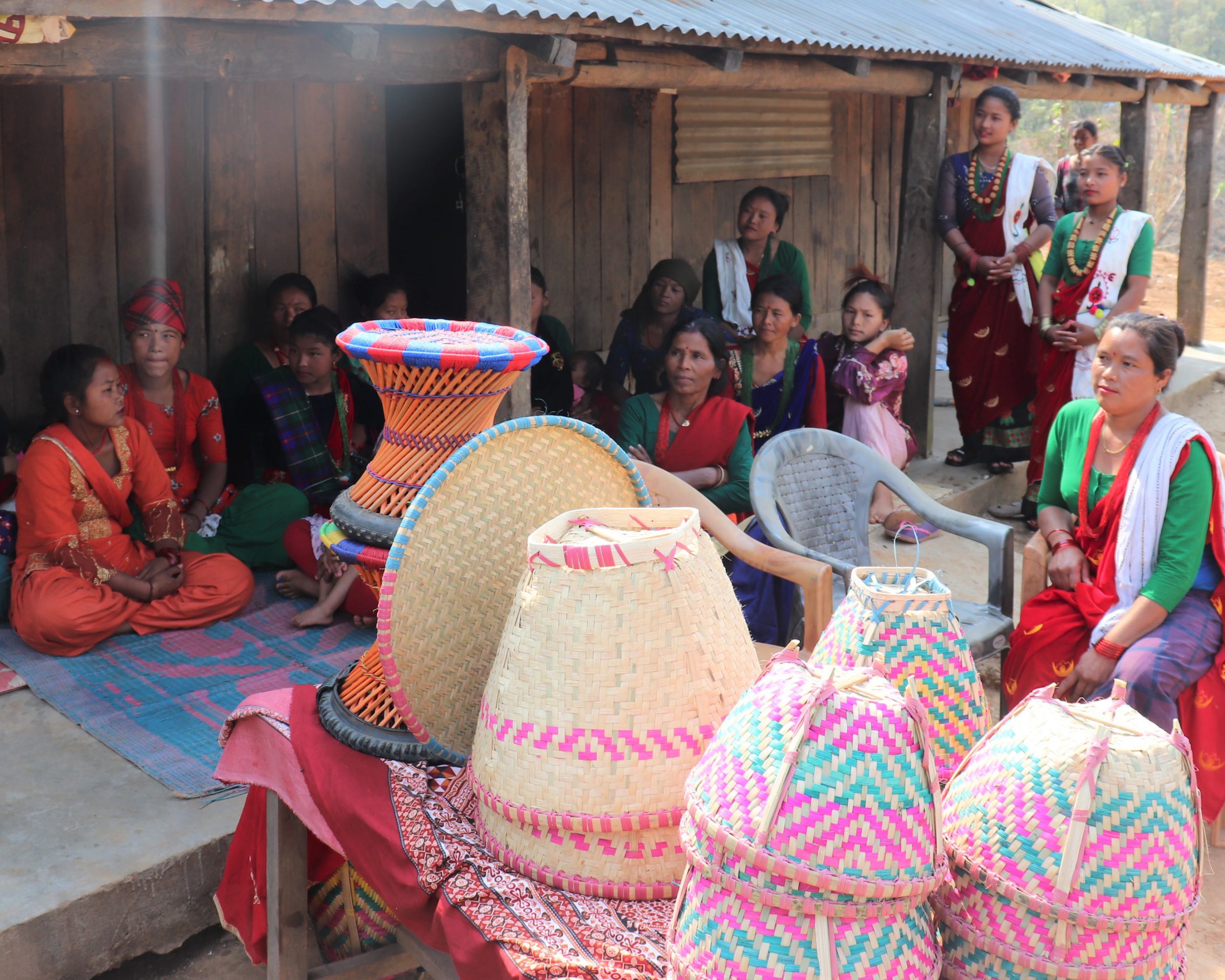
After completing the 2 years of its action research journey, the project Economic Empowerment of Women through Forest Solutions has successfully carved out more than 240 rural marginalised women entrepreneurs and increased their economic, social, and technological empowerment through a series of trainings, visits, and capacity-building programs. During its implementation, they have come across policy, technological, and many other arduous legal barriers. So in order to represent the voices and stories of transformation of these entrepreneurs from the field to the table of policymakers, a one-day reflective national workshop was organized in Kathmandu. It aimed to enhance business and entrepreneurial knowledge through interaction and sharing their experiences, establish linkages between women-led production processes and the market through direct interactions with veteran entrepreneurs, and create a supportive and inclusive environment for the entrepreneurs in terms of policy and programme implementation, aiming for sustainable markets, and addressing the voice from the grassroots. As the diverse stakeholders are a crucial aspect of this national workshop, there was active engagement from diverse professional backgrounds who sparkled the discussion on different themes, intricately analysed the stories and voices of the entrepreneurs, and gave critical feedback and assurance to facilitate a supportive environment in as many aspects as possible.
The panelist discussion was centered on strategies and policies for the sustainability of microenterprises focusing on women’s engagement in the enterprise, Measures for easing registration and functioning, Major problems and issues encountered, strategies for solving the complications in the value chain of minor forest products, policy and practical gaps faced by women, and potential solutions to promote women in forest-based enterprises The issues faced by women entrepreneurs till now were: limited market, lack of skills of professional intermediaries at the local level, market expansion plans, formal product registration and certification, gender and caste discrimination, sustainability and availability of resources, maintaining quality, legitimacy of product prices, etc.
The common pathways echoed by the stakeholders were
● Accounting and expanding the use of local resources according to market potential.
● Developing strategies and implementing forest resource expansion programs,
● Market management and product diversification, for example, taking initiatives to bring Nepali paper and paper products to the national and international market,
● Producing and cultivating in community forests, private forests, and private lands for the sustainability of raw materials,
● Promoting agroforestry,
● Creating an environment of collaboration and cooperation with local government, domestic and divisional forest offices, banks and financial institutions, enterprise groups, value chain actors, community forests, and other stakeholders, and propagating the latest endeavors of knowledge and skills through various means
More than 45 diverse concerned stakeholders passionate about advancing women’s economic empowerment came together in a workshop held in Nawalparasi. It aimed at dissemination of the findings and recommendations of the Mid-Term Review (MTR) of the project “Economic Empowerment of Women through Forest Solutions”. The workshop preceded several sessions, starting with the women entrepreneurs’ journey, a presentation on the project outcomes, and group discussions on the role of different stakeholders in supporting women entrepreneurs. Participants developed a collaborative exit action plan as an outcome.
So far, the project has successfully demonstrated certain exemplary women entrepreneurs promising results of forest resource-based livelihood efforts within the contexts of three CFUG. They shared about their growing leadership and decision-making roles in economic, social, and political roles by learning the technical tactics of enterprise management skills, accessing technologies and women entrepreneurs’ buildings, and securing sustainable access to minor forest resources for their product development. They expressed gratitude to concerned stakeholders for encouraging them in their journey to establish themselves as entrepreneurs since they gained a new identity as “green entrepreneurs” based on “green enterprises”
The women entrepreneurs shared their happiness and pride with the new experiences of conducting inventories of Sal and Thakal leaves, preparing operational plans based on analysis of their inventory outputs, and obtaining approval from the DFO while including them in the operational plan of the CFUGs. Thus, women’s choices of NTFPs are now equally respected with the timber-based forestry operational plans of the concerned CFUGs.
The workshop also highlighted the critical challenges and suggestions received from the MTR, such as the absence of secure marketing channels, the need for legal certification and branding of products, the diversification of products, and the adoption of quality control measures. The key recommendations of the MTR were also shared in the workshop, highlighting the need for continuity of reflective learning, embracing innovation, and exploring online platforms for developing high-quality products to sustain marketing. The workshop concluded with encouraging words from the Deputy Mayor of Devchuli Municipality, who informed us that the municipality has already included funds for supporting women entrepreneurs’ marketing by opening a marketing outlet (Koseli Ghar) in Devchuli.
A walking training was conducted from September 1st to 5th, 2023, with the participation of 17 agricultural graduates in Chitwan district. On the first day of the route, the journey commenced in Hugdi, Dhading district, and concluded at Upper Kaule in Chitwan district. During the visit to Kaule, a brief observation of Chepang culture, traditions, agricultural practices, and lifestyle was carried out. It was also observed that the Chepang community has embraced modernization and there appeared to be a decline in their devotion to their own cultural heritage.
The second day of the journey began in Kaule and concluded at Upardangadi. Along the way, the participants observed the impact of climate change on the local community and vegetation. Dr. Jeewan Chetri moderated a discussion on climate change during this part of the walk.
The third day’s route started in Upardangadi and ended in Syangdi. During this leg of the journey, the participants observed deforestation, wildfires in the forests, and changes in vegetation as they ascended the Mahabharat range. This experience provided insight into the challenges faced by previous generations.
On the fourth day, the journey started in Syangdi and ended in Madi. During this portion of the walk, the participants observed the agricultural practices of the Madi community, with a particular focus on the Tharu community. They visited an organic farm to evaluate the use of organic fertilizers and botanicals for successful organic farming. Additionally, they visited a farm that integrated both organic and inorganic practices. This farm showcased advanced technologies such as high-tech tunnels, drip irrigation, vermi composting, Azolla preparation, and livestock farming. The participants also had the opportunity to learn about an inspiring Ph.D. holder who returned to Nepal to practice high-tech and organic farming.
On the fifth day, some of the participants traveled to Sumeshwor Mahadev, which marks the border between Nepal and India, while others engaged with the Tharu community to discuss their agricultural practices and cultural heritage. At the conclusion of the training, a self-reflection session was arranged to assess the training’s impact on the graduates’ learning and development.
The trend of constructing gender-friendly infrastructure is systematically ignored in Nepal and elsewhere. Although the government issues a circular to strictly enforce building codes to ensure disabled-friendly infrastructure construction, the practice does not materialise. Yet, mainstreaming women’s needs and accommodating diverse people’s perspectives into infrastructure design has the power to address gender inequalities and increase women’s mobility. It can also link with to efforts to enhance women’s access to and ownership of land, where a great gender gap exists.
In this context, the GLOW project Economic Empowerment of Women through Forest Solutions (WEE-FS) is addressing the vital issue of infrastructure development in sustaining women-led micro enterprises in Nepal. The project has secured six collective spaces for more than 240 women, engaging in 18 enterprise groups from the rural areas of Nawalpur and Sindhupalchok. These six “women entrepreneurs’ homes” were constructed to offer collective working spaces and solve the women’s difficulty in finding workspaces elsewhere.
In Bhujel village, Nawalparasi, where the project has supported bamboo enterprises, the women entrepreneurs wanted to use bamboo-splitting technology to enhance the efficiency of their production. The WEE-FS project supported them to purchase the required machine. However, the women struggled to find an appropriate place to install it. They asked the WEE-FS project to support construction of a building where they could use the machine together.
The women identified land for construction; but a powerful man sought to undermine them. Initially, he pretended to support the women’s group by providing a land lease agreement for 20 years (claiming that he owned the land, although it was never formally registered to him). The women suspected foul play and refused to accept.
He then led a small group of men in threatening the women to dispose of all the project’s capital equipment, if interrogated further on the land issue. In defence, the women are now claiming their rights with the local government and community forest user group (CFUG) – asking them to grant a plot of land for women’s enterprise buildings.
Completely different women’s groups in Sindhupalchok requested a solar dryer and grinding machine to expand their processing of nettle powder and cardamom, but could find no common space to install the machines. They started looking for rental space, but most requests were denied.
One man offered his land for a 20-year lease, the first two years free of cost. The women’s groups received equipment from the project, and started generating income. Then, the landlord began bargaining for rent and he threatened to throw out the machines if he did not receive it.
In another case, the women entrepreneurs running bio-cup and bio-plate businesses had to transfer their equipment from one place to another, paying the charges from their own pockets. There was a shortage of common space for the meetings and other capacity-building programmes. At times, CFUG events would clash with entrepreneurs’ machine operations, training programmes, or other group activities.
These examples illustrate how women entrepreneurs feel insecure due to lack of space for their enterprises. To meet these multiple needs, the women entrepreneurs decided to muster forces and pull together the legal permissions, materials, the labour and operating rules to construct and run a collective space, together with financial support from the project, local government and CFUGs.
Women entrepreneurs welcome delegates of the municipality to their home | Image source: Aarati Khatri, ForestAction Nepal
The women’s group also managed to leverage timber from the CFUG and cash from the local government. This paved the way for mainstreaming the women’s voices and wishes into the ward level development plans. They reflected that, “we could never go to the local government and demand before, but now we can get budget for construction”. This proactive involvement of government authorities and supporting agencies is imperative for the viability and sustainability of such green enterprises. They hold the potential to boost household economies, ensure societal well-being, and encourage wise resource utilisation while lowering carbon damage.
The women took the lead in the construction work by breaking all the gender stereotypes. Formation of a construction committee, opening bank account, dealing with the contractors and bargaining with the hardware shopkeepers for the best price were all done by women.
After the establishment of the entrepreneurial buildings, the happiness of these entrepreneurs knew no bounds. “I’m proud of our engagement in the construction, my learning with this construction is more than what we I could gain while I was an elected representative in the local government”, said one entrepreneur.
The businesswomen from Bhagar, Gaidakot ward 14, are excited to have their own space. One of them shared, “Earlier, we had no common places for the machine installation, and it was so worrisome to carry the machine here and there in search of a common space. But now we have our own building”. Another entrepreneur added, “We had to pay the rent, but now we are rent-free as we have constructed our own building”.
A woman from a broom-making enterprise shared her excitement: “Finally, we have a space that we can freely call our own. Now we don’t have to wander here and there to search for a rental home for working on our enterprise activities and storage for our raw materials.”
Entrepreneurs of the bio-cup business teach the local mayor how to use the machine | Image source: Aarati Khatri, ForestAction Nepal
A space free from violence and trauma
More importantly the “homes” have become a common ground to share the history-long oppressions of gender inequality and countless incidences of gender-based violence and intergenerational traumas. One of the entrepreneurs said that the house can act as a safe shelter for women suffering from domestic violence. She added, ”If there are any disputes in the family, at least I have a new safe home to stay in. This building has been a space to gain mental peace too and this makes me feel empowered.”
The community halls will hold the discussion, sharing, and interactions that help women to socialise and learn, while combating their loneliness through “women for women” counselling and support.
Space to keep materials, machinery and products safe from harm
Where there is economically valuable equipment, there will be security concerns, and the homes provide security from thefts. During disasters, they can be used as rescue homes; also as isolation centers during medical emergencies. In addition, the homes provide safe storage and can save the products from insect attacks and forest fires, too. Entrepreneurs noted that “we encountered losses as our bio-cups and plates were eaten by insects and mice! Now we are happy our products are safe in the newly constructed building”. Furthermore, the homes help to maintain hygiene when storing edible products such as sisnoo, lapsi, and triphala, which could be easily spoiled under poor storage conditions.
Space for innovation and creation
This space enhances creativity and innovation through the interactions among the entrepreneurs. “The home has helped us to maintain consistency in our products, the bags and mats that we prepare were not consistent in size and shape, but now we can work together”, said a Thakal entrepreneur. These common roofs weave the unity needed to empower marginalised women and people with disabilities to be part of societal and economic development through enterprise development. The women are creating ideas to diversify their products and exchange them with other entrepreneurs.
Space for meetings and cultural exchange
The homes act as the unifying places for the networking of different stakeholders, such as government line agencies, researchers, and other diverse visitors, with women entrepreneurs. They provide a common roof and ground for negotiations, capacity-building training, and marketing that will further enhance connectedness and cohesion. “After the machine and the products are safely stored and the decorated here in the entrepreneurs building, there has been an increase in the number of visitors to see the buildings and the process of bio-cup and plate production”, said an entrepreneur in Sankhadevi CFUG. The group has been motivating others to bring the lapha (leaves weaved together) or leaves with them so that we can buy them and they can reap the benefits as well as visit our enterprises too.
There are numerous women’s festivals and social gatherings, and these buildings can be used as a common ground and recreational space for cultural exchange, uniting the diversity of entrepreneurs having different cultures and religions. They help create a friendly environment, where people can strengthen their social bonds, and celebrate peace and harmony.
Interior of the bio-cup and bio-plate enterprise home | Image source: Usha Thakuri, ForestAction Nepal
Summary: one space, many benefits
There is true inclusion because each building comprises three rooms: one for productive machinery, storing raw materials, and showcasing the final products, a second room is for childcare and breast feeding and a third room is a kitchen where the women can cook snacks and eat. The building is not only gender-responsive, but also disability-friendly, being wheelchair-compatible.
This advancement of gender-responsive buildings that are safe, affordable, and reliable has significant potential for reducing the barriers that hold back the success of women entrepreneurs. Investing in more sustainable infrastructure and promoting gender equality are development priorities of Agenda 2030. These buildings have incorporated the multiple facets of women’s entrepreneurial journey. They are a foundation that will carry the legacy of women’s entrepreneurship, by maintaining sustainability and cohesion with other development actions.
Businesswoman balances her entrepreneurial and family priorities, during the completion of the baseline survey | Image source: Aarati Khatri, ForestAction Nepal
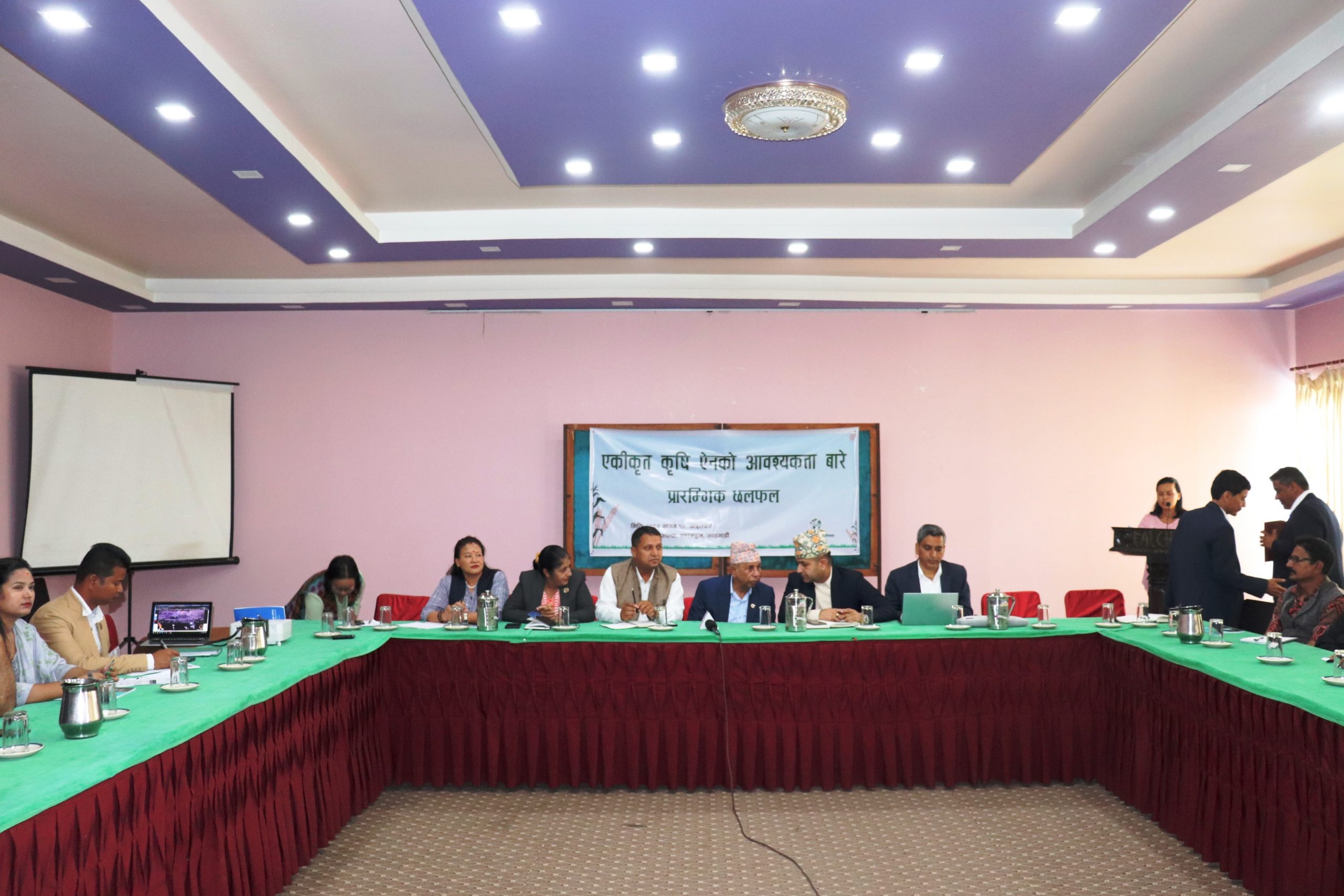
On July 30, 2023, ForestAction Nepal, the secretariat of the Alliance of Agriculture for Food (AAF), organized a preliminary discussion program on the need for an integrated agriculture act at SAP-Falcha, Kathmandu. The event was attended by distinguished guests, including Dr. Bedu Ram Bhusal, Honorable Minister of Agriculture and Livestock Development (MOALD), as well as the Secretary and joint secretaries from MOALD. There were also honorable members from the Agriculture, Cooperative, and Natural Resources Committee (under the House of Representatives), the National Planning Commission, the National Farmers Commission, and various other stakeholders, such as agriculture experts, farmers, media persons, activists, representatives of CSOs, and AAF members.
The event was conducted in two sessions. During the first session, two presentations were made, one by the Ministry and the other by AAF. The second session was dedicated to discussions on the topic at hand.
During the event, Dr. Rajendra Mishra, the joint secretary from MOALD, shared the first draft of the Agriculture bill that was prepared by the Ministry. In his presentation, he emphasized that the proposed act aims to promote the protection of farmers, the farming occupation, agri-business, water conservation, indigenous products/commodities, and agrobiodiversity.
Additionally, Dr. Rajendra Mishra further highlighted that the proposed act also encompasses the management of a gene bank and ensures the rights of farmers and farming communities.
At the event, Dr. Krishna Prasad Paudel, an AAF activist, presented a review of the first draft of the Agriculture bill. Dr. Paudel criticized the draft prepared by the Ministry, stating that it appeared to be more focused on the agricultural business promotion act rather than on an integrated agriculture act. He emphasized the need for all dimensions of agriculture to be taken into consideration while preparing the act. He expressed his concern that the proposed act failed to prioritize the smallholder farmers. He also stressed the importance of extensive discussions with stakeholders during the drafting process of the act.
Following the presentations, the floor was opened for the discussions. During the open discussion session, various viewpoints were expressed by the guests and participants. Here is a summary of the key viewpoints:
– In order to make the act more comprehensive and effective, there is still a need for significant discussions.
– There is an urgent need for the act to be implemented as soon as possible in order to address the challenges and opportunities in the agricultural sector effectively.
– There has been a lack of attention given to conservation in regards to the farmers group, women group, and forest group.
– Before the formulation of Agriculture act, there is a need to discuss effectively on issues of arable land.
– The purpose of the Agriculture Act should be to localize and empower farmers by prioritizing institutional and bureaucratic restructuring.
– Research institutes and university should actively engage in research initiatives, create knowledge, and provide evidence-based recommendations to foster progress in agriculture. Furthermore, these institutions should work collaboratively and take ownership of implementing policies, programs, and interventions aimed at addressing the challenges faced by farmers and promoting sustainable agricultural practices.
– The Agriculture Act should comprehensively address the important aspects of education, research, and dissemination within the agricultural sector.
– There is a need for coordination between the Ministry of Agriculture, Ministry of Lands, Ministry of Irrigation, and the Ministry of Forestry and prepare the integrated act.
Forest fire pose threats to the ecosystem and human lives every year in Nepal. The problem is exacerbated with rising temperatures, changing precipitation patterns, and prolonged droughts. Despite efforts from multiple agencies, forest fire remains a threat due mainly to high accumulation of fuel load in the forests and poor forest management practices. This calls for effective forest fire management strategies with a combination of prevention, preparedness, response, and recovery measures. In this backdrop, ForestAction Nepal in collaboration with Nepal Forester’s Association (NFA), Global Institute of Interdisciplinary Studies (GIIS), and Institute for Study and Development Worldwide (IFSD) organized a half day dialogue to identify key gaps and challenges pertinent to forest fire management in Nepal.
Some key takeaways from the dialogue are:
– With changing patterns and intensity, it is important to understand the forest fire dynamics to reduce the hazards.
– In recent years, local communities are losing interest and motivation in getting involved in extinguishing forest fire in nearby community forests. Though several reasons can be attributed to this, the primary factor has been increasing regulatory requirements for the user groups to acquire timber and other benefits from the forest.
– Declining interest and involvement of user groups in forest management activities has resulted in high deposition of burning materials/biomass in the forests, thus triggering the risk of fire. This demands for a radical rethinking on the use of forest biomass.
– While technological innovations have proven to be effective in some cases, policies and strategies should largely focus on engaging community institutions and their participation in management of forest fire in Nepal. In addition, adequate focus should be laid on reducing risks of communities who get involved in forest fire management.
– While problems and issues pertinent to forest fire in Nepal are largely understood, prioritizing research and piloting will provide a solid ground for scaling out strategies and options for forest fire management.
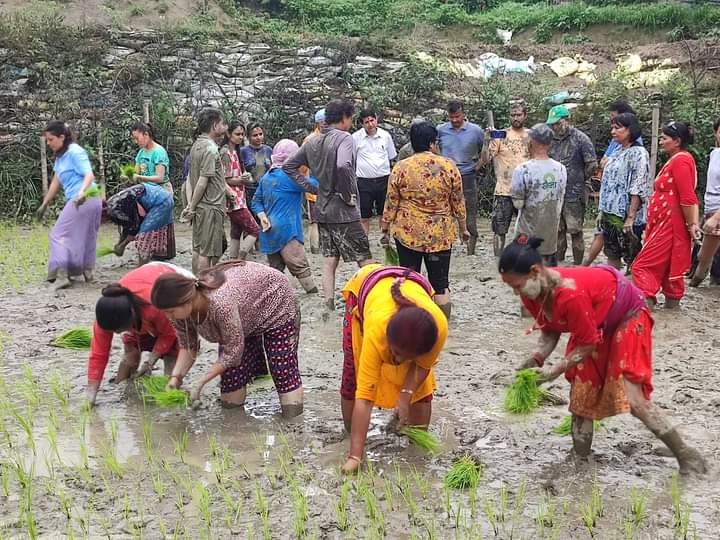
In a remarkable display of community spirit dedication towards Sustainable agriculture, representatives from alliance of agriculture, civil society and media organizations gathered on June 30, 2023, to celebrate 4th International Localization Day and 20th National Paddy Day at Kavresthali, Kathmandu. This event aimed to promote the age-old practice of rice transplantation, emphasizing its importance in ensuring the food security and financial stability of the agricultural community in Nepal, as well as its overall positive effects on the environment. The collective effort of all the stakeholders made this event a resounding success, creating awareness and inspiring a positive campaign.
Bestowed by the hazy day, the event commenced with an opening ceremony led by the agriculture experts, representatives from different organization and media outlets, along with local farmers, highlighting the importance and necessity to promote sustainable farming practices and provide support to local farmers. The event kicked off with informative session, where famers shared insights and knowledge techniques related to rice transplanting. The session emphasized the ecological advantage productivity associated with this method. Following the session, participants eagerly ventured into nearby paddy fields to engage in hands-on experience. Guided by experienced farmers and experts, enthusiastic representatives’ donned traditional farming attire, rolled up their sleeves, and joined the local famers in the muddy fields. This active participation fostered collaboration and knowledge exchange among the attendees.
The media played a crucial role in amplifying the events impact with journalists from mainstream media documenting the activities and interviewing participants. Through their coverage, they aimed to raise awareness globally, showcasing the significance of traditional farming methods and the efforts made by different related organization, and local farmers in promoting sustainability. As the day drew to a close, local farmers and affiliated officials expressed their gratitude to all the attendees for their unwavering support in promoting sustainable agriculture in the region.
The National Rice Transplanting Day served as a remarkable example of the positive impact, by paving the way for promotion of strategic intervention and support while simultaneously honoring the rich cultural heritage of traditional rice cultivation.
Women around the world are disproportionately stressed by unpaid care work and the effects of shocks, especially in emerging and rural economies. However, much of the work being done to transition to a net-zero economy is frequently fragmented, biased against women, and does not take into account their specific needs and interests. The Gender Equality in a Low-Carbon World (GLOW) research programme was initiated by Canada’s International Development Research Centre (IDRC) in response to this pressing knowledge gap. GLOW funded 12 initiatives in 17 low- and middle-income nations to investigate into how to incorporate women’s economic empowerment into low-carbon, climate-resilient transitions. Nepal was successful in bagging the two out of twelve projects which are implemented by ForestAction Nepal-, Economic Empowerment of Women through Forest Solutions in Sindhupalchok and Nawalparasi district while SIAS implementing Co-production of Shock Resilient Business Ecosystems for Women Engaged Enterprises (CREW) in Ramechhap, Dolakha and Arghakhanchi districts.
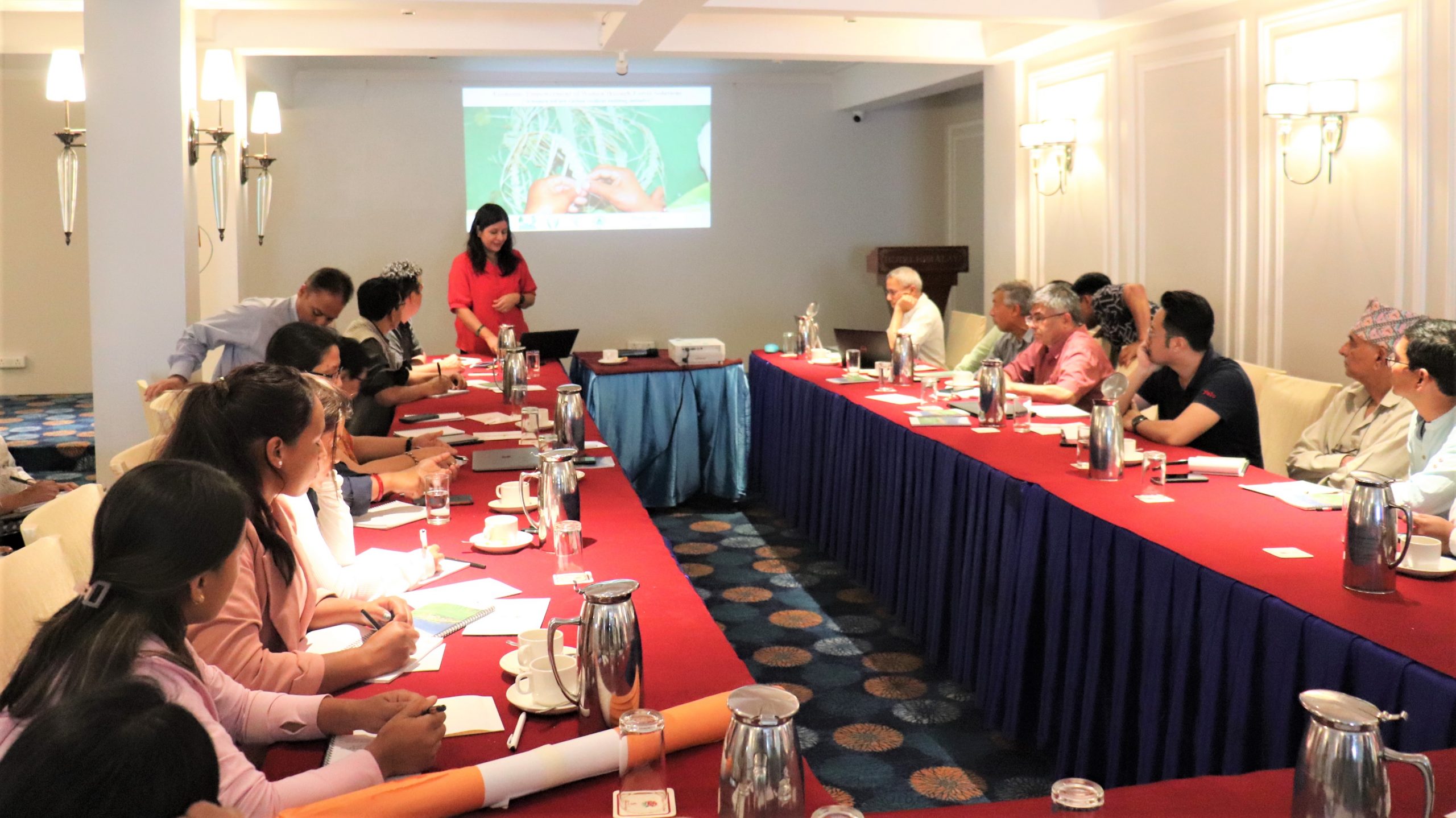
In order to share emerging findings, reflections and learnings between two above mentioned IDRC funded projects in Nepal under (GLOW) program and to identify the areas for collaborative outputs and synergy building for a better enabling environment on women’s economic empowerment in natural resource management sector, ForestAction Nepal along with the SIAS Nepal and their consortium partners organized the joint meeting on 28 June 2023 in the presence of the Dr. Bhim Adhikari, Senior Program Specialist /Sustainable Inclusive Économies – IDRC Canada.
ForestAction Nepal’s consortium partners, HIMAWANTI Nepal, AFFON, and FenFIT, presented their perspectives on approaches and strategies adopted in the project, reflected the achievements, issues and opportunities on women empowerment using forest solutions. The session specifically focused on enterprise and entrepreneurship, socio-political empowerment, sustainable forest management, knowledge dissemination. The research ideas were shared on the impact of forest-based enterprises, challenges of adopting feminist approaches in the consortium, procedural and policy challenges and societal issues, and key learnings encountered during the project interventions.
Similarly, SIAS’ partners (NIMS College, ARIA Solutions, and Himalayan Bio Trade Limited (HBTL)) reflected on 18 months into the CREW Project: Interventions, Approaches, and Reflections in its 3 districts under themes like understanding barriers and constraints, enterprise development through technological and institutional innovations, capacity enhancement to amplify voices and agency, and knowledge dissemination and policy uptake.
The common issue identification and discussion for synergy building were moderated by Dr. Naya Sharma Poudel and Dr. Dil Bahadur Khatri. The majority of the discussions centered on community forest users committee dynamics, policy-level constraints, and the joint collaboration between the consortium might be groundbreaking; the need for meso-level government engagement; societal-level constraints, challenges, and barriers; reflections; open dialogue; Intersectionality within the feminist approach; integrating the productive economy and the care economy; all these for ensuring the sustainability of the forest and agri-best enterprises.
Dr. Bhim Adhikari concluded with the emphasis on the dire need for comprehensive research shifting sectoral policy into macroeconomic policy, deeper analysis of the contradictory policies that restrict the use of the resources on which they are heavily dependent, taking all these stories of learning and co-learning into the global context, exploring how people perceive the upgrading of technology in society, exploring the stories of more incorporation of the private sector, fair trade, branding, and labelling for the sustainability of enterprises—all these for ground-breaking outcomes. He emphasized that now onwards he would appreciate a common outcome of learning from both FAN and SIAS on the research reports. His words of encouragement and critical feedback have opened up the path for both projects to pave their way in a more inclusive, sustainable, and productive way, analyzing them through a feminist approach with an intersectional lens.
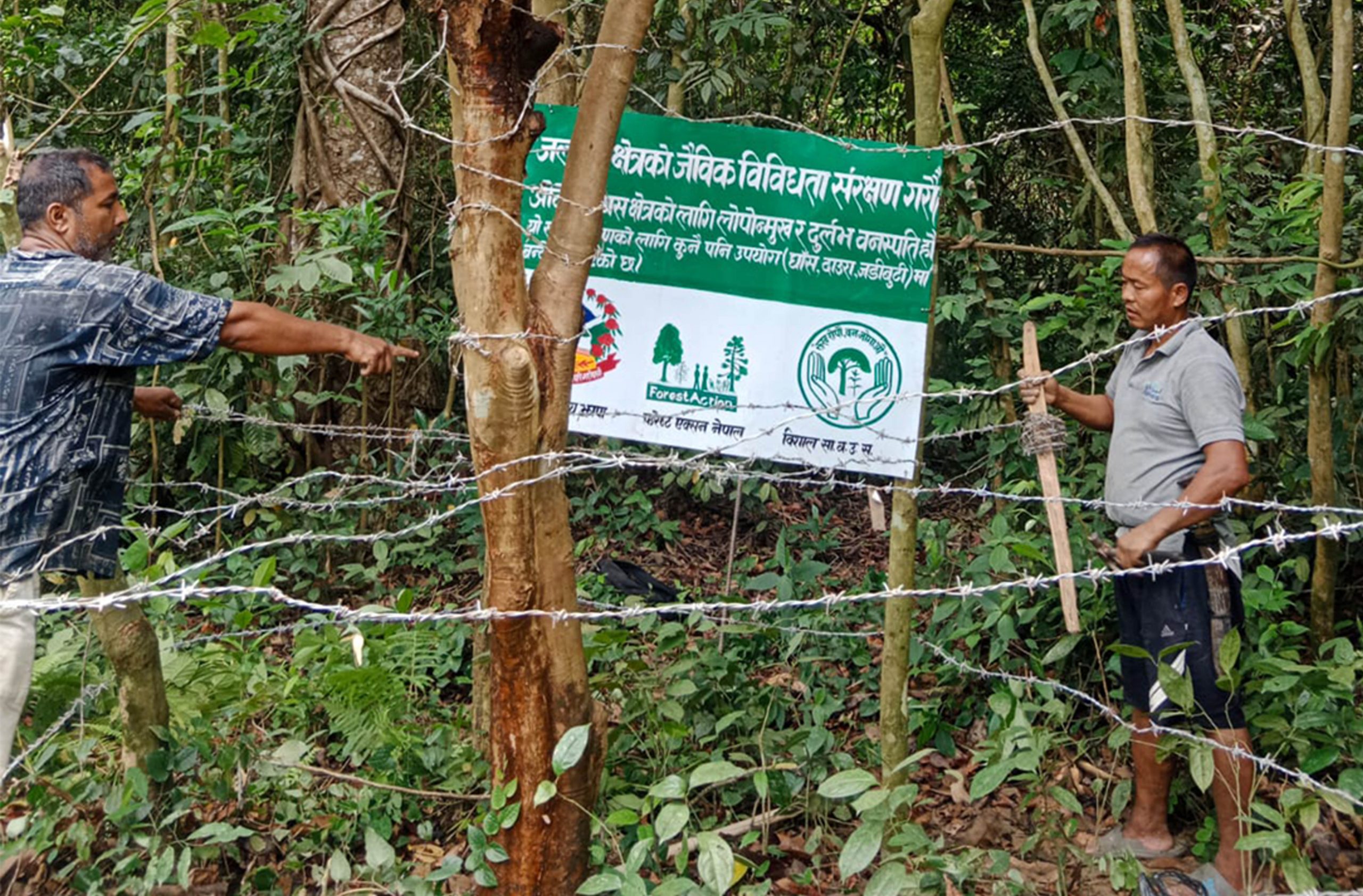
Jalthal, a 6100 hectare block of forest, is known for its rich biodiversity. The forest is remnant of once lush and continuous forest of lowland of Nepal. The forest is gradually degrading and its rich biodiversity is gradually eroding. Dillenia indica, a rare species in Nepal, demonstrates case of biodiversity erosion in the forest associated with development during last five decades.
Locally called as Paanchfal and Thaaidith grows into a medium sized tree used to be a common species in Jalthal forest. Our detail forest survey shows that the species is about to vanish from the forest. We have spotted only two individual trees and they are without seedlings and saplings. Standing trees are degraded due to lopping. Locals have not seen its flower and fruits for last two decades. The tree is multipurpose with edible fruit. Fruits are eaten raw, picked and even used in traditional medicines. Twigs are used as fodder and woody parts as firewood.
Given its situation in the forest and to protect the valuable genepool in the wild, ForestAction Nepal joined Bishal Community Forest and Division Forest Office (DFO) Jhapa to protect the species’ last individuals in the forest. Protection of standing trees coupled with awareness among forest user and provision of alternative fodders are expected to conserve the species’ valuable genepool in the forest.
This demonstrates ForestAction Nepal’s Darwin Initiative project’s ‘data informed conservation action’.
Forest Action Nepal, secretariat of Alliance of Agriculture for Food (AAF) along with Free student Union (FSU) Lamjung campus, hosted a two-day participatory workshop focused on Agroecology and Sustainable Agriculture. The event, held on June 13 and 14 of 2023 aimed to promote sustainable agriculture and disseminate innovative and proportionate solutions for agriculture challenges in the region.
The workshop brought together researchers, experts, and students in the field of Agriculture. Participants engaged in lively discussions, sharing their knowledge and experiences related to agroecology and sustainable farming methods. The event was structured to foster collaboration and encourage the exchange of ideas among the attendees.
Keynote speakers at the workshop highlighted the importance of adopting sustainable practices to mitigate the negative impacts of conventional farming on the environment. They emphasized the need for promoting biodiversity, conserving natural resources, and reducing chemical inputs to ensure long term agriculture sustainability.
Throughout the two days, various topics were covered, including organic farming, permaculture, crop rotation, integrated pest management, and soil conservation strategies. Attendees actively participated in hands-on demonstrations, practical sessions, and interactive group activities to enhance their understanding of these concepts.
Additionally, the workshop featured presentations on successful case studies of agroecology implementation from different parts of the world. These success stories provided inspiration and practical insights for participants, demonstrating the positive outcomes of the sustainable agriculture practices.
The two-days participatory workshop on Agroecology and sustainable agriculture at Lamjung Campus proved to be valuable platform to exchange knowledge, networking and collaborative efforts. The event undoubtedly succeeded in sowing the seed of sustainability in compliance with the aim of the workshop.
Solving environmental problems is not the responsibility of anyone alone. Togetherness in the movement obviously makes a huge difference. While “World Environment Day 2023” was globally celebrated with the campaign #beatplasticpollution, the ACIAR funded EnLiFT2 project implemented under ForestAction Nepal, along with Salle Chaubas Forest Management Committee and Sub Division Forest Office, Chaubas, organized a one-day “School Level Awareness Program” on June 5, 2023, in Setidevi Secondary School, Yakpa tole of Bhumlu-4, Kavre, Nepal. The celebration serves as a spur for collaboration and group efforts to build a more sustainable and environmentally friendly future for future generations. This day was celebrated primarily to raise public awareness of the need to protect the environment by avoiding the use of plastic and instead utilizing eco-friendly alternatives. The event was chaired by Mr. Lok Bahadur Kunwar, the coordinator of Salle Chaubas Forest Management Committee, in the presence of Mr. Prem Bahadur Bhujel, chairperson of Bhumlu Rural Municipality (RM), as chief guest. Other guests, like the chief administrative officer of Bhumlu RM, the coordinator of the Forest, Environment, and Disaster Committee of Bhumlu RM, the chairperson of Bhumlu 5, the Assistant Forest Officer from Sub Division Forest Office-Chaubas, the school’s representative, FECOFUN Bhumlu, CFUG’s representatives, the Private Forest Owners Association, etc., participated in the program.
Marking the 50th anniversary of World Environment Day 2023, the events were divided into multiple sessions that centered on beating plastic pollution. The sessions were a silent rally on the importance of environmental conservation, with the participation of hundreds of students from three major schools in Bhumlu and Kavre. The rally was demonstrated, seeking to bring recognition of how plastic pollution impacts a natural environment. It was staged to bring attention to environmental issues and prompt action to prevent or address plastic pollution. The plantation program was carried out on the school premises to promote the preservation of trees, maintain a sustainable environment, and promote the greenery around the school premises.
Inter-school speech competitions and inter-school quiz competitions were conducted, in which three higher secondary schools, Bhumlu 4 and 5, participated. The main aim of these competitions was to offer the students the chance to socialize not only with classmates but with different students from other schools and learn through these interactions. Further, this competition also helped the students to observe, share their opinions, choose their words, ease oral communication, and take many actions to motivate them to fight against plastic pollution.
This event was intended to encourage fun learning methods while also enhancing general knowledge on diverse environmental-related themes. Overall, all the participants present there benefited from the diverse themes discussed in this event, making them more environmentally conscious. Two cultural dances and songs were performed by the students to promote social and cultural interaction as well as a sense of community well-being and unity. These dances were accompanied by powerful social messages and narratives. Ecofriendly alternatives like cloth banners, handmade papers, hemp bags, etc. were used throughout the program to encourage the use of green alternatives.
Nepal has an illustrious reputation for its beautiful mountains, but has now been taken over by a storm of plastic pollution, which forms mountains ofwaste in urban spaces and creates detrimental effects on human health. Nepal generates roughly 2.7 tons of plastic waste each day; 16% of urban waste is plastic. Kathmandu alone uses 4,700,000 to 4,800,000 plastic bagsdaily, according to research by ICIMOD.
While the world commemorates World Environment Day, the 30 rural and marginalised women entrepreneurs of three community forests involved in the project Economic Empowerment of Women Through Forest-Based Solutions have an ecofriendly alternative to the plastic crisis. It is bio cups and plates, also known as Duna Tapari in Nepali, which have been used in the country for food packaging, for time immemorial. The cups are made from naturally fallen leaves and sustainably picked from self-sustaining sources like Shorea robusta (Sal leaves).
Image source: ForestAction Nepal
The women are modernising the once-arduous, traditional occupation of making these plates, by now using low-carbon, women-friendly technologies. To achieve this, the project is empowering women entrepreneurs on gender and social inclusion issues, providing skill-based trainings, and group management training, and forming women’s leadership circles.
Image source: Usha Thakuri, ForestAction Nepal
The women undertook an inventory of Sal leaves in their local forest area. The information was then integrated into the community forest management plan, which opens avenues for the women to establish multiple enterprises based on the non-timber forest products.
The fresh green leaves are collected manually without harming trees and dried to make lapha – a couple of leaves stitched together with bamboo pins which are then pressed by electric machine to achieve an appropriate size and finish.
This process is efficient, timesaving, reliable, hygienic, and easy to operate. What is more, using clean energy technology aligns with the goals of SDG 7, Affordable and clean energy, empowers women, bridges the gender development gap, and helps to build a new identity for rural women as those who handle electric machines.
Image source: Aarati Khatri, ForestAction Nepal
These women entrepreneurs have left no stone unturned in exploring markets for their products. Sal products are profoundly connected with Hindu culture and have strong religious relevance. People use them in all major life events from birth to death, such as weaning ceremonies, birthdays, exhibitions, workshops, social gatherings, marriage, community feasts, ethnic celebrations, parties, and funerals.
In recent years, Sal products have become popular with hotels, restaurants, homestays, event planning organisations, international and domestic non-governmental organisations, tourist attractions, etc. Due to their renewability, non-toxicity, high socio-economic value, strength, and durability, these products have grown commercial markets in both the national urban space and international markets.
In addition, these products have multiple environmental benefits. In many aspects, this eco-product is considerably superior to plastic. Contrary to plastics that are composed of polymers, oil, and fossil fuels, which pose a serious threat to living things, its raw materials are rich in sources of various flavonoids and exhibit anti-inflammatory, antibacterial, analgesic, and wound healing activities. Plastic takes around 20–500 years to decompose, leaving hazardous scars on the Earth that affect generations. But these biodegradable cups are converted into manure and dissolve into the soil, creating more life through their organic manure.
Every sector is touched by the plastics that create massive carbon footprints. Replacing the deep-rooted plastic economy overnight in a developing country like Nepal is a herculean task, as numerous livelihoods are connected with it. But it’s critical to take one step at a time.
It’s predicted that by 2050, we’ll be making approximately four times as much plastic as we do now. And based on the current situation, the OECD predicts that by 2060, plastic trash is predicted to triple, with half of it ending up in landfills. In the era of climate crisis, behavioural shifts to eco-friendly consumption and embrace of green attitudes is urgent. There is a pressing need to have zero impact on the environment and for each person to become an eco-champion of their own.
Image source: Kamal Bhandari, ForestAction Nepal
To develop the culture and practice of green packaging use in our daily routine, a robust and comprehensive policy intervention to discourage the use of plastic is a must. Providing incentives, subsidies, and tax exemptions for eco-friendly products would be appropriate efforts by the government. Furthermore, increasing taxes on plastic products that compete heavily with the bio-products would motivate women entrepreneurs to produce bio cups and plates at a larger scale.
These bio cups and plates can be a ray of hope for a sustainable environment, supporting marginalised sections of society, especially rural women, to improve their livelihoods and become economically empowered. Next time you buy these plates, you are also supporting and rewarding the hard work of these women, who have fought countless internal and external patriarchal, wars against gender stereotypes to be entrepreneurs. It is time to accelerate this action and switch to a bio-based circular economy and reimagine a plastic-free environment.