Joint Meeting on Women’s Economic Empowerment in a Low-Carbon COVID-19 Recovery

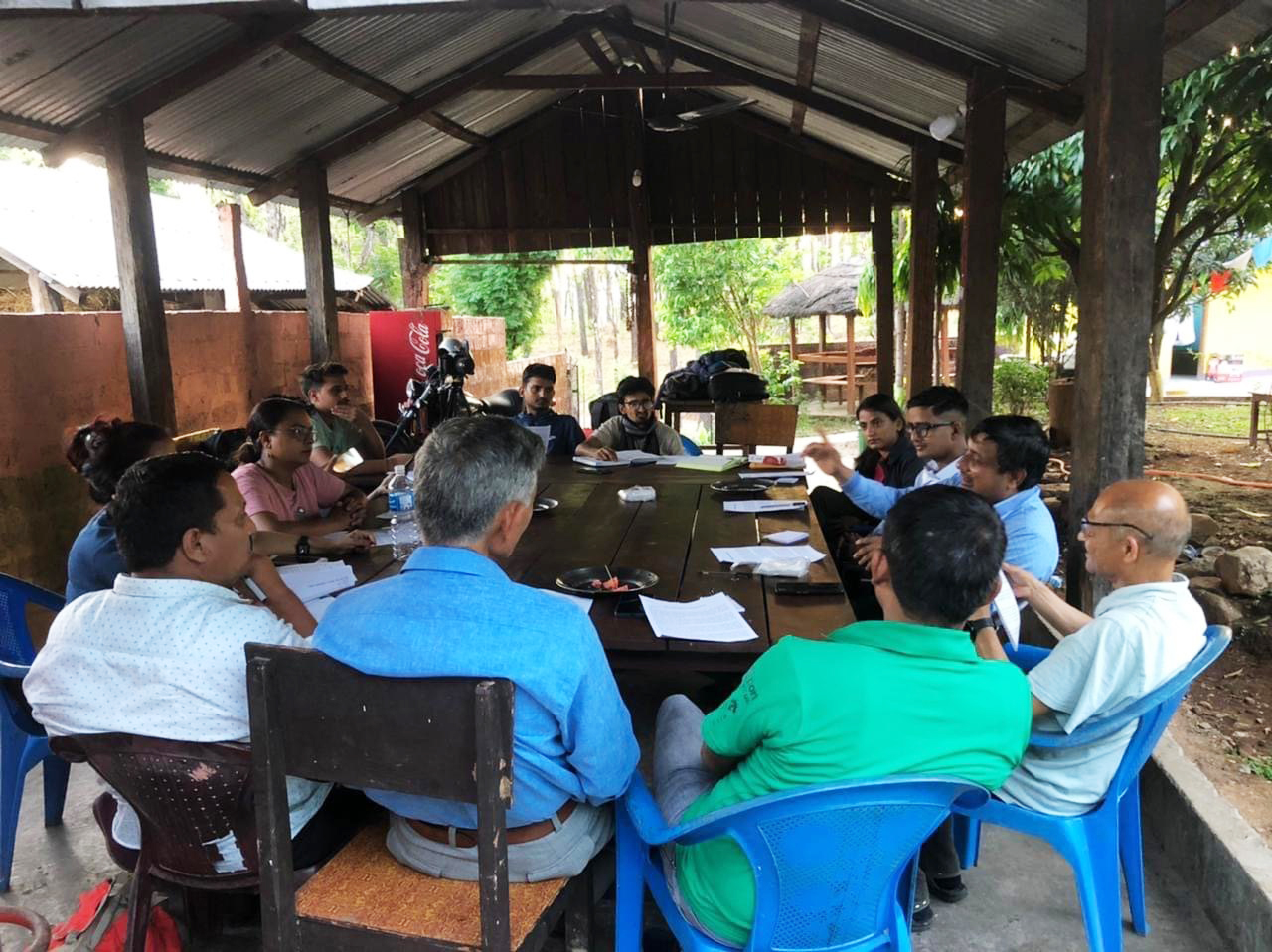
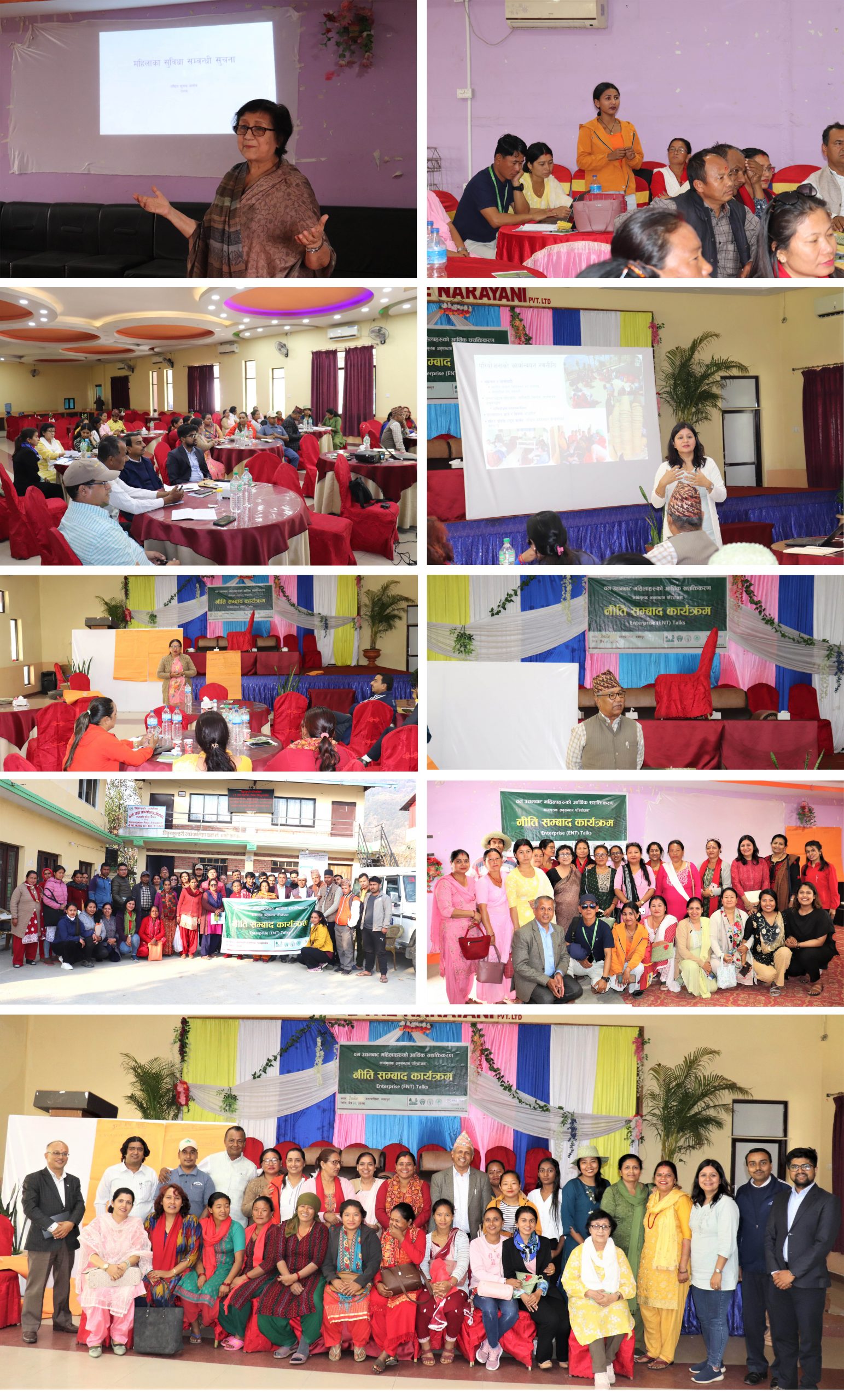
A joint meeting between ForestAction Nepal and Southasia Institute of Advanced Studies (SIAS) was organized on 11th September, 2022 on “Women’s Economic Empowerment in a Low-Carbon COVID-19 Recovery” funded by IDRC Canada. ForestAction Nepal is implementing- Women’s Economic Empowerment through Forest Solutions- WEE-FS in Sindhupalchok and Nawalparasi district and SIAS is implementing Co-production of Shock Resilient Business Ecosystems for Women Engaged Enterprises (CREW) in Ramechhap, Dolakha and Arghakhanchi districts. The meeting was organized to discuss the conceptual framing of women economic empowerment and share the projects achievements, issues and challenges in the action research.

The meeting was organized in two sessions, the first session was intended for sharing and discussion on the conceptual framework and project updates and second one on the opportunities, issues and challenges faced in project implementation. Dr. Bhim Adhikari shared the IDRC’s research priorities and the developmental challenges. He raised the issue of challenges of action research on influencing policy making at national and global level and expected two projects in the same country will bring synergy stimulating policy process.

Dr. Mani Ram Banjade, Principal Investigator- CREW project shared conceptual details of the women economic empowerment (WEE) framework. Five domains of WEE (economic, socio-cultural, environmental, technological and policy) and interlinkages between them important to build shock resilient women led enterprises. He further updated the project achievements and glimpses of base line survey analysis.

Ms. Kanchan Lama and Dr. Srijana Baral, discussed the conceptual framework adopted by WEE-FS project. Ms. Lama shared that in the WEE framework women’s societal relationship with her family is equally important as agency development and reducing the social biases and structural barriers in the empowerment process. Dr. Baral shared the project approaches and the updates made so far in the project outcome areas.


ForestAction Nepal’s consortium partner HIMAWANTI Nepal, AFFON and FenFIT presented their perspectives in issues and challenges faced in the project implementation. Similarly, SIAS partners (NIMS College, ARIA Solutions and Himalayan Bio Trade Limited -HBTL) reflected the same.

The discussions between the sessions were moderated by Dr. Naya Sharma Poudel and Dr. Dil Bahadur Khatri. The majority of the discussions focused on joint actions for WEE, cross learnings and policy gaps on developing low carbon economies. More such events are expected to be useful to both the projects and IDRC as a whole.

In his concluding remarks, Dr. Adhikari shared that the projects are progressing well in line with IDRC’s strategic thinking and ideas. He appreciated the partnership approaches. He also suggested on developing scalable models for women empowerment through low carbon initiatives. He emphasized on knowledge generation and dissemination, as IDRC uses the academic outputs to map project’s impacts.


Policy round table discussion on Agroecology in Nepal

Alliance of Agriculture for Food (AAF)/ForestAction Nepal, in collaboration with ActionAid Nepal, organized a national level policy round table discussion on Agroecology in Nepal, in presence of policy makers and experts, on 30 November 2022 in Kathmandu.

During the event, issues like policy gaps to promote agroecology, food sovereignty and food security, natural resource management, land and land use, environmental degradation and climate change, nutrient, disease and pest management, agro-biodiversity, peasants’ right, agriculture production and trade, and agricultural research, extension, and education were discussed.

Key highlights of discussion are as follow:

– Need for an integrated agriculture policy that can balance current agriculture practices with agroecological principles.

– Farmers are the knowledge hub of agroecology, as they are long-term practitioners of innovative, environment and smallholder farmer’s friendly practices.

– Areas and scope of sustainable agriculture are not explored enough.

– Documentation, exploration, revision, and integration of agroecological knowledge, with aggressive research and application from the research community, academic institutions, and the corporate sector is lacking.

– Collaboration between education, research, and extension is necessary.

– Marketing of agricultural products need to be enhanced.

– The dignity of farmers must be protected. Research needs to be done in response to issues with farmer’s fields.

A month-long celebration of 42nd World Food Day 2022

Alliance of Agriculture for Food (AAF) in collaboration with 20 organizations and active engagement of all concerned stakeholders, successfully organized a month-long celebration of 42th World Food Day 2022. The major objective of the program was to create public awareness on the issues of food and agriculture to realize the importance of agriculture for food in the current context of agriculture development in Nepal. Moreover, it was also deliberated to create forums for the general public and to create pressure on policy shapers/makers for formulating effective policy measures pertaining to food and agriculture showing the cases of critical issues as well as best practices at ground.

The celebration events were organized in local, province and federal levels. The program begun with a press meet in Bharatpur, Chitwan on 22 September, 2022 with the aim of informing about the weeklong program. Various interaction programs along with rallies, food festivals and exhibitions were organized in Kathmandu, Surkhet, Dhangadi, Biratnagar, Hetuada and Kalika Municipality of Chitwan. A National dialogue on food and climate justice, and seminar on Agroecology: Rebuilding sustainable food systems were organized in Kathmandu. Where different organizations lead the themes related to Agroecology. All these interactions covered different dimensions of food and agriculture such as food rights, climate justice, policy discussion on right to food, food sovereignty, food security, and landlessness; agriculture of Karnali and Terai Madhesh; roles of rural women farmers; and contribution of agro-biodiversity to food security. Each thematic session consisted of presentations of panelists in the field followed by critical comments and open discussions.

The closing of month-long deliberations was followed by a Raithane Sanjh (local food festival) on 21st October 2022.

During the program period, Factsheet of Food and agriculture was prepared and widely distributed. Likewise, AAF prepared articles and published in national newspapers and online media. Appeals were also prepared and presented to political leaders, policymakers, government officials including local government representatives, public figures, media persons, farmers, activists, and representatives from different organizations. The major collaborators include: ActionAid Nepal, LiBIRD, CSRC, FIAN, NFGF, NLRF, SWI, IM Swedish, ERI, CEPP, CAED, ANAJ, DCA, Digo Bikash Institute, halokhabar, ubjani.com and Provincial and local governments.

Assessment of agroecological farming in Mahakali river basin area

Members of food and agriculture team of Forestaction Nepal, recently accomplished a field visit to Far West Province. The main objective of the field visit was to conduct agro-ecological assessment in Mahakali River basin (Bheemdatt and Dodhara Chandani Municipalities of Kanchanpur district, and Parashuraam Municipality of Dadeldhura district). This assessment has been carried out in collaboration with NNSWA (Kanchanpur based organization), and was conducted between 29th May to 3rd of June, 2022.

Municipality level interactions, in presence of newly elected representatives, were conducted in all of above three municipalities. The possible roles of local government in promoting agriculture for food at local level, was discussed during municipality level interactions.

At ward level, separate focus group discussions were held with farmers group, women farmers group, and Dalit women farmers group. Also, separate interaction was held with few of the individual farmers. During the interaction, the current scenario of food and agriculture of respective ward level, the problems, challenges being faced by the farmers including the problems invited due to over flooding in Mahakali and Jogbuda rivers during rainy season, the scope of agriculture, agriculture related enterprises that the farmers have envisioned, were discussed.

During the field visit, agriculture and livestock offices, situated at municipality, were also visited, and interacted with the officials.

The report making process is in progress. All the information collected from the field is being analysed. At the same time, policy documents and other similar study related articles and reports, and respective municipality’s profile is being reviewed.

The field study report will be shared later once it is finalized.

Expansion of Alliance of Agriculture for Food in Chitwan valley

Alliance of Agriculture for Food (AAF) is expanded in Chitwan valley too. AAF is collaborating with other networks and alliances of organic food producers and sustainable agriculture promoters, located inside Chitwan valley, and jointly raising the issues of food and agriculture, conducting awareness campaign against the use of chemical fertilizers and pesticides and bringing such issues into public debate, and promoting agroecological farming.

Recently, AAF organized an interaction event at Kalika municipality, in presence of newly elected local representatives, and discussed over the contemporary issues of food and agriculture of respective municipality. Also discussed the potential roles and responsibilities of local government to promote agriculture for food at local level.

The new series of an apprenticeship course begins

Food and agriculture team at Forestaction Nepal has been running an apprenticeship course on “transformative activism for sustainable agriculture” since 2010. The motive behind running this course is to build the capacity of the farmers, activists, agriculture students, and others who are interested in farming, and make them able to involve in the campaign of “Agriculture for Food”, either through practices, or through their engagement in policy advocacy at local level. Further, changing ourselves by reflecting and learning by doing and teaching by learning is motto of this training.

So far now, the team has already successfully conducted seven of its series, with an average of 20 participants in each batch, and has now started the new series of it.

The new series of this course includes two groups of participants. The one group includes the participants solely from Terai Madhesh region, whereas, the other one includes the fresh agriculture graduates including some farmers/activists as participants.

The Terai Madesh group has 25 participants, who are currently engaged in with different groups, and are promoting agriculture, working in the social sector, education field, and some are students too. The first module of this series for this group was organized at Thimura, Chitwan, for five days starting from 29th of April 2022.

Similarly, the first module for the next group was organized at SWI, Nakhhu, lalitpur, for five days, staring from 20th of May, 2022. This group has altogether 22 participants.

The theme of the first module for both of the groups was “Back to Basics”.

In this module, under the theme of back to basics, classes were conducted on topics such as evolution, diversity and discrimination, development, education, public health and life skills. Thematic presentations, discussions, group interaction, games and active interactions of participants were the method applied during the training. The first module for both group ended with effective learning through various thematic sessions by facilitators and the active participation of participants.

7th National Workshop on Community Forestry

The aim of this workshop is to review the five decades of CF, develop a common understanding on its achievements, lessons, challenges and opportunities especially in the changing biophysical and socio-political contexts.

Mainstreaming Biodiversity in Community Forests: Issues, Challenges, and Strategies

A half-day workshop on “Mainstreaming Biodiversity in Community Forests: Issues, Challenges, and Strategies” was successfully held in Hotel Himalaya on 24th March 2022. The program was jointly organized by the Department of Plant Resources, ForestAction Nepal, and Kathmandu Forestry College. The workshop was attended by officials from Ministry of Forest and Environment, NGOs, Academia and members of local communities working on biodiversity and forest management in Nepal. The participants represented a total of 25 different institutions.

The presentations, discussions and comments highlighted biodiversity significance of community forest, policy environment around community forest and status of invasive alien species in Nepal. Officials, researchers and participants discussed on challenges of integrating biodiversity conservation in community forests.  The participants suggested developing a minimum requirement for biodiversity inventory in community forests. Biodiversity significance was demonstrated through case of a DI UK funded project.

Dr Lila Nath Sharma, Prof Ambika Gautam and Kalpana Sharma Dhakal presented papers and Prof Bharat Babu Shrestha of TU and Dr. Rajendra KC, Director General of the Department of Forest and Soil Conservation commented on the presentation. Shiva Kumar Wagle, Chief of Planning and Monitoring Division, Ministry of Forest and Soil conservation, Dr Buddi Sagar Paudel, Director General of Department of Plant resources and Dr Mark Watson of Royal Botanical Garden Edinburg provided their remarks and highlighted need for scientific research on biodiversity and conservation in community forests.


Report Launch: Revitalising community forestry in the changing socioeconomic context of Nepal

‘Revitalising community forestry in the changing socioeconomic context of Nepal’ report launch event was successfully held at Hotel Himalaya on 15 March 2022.

The report was jointly launched by the Secretary of MoFE, Dr Pem Kandel, and HE Felicity Volk, Australian Ambassador to Nepal. There were over 35 participants from various institutions including joint secretaries from the MoFE, Divisional Forest Officers, Under Secretaries, Dean of Institute of Forestry, University Professors, Chair and representatives of FECOFUN, and representatives from NGOs and INGOs.

Secretary of the MoFE and HE the Ambassador, highlighted that the report is very timely and gives a strong basis to framing community forestry policies in the days to come and would provide crucial direction to strengthen the sector. They also acknowledged the collaborative effort of both Australian and Nepalese researchers on this report.


Origins and early development of community forestry in Nepal

A webinar on ‘Origins and early development of community forestry in Nepal’ was organized on 14 March 2022. The speakers involved pioneers and early advocates of community forestry in Nepal. The experiential insights of the four pioneers (Dr Don Gilmour, Mr. Stephen Midgley, Dr TBS Mahat, Dr Narayan Kaji Shrestha) threw light on the historical context of community forestry in Nepal, and provided footing to advance community based natural resources management in the challenging time and rapidly changing contexts.

The webinar was jointly organized by the EnLiFT2 project and the Nepalese Association of Agriculture, Forestry, and Environment in Australia. The full video to the webinar is available at: https://www.youtube.com/watch?v=ZbIBuPsIg5w&t=23s

Click here to download the transcription of the webinar


Celebration of the International Women’s Day (IWD)-2022 at ForestAction Nepal

On 8th of March, 2022, ForestAction team celebrated the “Break the Bias” and “Gender equality today for a sustainable tomorrow” to mark the International Women’s Day 2022. The program started with a brief presentation about IWD, followed by a group learning on “my organization, my pride” through a participatory group work, cutting an “IWD 2022” cake and felicitating two women support staff in the organization.

Among other issues, the origin, history, the journey of women’s advancement throughout various international conventions, treaties and national commitments of the Government of Nepal, was highlighted during the gathering. Moreover, the importance of IWD 2022 motto on the need of today to break the bias to achieve equality was underlined. Subsequently, one of our female staff members recited a poem on, “Naari” (woman). It was followed by cutting the “IWD 2022” cake and celebration among the entire team. Likewise, two of our women support staff were felicitated in recognition of their support to the ForestAction team.

Ms. Kanchan Lama led a group work involving a participatory exercise to work out on the image, champions/villains, rituals and culture of ForestAction in regard to equity and equality. The staff were given colorful cards to write one answer in one card only, then to paste them in the sketch of a half cut onion. The objective of the exercise was to motivate the ForestAction team members towards their self-responsibilities to shape an “equality for creativity” type of organizational culture by contributing to building an enabling environment for all.  The ForestAction team members appreciated the efforts to achieve gender equality.

41st International World Food Day

41st International World Food Day was celebrated with a month-long event during September-October 2021. The celebration started with a press meet on 10th September and the closing event on 2nd November 2021. Alliance of Agriculture for Food/ForestAction Nepal collaborated with 24 different networks/alliances and organizations. With the objective of creating public awareness on the issues of food and agriculture to realize the importance of agriculture for food in the context of agriculture development in Nepal, we have been celebrating Food Day for the last 5 years. Over the years it has been established as a forum to raise the collective voices of the general public, farmers, and farming communities to create pressure on policy shapers/makers for formulating effective policy measures.

The debates and discussions around issues of agroecology and close issues were organized mainly virtually with 20 virtual thematic sessions. These sessions were organized by different collaborators depending on their subject area and expertise. An awareness-raising video song, jingles, and publications were also prepared and distributed.