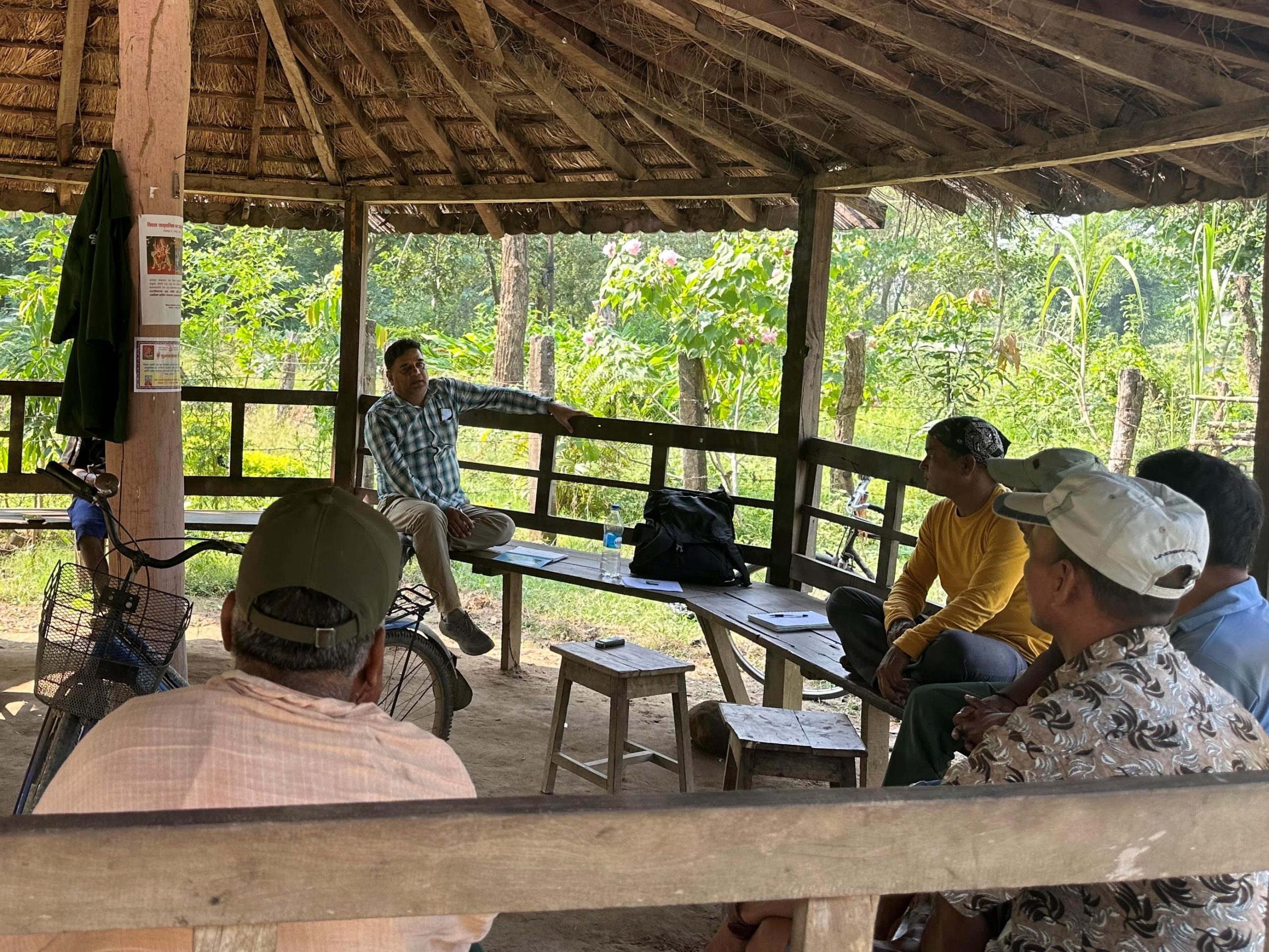
ForestAction Nepal is currently undertaking a REDAA research project funded by UK International Development from the Foreign, Commonwealth and Development Office (FCDO) and managed by the International Institute for Environment and Development (IIED) to analyse the socio-ecological outcomes of restoration interventions in Nepal. Since three months, ForestAction Nepal’s team has been travelling to different transits in Nepal to assess different restoration sites, initiatives and their impacts. The team have complete the field research in Eastern (Pancthar, Ilam, Sunsari, Dhankuta, Bhojpur), Central (Palpa, Syangja, Tanahu, Kaski), and Western (Surkhet, Jajarkot, Dailekh) transits of Nepal.
The team had identified forest coverage changes through satellite images for the intervention. After analysing the satellite images, and assessing the forest cover changes, the team conducted socio ecological surveys, where bio-physical surveys was conducted in the forest and socio-economic surveys were taken in the forest-depended communities. Along with that, the team has also conducted capacity building trainings, leadership trainings to various communities on forest landscape restoration and management.
As part of our ongoing efforts to foster agroecology for soil restoration and biodiversity conservation, Forest-Action Nepal, in collaboration with Ichhakamana Rural Municipality, successfully conducted training sessions on compost and bio-pesticide preparation for farmers from Dhusa and Kalikhola villages on February 4 and 5, 2025, respectively. A total of 34 farmers, all actively engaged in commercial vegetable farming, participated in the training sessions.
Chandra Prasad Adhikari, an organic farmer with over three decades of experience facilitated the training. The training methodology integrated learning approaches like interactive discussions and hands-on field exercises and covered topics like the orientation on agroecology, the effects of inorganic farming on soil and human health, the benefits of organic fertilizers and bio-pesticides, and the practical demonstration of composting and bio-pesticides.
This training is a significant step in our agroecology initiative, promoting community-led approaches to sustainable farming that promotes local knowledge exchange and capacity building of farmers. This training also serves as a foundation for establishing farmer-led demonstration plots, further strengthening our collaborative action plan with Ichhakamana Rural Municipality.
ForestAction Nepal’s agricultural team recently visited Ichhakamana Rural Municipality, where productive meetings were held with local farmers and farmer groups to explore opportunities for promoting agroecology, specifically focusing on soil restoration and biodiversity conservation. The team discussed the challenges faced by farmers, such as soil degradation and declining fertility, and how agroecological practices like crop rotation, organic farming, and agroforestry could address these issues. Emphasis was placed on restoring soil health through composting, mulching, and the use of bio-fertilizers, while also promoting biodiversity through intercropping and protecting pollinators.
The importance of a community-led approach to implementing these practices was highlighted, with farmer-led demonstration plots, training sessions, workshops, and capacity-building efforts identified as key strategies to strengthen local knowledge.
A significant outcome of the meeting was the agreement to develop a collaborative action plan, that ensures farmers are actively engaged at every stage, from planning and implementation to monitoring and evaluating progress.
Additionally, a meeting was held with the agriculture section of Ichhakamana Rural Municipality, where we provided an update on the discussions with the farmers’ groups, as we will be collaborating with the municipality in this initiative.
ForestAction Nepal has been actively promoting agroecology in Nepal through field action research, training and capacity-building activities, and policy advocacy, engaging stakeholders at the local, provincial, and federal levels. As part of these efforts, ForestAction Nepal has been utilizing public platforms to raise awareness of agroecological issues, draw the attention of policymakers, and foster dialogue.
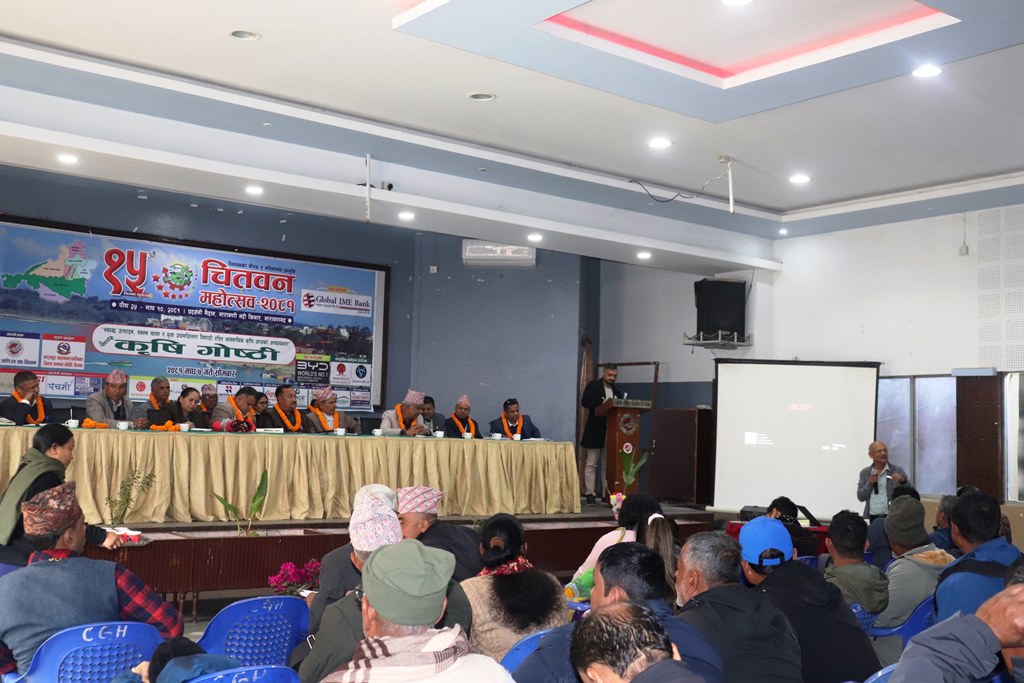
In this context, Dr. Krishna Prasad Paudel, representing ForestAction Nepal (the secretariat of the Alliance of Agriculture for Food), delivered a speech at the Agricultural Forum organized by the Chamber of Commerce and Industry (CCI) during the Chitwan Mahotsab on January 20, 2025. Dr. Paudel highlighted the consequences of chemical-based modern farming on soil fertility and human health and emphasized the urgent need to shift towards agroecological approaches.
Similarly, Mr. Chandra Prasad Adhikari, an organic farmer with over three decades of experience and president of the Organic Farmers Federation Chitwan, an ally of the Alliance of Agriculture for Food, provided valuable insights into the status and challenges of organic farming in Chitwan.
The forum was attended by the Honorable Prakash Shrestha, Minister of Agriculture and Livestock Development of Bagmati Province, as the Chief Guest. Other notable figures included Dr. Sharada Thapaliya, Vice-Chancellor of Agriculture and Forestry University; Mr. Narayan Prasad Adhikari, President of the Office of the District Coordination Committee Chitwan; Mr. Chun Narayan Shrestha, President of the Chamber of Commerce and Industry Chitwan; Mr. Jhalak Nath Kandel, Chief of the Agriculture Development Centre; and Mr. Sujan Amgain, Chief of the Beekeeping Development Program. More than 100 participants, including farmers, journalists, researchers, and stakeholders from diverse sectors, engaged in the discussions, which focused on current issues in the Nepalese agriculture sector and the need for collaboration among diverse stakeholders to advance sustainable agriculture in Nepal.
The rugged terrain of Nepal’s mountain districts makes it difficult to respond to any forest fire event. This compounded by lack of tools and equipment, inadequate capacity of local stakeholders to prevent and respond to forest fire, and weak coordination mechanism, makes the situation even worse.
While enhancing capacities of stakeholders in addressing any forest fire event is a priority, preventing it through involvement of community forest user groups (CFUGs) in forest management by drawing on their years of local knowledge is imperative. In this line, ForestAction Nepal has entered into partnership with the Australian Himalayan Foundation to address the challenge through inclusive community-based forest fire management in Dolakha and Sindhupalchowk districts.
The project kicked off with inception workshops in Shailung rural municipality of Dolakha and Chautara Sangachokgadhi municipality of Sindhupalchowk districts on 8th and 9th January 2025.
Participation in agricultural exhibition and farmers fair at Agriculture and Forestry University, Rampur, Chitwan
From December 14–18, 2024, ForestAction Nepal participated in the Agricultural exhibition and farmers fair organized by Agriculture and Forestry University at Rampur, Chitwan. Utilizing this event as a platform to promote agroecology among diverse stakeholders, we collaborated with the Organic Farmers Federation Chitwan (Jilla Prangarik Sangh) and Shree Prangarik Krishi Utpadak Sahakari Sanstha Limited and showcased a variety of local and indigenous seeds and crops from across Nepal. Similarly, informative posters/arts were also displayed, highlighting the importance of sustainable farming, the effects of climate change, and the benefits of using indigenous seeds instead of commercial ones. The stall attracted many visitors who appreciated the displays and information presented.
The Southasia Institute of Advanced Studies (SIAS) and Forest Resources Studies and Action Team (ForestAction) Nepal, in collaboration with other organisations, are organising a symposium entitled Women’s Economic Empowerment through Natural Resources: Opportunities, Innovations and Challenges. We invite submissions from researchers, scholars, policymakers and practitioners engaged in initiatives related to women’s economic empowerment in the agriculture and/or forestry sectors.
Date: 24 February 2025
Location: Kathmandu
Please submit an abstract of max. 300 words of the research, experiences and insights aligned with the symposium themes along with a summary CV.
The deadline for the abstract submission (papers/presentation/ poster) is 20 January 2025.
You will be notified about the acceptance of your proposal by 25 January 2025.
Women’s economic empowerment (WEE) is a prerequisite for achieving gender equality, and there have been different WEE frameworks that have suggested the means to achieve this. Women led and/or engaged enterprises are key strategies for achieving women’s economic empowerment and an inclusive economy. Despite its transformational potential, women in general, face political, socio-economic and cultural barriers in accessing resources, information, and networking and institutional support. Such disparities in access undermine their ability to establish and expand their enterprises or benefit the businesses they are involved in, especially in the context of fast-growing manifold impacts of climate change. In the context of growing risks from environmental and socio-economic factors and their impacts (especially in the context of natural resources), policies, strategies and practices need to become central to all debates and actions related to women’s economic empowerment.
In this symposium, we aim to bring together multiple actors – government, researchers and academia, development partners, civil society, private sector – to understand current challenges, review and learn from good practices and innovations and develop approaches and methodologies that inform policymakers and other key stakeholders, towards achieving women’s economic empowerment.
We would like the presentations/posters to focus on the following questions:
1. Frameworks, approaches and methodologies: What are some of the innovative research methodologies and inclusive intervention processes that provide an enabling environment for women’s economic empowerment?
2. Opportunities and Challenges: What are the key opportunities and challenges in women’s economic empowerment through natural resources-based enterprises in the face of changing climate?
3. Innovations and good practices: What are some key governance, institutional and technological innovations and good practices that can be scaled out and scaled up so that more and more women engage in and benefit from natural resources-based enterprises?
The debate on forest sector governance has become more intense within the federal structure due to the lack of clarity in the use and responsibility to conserve forests, carbon services and biodiversity among the three tiers of government. Against this backdrop, the Ministry of Forests and Environment, Federation of Community Forest Users Nepal (FECOFUN), with the support of FFF (Forest and Farm Facility) and in collaboration with ForestAction Nepal and RECOFTC, organised a two-day Policy Dialogue on 19th and 20th December 2024 focusing on “Transforming the Role of Community Forests in the Context of a Shift in Socio-Political Priorities, Growing Economic Opportunities and Climate Change.” The objective of this policy dialogue was to focus on fostering an inclusive discussion on the evolving role of community forests in addressing sociopolitical dynamics, driving economic development through sustainable livelihoods, and enhancing community resilience to climate change through adaptation and mitigation activities.
Four different sessions including a presentation and panel discussions were held. Out of the them, Dr. Naya Sharma Paudel from ForestAction presented and moderated the panel discussion on “Policy framework and governance restructure enabling community forestry in socio-political transitions.” The session focused on the evolving socio-political dynamics of community forestry (CF) and the challenges they pose, such as declining community engagement, institutional inefficiencies, and tedious policies. Panelists highlighted the importance of simplifying policies, and ensuring equitable financial benefits while addressing legislative delays and fostering effective governance across all tiers of government.
Overall, the two days policy dialogue brought different stakeholder together to invest and discuss on necessary strategic interventions which will propel the effects and impacts of previous interventions to larger areas, and producer groups and organisations.
Nepal’s 2015 Constitution marked a shift to federal governance, emphasising cooperation among federal, provincial, and local levels. The Local Government Operation Act 2017 and Forest Act 2019 outlined local government’s (LG) collaborative roles in community forest management. While these frameworks laid the groundwork for a more integrated approach to community forestry governance, there are challenges.
With an aim to identify avenues for collaboration and areas of gaps and cooperation between the two institutions, consultations with LGs and community forest user groups (CFUGs) were organised to facilitate the dialogue and identify strategies to strengthen their partnerships. ForestAction Nepal with support from The Asia Foundation, conducted series of consultations at local, provincial, and federal level, which has drawn valuable lessons to address climate change and enhance socio-ecological resilience through improved community forest-LG collaboration.
The consultations engaged an extensive and diverse group of stakeholders, ensuring representation across different levels of governance and community forestry. It included mayors, deputy mayors, chief administrative officers, provincial forest officials, foresters, CFUG leaders, researchers, and representatives from organisations such as the FECOFUN and Community Forest Support Center. Local consultations were conducted in Syangja (Galyang Municipality) and Kailali (Tikapur Municipality), with additional provincial-level meetings in Gandaki and Sudurpaschim provinces. The consultations revealed governance gaps, poor coordination, untapped resource potential, environmental risks, human-wildlife conflicts, and declining youth engagement. Jurisdictional disputes, weak collaboration, restrictive policies, and market barriers has been hindering the community forestry’s effectiveness, simultaneously, climate risks and leadership challenges have threaten its sustainability.
Team members from the ForestAction/AAF secretariat were actively engaged in various processes of the IFOAM Organic World Congress 2024.The World Congress is organised by IFOAM every three years involving thousands of organic farmers, producers, researchers, advocates, and policy experts from around the world. Activities such as pre-conference, the General Assembly, side-events and organic exhibition are included in the congress. This year, the Congress was held at Nanhua University, Taiwan, from November 30 to December 6, 2024 comprising of pre-conference, congress and general assembly of IFOAM. The congress (2-4 December) included various plenary sessions, parallel modules, and workshops where the team had an active presence.
A poster entitled “Walking Training: A Transformative Approach to Capacity Building in Agroecology” was presented by Sindrela Dewan and Srijana Poudel. It introduced the concept of walking training, its significance, methodology, and the process of participant selection for the training. Additionally, the poster highlighted the lessons learned from previous training.
Two papers were also presented by team members in a parallel session entitled fostering organic growth through policy building on December 4, 2024. Krishna Prasad Poudel, along with Mahesh Badal, presented on ‘Analysis of Policy Provisions and Government Programs for Agroecology Promotion in Nepal,’ while Sujata Tamang and Dipesh Nepal presented on ‘Evidence-Based Policy Advocacy Pathways: Learning from Nepal’.
As the secretariat of the Alliance of Agriculture for Food, the team also organised a workshop on “Regeneration of Mountain Agriculture: Future Solution for Sustainable Food System”. Krishna Prasad Poudel was the keynote speaker of the workshop, moderated by Sujata Tamang.
In the Workshop, Mr. Paudel highlighted the specific characteristics of mountain-specific agriculture and industrial agriculture and discussed on the situation arising from the holistic development approach in agriculture and how mountain agriculture is particularly impacted on a greater scale. The crucial role of regenerative agriculture in addressing the specific challenges faced by mountain regions in achieving sustainable food systems, especially in the context of climate change was also discussed in his presentation.
He also shared points for reflection and future pathways. During the open discussion, possible innovative solutions, responses at policies and programs level and practices that farmers and local communities are adopting in response to the current crisis through regenerative agroecological approaches were discussed and shared.
National dialogue on strengthening forest fire management in Nepal
Nepal’s rich forest ecosystems are increasingly threatened by forest fires, driven by climate change and human activities. Over the past two decades, forest fires have destroyed thousands of hectares of forest, alongside the lives of people and wildlife. There has been a sense of urgency among the stakeholders to address the issue, wherein a common platform was much needed to discuss critical areas and come up with converging views. In congruence to that, a national dialogue on ‘Strengthening Forest Fire Management in Nepal’ was organised by NDRRMA in collaboration with ForestAction Nepal, and in support of the Department of Foreign Affairs and Trade (DFAT) through the Australian Embassy in Nepal, on 4 December 2024 in Kathmandu. Interesting presentations, a panel discussion, and floor discussions were instrumental in deepening our understanding on forest fire management in Nepal.
Key takeaways
– Large part of the problem lies with the protective regime and lack of management resulting in heavy fuel load in forests. Suitable forest management with active harvesting and other silvicultural operations will help mitigate the problem
– Given our difficult topography and limited financial and human resources, a rather decentralised, local/community-based approach would be appropriate. Resources and capacity building interventions should therefore focus on local communities/actors.
– Involvement of private entities would be crucial in fostering forest-based enterprises, with the management decisions still remaining with the community to ensure equitable benefits.
– Revision of the existing forest fire management strategy considering the changing socio-economic dynamics of the country is pertinent.
– Need for more work on scaling forest fire mitigation and prevention through the use of technologies like early warning system, forest fire detection and monitoring system and adopt technology transfer to concerned authorities.
– Clearly defined roles, responsibilities, collaboration, and jurisdictions among stakeholders to create a cohesive approach to forest fire risk reduction and management for the avoidance of overlaps and inefficiencies is imperative.
Raising awareness on the importance of sustainable farming through theatre play in the communities
ForestAction Nepal, in collaboration with the Shilpi Group, showcased the drama Sattapatta across ten locations in Chitwan from November 12–20, 2024, with the primary goal of raising awareness about sustainable farming. The performances targeted a diverse audience, including students, teachers, local government representatives, and community members, particularly farmers. By engaging both younger and older generations, the initiative aimed to influence those directly and indirectly involved in agricultural practices.
Each performance attracted an audience of approximately 150-200 people, successfully engaging them throughout the show. Through its powerful narrative, the play effectively highlighted the growing reliance on chemical inputs in agriculture, emphasising their harmful impacts on soil health, human well-being, and the overall ecosystem.
Additionally, meaningful discussions about the need for alternative, sustainable farming practices were thoroughly conducted after every show. The play not only conveyed a positive message but also helped participants understand the importance of sustainable farming systems.